


 Latest
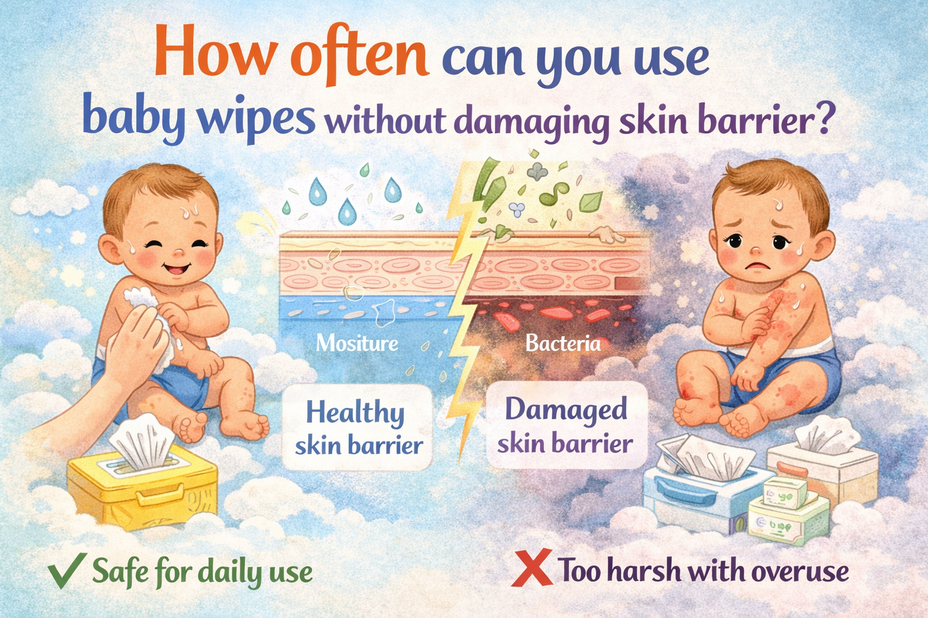
How Often Can You Use Baby Wipes Without Damaging Skin? It’s Not About the Number
A parent once asked me a very specific question:
“How many times a day is too many when using baby wipes?”
They were expecting a number.
Three times? Five times? Ten?
But skin care — especially for babies — doesn’t really work like that.
Because the real risk isn’t about how often you wipe.
It’s about what repeated wiping does to the skin over time.
Why This Question Feels So Important
Baby skin looks soft, but it’s also more vulnerable than adult skin.
The outer layer — often called the skin barrier — is still developing.
Its job is to:
keep moisture in
keep irritants out
Every wipe interacts with that barrier.
So parents naturally worry:
“Am I cleaning… or slowly causing damage?”
That’s a reasonable concern.
What Actually Affects the Skin Barrier
Instead of counting wipes, it helps to understand the three main factors that influence skin irritation:
1. Friction
Every wipe creates mechanical contact.
Gentle dabbing is very different from repeated scrubbing.
Over time, friction can disrupt the skin barrier — especially in already irritated areas.
2. Moisture Exposure
Wipes leave the skin slightly damp.
If the area stays wet (like inside a diaper), the skin becomes more permeable and easier to irritate.
This is why prolonged moisture — not just wiping — plays a major role in diaper rash.
3. Ingredients
Not all wipes are identical.
Some contain:
surfactants (cleaning agents)
preservatives
plant extracts
Even products designed for sensitive skin can affect different babies differently.
Again, the reaction depends on the individual child, not just the label.
So… How Often Is “Too Often”?
There isn’t a universal number.
A baby might tolerate:
frequent wiping with no issues
Or
develop irritation with relatively minimal use
What matters more is the condition of the skin.
A practical way to think about it:
Healthy skin → usually tolerates normal wiping during diaper changes
Irritated skin → becomes more sensitive to each additional wipe
So the same action can be fine one day and problematic the next.
A Risk-Based Approach That Actually Works
Instead of limiting wipes by count, experienced caregivers adjust based on context:
When skin looks normal
Use wipes as needed during diaper changes
Clean thoroughly but gently
When skin starts looking red or sensitive
reduce wiping frequency where possible
switch to damp cotton or soft cloth with water
allow the area to dry before putting on a new diaper
When irritation is already present
prioritize minimizing friction
focus on protecting the skin barrier, not just cleaning perfectly
The Hidden Trap: Over-Cleaning
Many parents unknowingly increase irritation by trying to keep the area extra clean.
It comes from a good place.
But more wiping doesn’t always mean better care.
Sometimes, it means:
more friction
more exposure
more disruption to healing skin
Clean enough is often better than perfectly clean.
A Simple Reframe
Instead of asking:
“How many times can I use wipes safely?”
Try asking:
“What does my baby’s skin need right now?”
That shift changes everything.
Because now you’re not following a fixed rule —
you’re responding to a changing system.
The Quiet Truth
Baby wipes aren’t inherently harmful.
Frequent use isn’t inherently harmful either.
Problems usually come from mismatch:
too much friction on sensitive skin
too much moisture without drying
or a product that doesn’t suit that specific baby
Once you start watching the skin instead of counting the wipes, decisions become clearer.
And parenting feels a little less like guessing —


