


 Latest
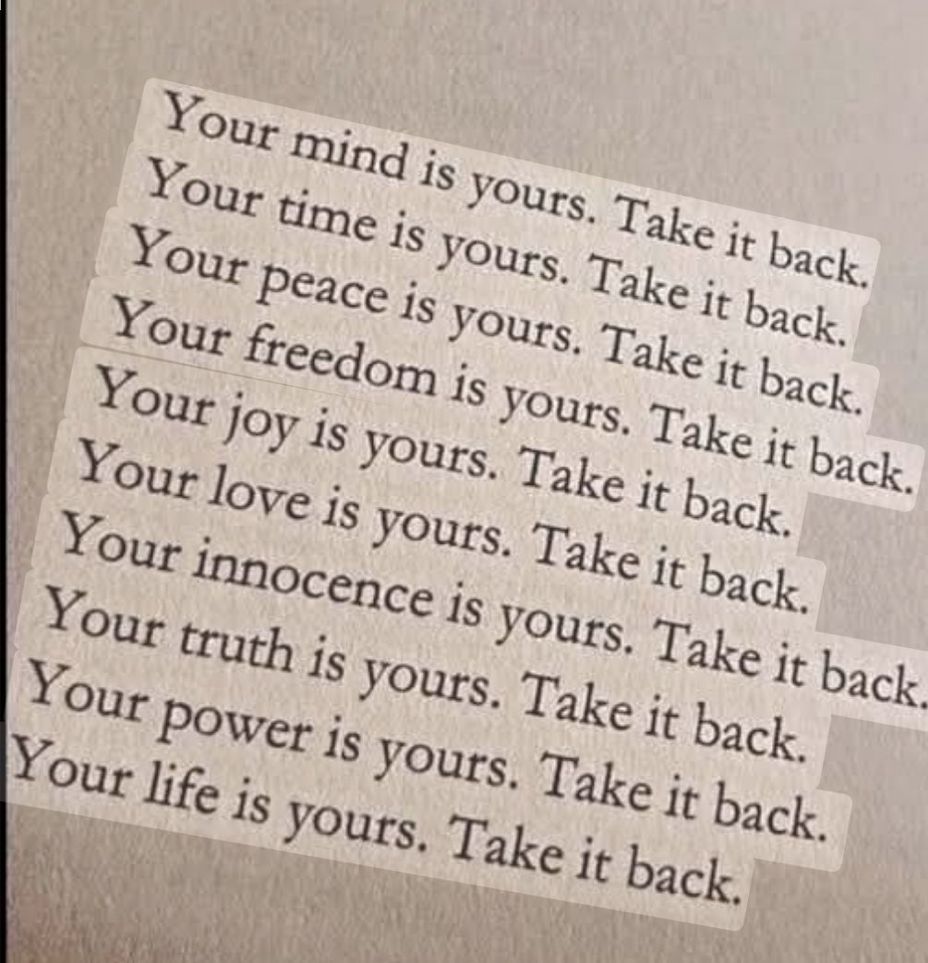
Taking Your Power Back: Reclaiming Yourself from Addiction and Mental Health By BigmommaJ
There comes a moment—quiet, almost unnoticeable at first—when something begins to shift.
Not everything. Not all at once.
But enough.
Enough to recognize that the life being survived is not the life meant to be lived.
For individuals navigating addiction and mental health challenges, “taking power back” is not a motivational phrase. It is not a single breakthrough moment.
It is a process of reclaiming self—piece by piece.
What Addiction and Mental Illness Take
Addiction does not only involve substances—it impacts identity.
Mental illness does not only affect mood—it distorts thinking, self-worth, and the ability to trust internal judgment.
Together, they create a cycle:
*Self-doubt
*Emotional instability
*Shame
*Escapism
*Regret
Research from the Centre for Addiction and Mental Health confirms that substance use disorders frequently co-occur with mental health conditions, reinforcing patterns of emotional dysregulation and negative self-concept (CAMH, 2023).
Over time, individuals can lose connection with who they are. Internal narratives become dominated by criticism, and self-trust begins to erode. Trauma—particularly early and repeated trauma—further intensifies this cycle, increasing vulnerability to both addiction and mental health challenges (Public Health Agency of Canada, 2020).
What “Taking Power Back” Actually Means
Taking power back does not mean controlling everything.
It means learning where control truly exists.
Within trauma-informed practice, power is defined as the ability to exercise awareness, choice, and intentional response—not perfection or dominance (SAMHSA, 2014).
It can look like:
*Choosing not to engage with shame-based thinking
*Setting boundaries, even when discomfort arises
*Acknowledging triggers instead of avoiding them
*Taking accountability without becoming consumed by guilt
*Showing up consistently, even on difficult days
The Mental Health Commission of Canada emphasizes that recovery is nonlinear and rooted in self-determination and hope (MHCC, 2015).
Power is not perfection.
Power is awareness.
Power is choice.
The Internal Battle No One Sees
Recovery is not linear—and mental health does not stabilize simply through intention.
There are still moments when:
*Thoughts become overwhelming
*Emotions feel unmanageable
*Old patterns attempt to resurface
Clinically, this reflects ongoing challenges with cognitive distortions and emotional regulation, particularly in trauma-related conditions and disorders such as borderline personality disorder (American Psychiatric Association, 2022).
Evidence-based approaches such as Dialectical Behaviour Therapy (DBT) emphasize the importance of creating a pause between emotion and action (Linehan, 2015).
That pause—that space between feeling and reacting—is where change begins.
It is also where power is reclaimed.
Relearning Trust in Self
One of the most difficult aspects of recovery is rebuilding self-trust.
Repeated cycles of relapse, self-doubt, or perceived failure can fracture confidence in personal decision-making.
Rebuilding trust requires consistency:
*Following through on small commitments
*Practicing honesty, even when uncomfortable
*Engaging in behaviours that align with values
The Canadian Centre on Substance Use and Addiction identifies internal resources such as self-efficacy and resilience as key components of recovery capital—critical for sustaining long-term change (CCSA, 2020).
Trust is not rebuilt through intention alone.
It is rebuilt through action.
From Surviving to Reclaiming
For many, survival mode becomes the default.
And survival mode serves a purpose—it protects.
But it does not allow space for growth.
Taking power back means shifting from:
*Surviving → Intentional living
*Reacting → Responding
*Avoiding → Facing
*Numbing → Feeling
Trauma-informed frameworks highlight that emotional processing—not avoidance—is central to healing (Herman, 2015).
And feeling is difficult.
But feeling is where healing begins.
A Grounded Reflection
Addiction and mental health struggles can create the belief that identity is permanently tied to suffering.
That the patterns will always return.
That change is temporary.
However, trauma-informed and recovery-oriented perspectives challenge this belief.
Experiences shape individuals—but they do not define them.
Recovery is built through repeated, intentional choices that gradually reshape identity, behaviour, and belief systems.
Each moment of awareness.
Each interrupted pattern.
Each decision to respond differently.
These are not small victories.
They are evidence of change.
A Call to Those Still in the Fight
For those currently navigating addiction and mental health challenges, power may feel out of reach.
But research and clinical practice consistently demonstrate that change begins with small, intentional steps.
This can include:
*Making one supportive choice each day
*Reaching out for connection or professional support
*Practicing grounding during distress
*Challenging negative internal narratives
Accessible supports such as Wellness Together Canada provide free, confidential mental health services across the country (Government of Canada, 2023).
Power is not found in having everything figured out.
It is found in choosing—moment by moment—not to give up.
Closing
Taking power back is not a destination.
It is a daily, deliberate process.
Some days will feel manageable.
Others will feel overwhelming.
But every time a different choice is made—over old patterns, over internalized shame, over automatic reactions—something shifts.
Power is not lost permanently.
It can be rebuilt.
One decision at a time.
BigmommaJ
#resilience #MentalHealth #reclaimingyourpower
#BeYourself
 5 reactions


