healing

Create a new post for topic
Join the Conversation on
healing
8.9K people
0 stories
1.2K posts
Explore Our Newsletters
What's New in healing
All
Stories
Posts
Videos
Latest
Trending
Post

My Rainbow

There was a time in my life when my heart carried more pain than hope.
After losing the chance to have the baby I dreamed of, I lived with fear. Fear that I would never know the joy of motherhood. Fear that my opportunity had been taken from me forever.
That fear followed me quietly.
Every time I thought about the future, it whispered the same question: What if it never happens for you?
When my niece was born, I was still carrying that storm inside me. My mind was filled with worries about finances, the future, and all the things that could go wrong.
But something beautiful happened that I did not expect.
Slowly, gently, that little girl began to heal parts of me I didn’t even know were broken.
She became my comfort.
The baby I once looked at with uncertainty became the little soul who brought peace back into my life.
• She is my protector.
• My little fighter.
• My joy.
When I am sick, she nurses me with the seriousness of someone much older.When I cry, her tiny hands wipe away my tears.
• She calls me beautiful.
• She tells me I am amazing, intelligent, and sweet.
• She looks at me with admiration, as if I am the most important person in the world.
And in her eyes, I feel seen.
I feel wanted.
I feel loved.
She taught me something I did not understand before.Motherhood is not only about carrying a child for nine months.Sometimes motherhood is about loving a child with your whole heart and choosing every day to show up for them.
• She became my reason to wake up with purpose.
• My reason to become stronger.
• My reason to keep going even on the hardest days.
She is my rainbow baby — the beautiful light that appeared after the storm.She didn’t just bring joy into my life.She brought back my hope.And every single day, I promise myself that I will do my best to be the woman she believes I am.
Because loving her has become one of the greatest gifts of my life.
Reflection — Pages of My Becoming
Sometimes life does not give us the story we imagined.But sometimes it gives us something even more beautiful — love in a form we did not expect.
She is my rainbow after the storm.
And through her, I learned that healing can come in the smallest, most powerful ways.

Listen to the still small voice within-Gemini💜.

#Healing #Selflove #innervoice #Smallvoicewithgemini

Post
See full photo

Honestly i can attest to this, four years i chose myself, healed from my postpartm depression now its my turn to give hope and educate others❤️..
#Healing #PostpartumDisorders #Selflove

Most common user reactions 8 reactions 1 comment
Post
See full photo

Life Changes When You Start Finding Your People

For the first time in a very long time, I am starting to understand something important:

Life changes when you start finding your people.

Not the people you perform for. Not the people you constantly edit yourself around. Not the people who love you conditionally, as long as you stay quiet enough, calm enough, serious enough, small enough.

I mean the people who see the real you and don’t immediately reach for the dimmer switch.

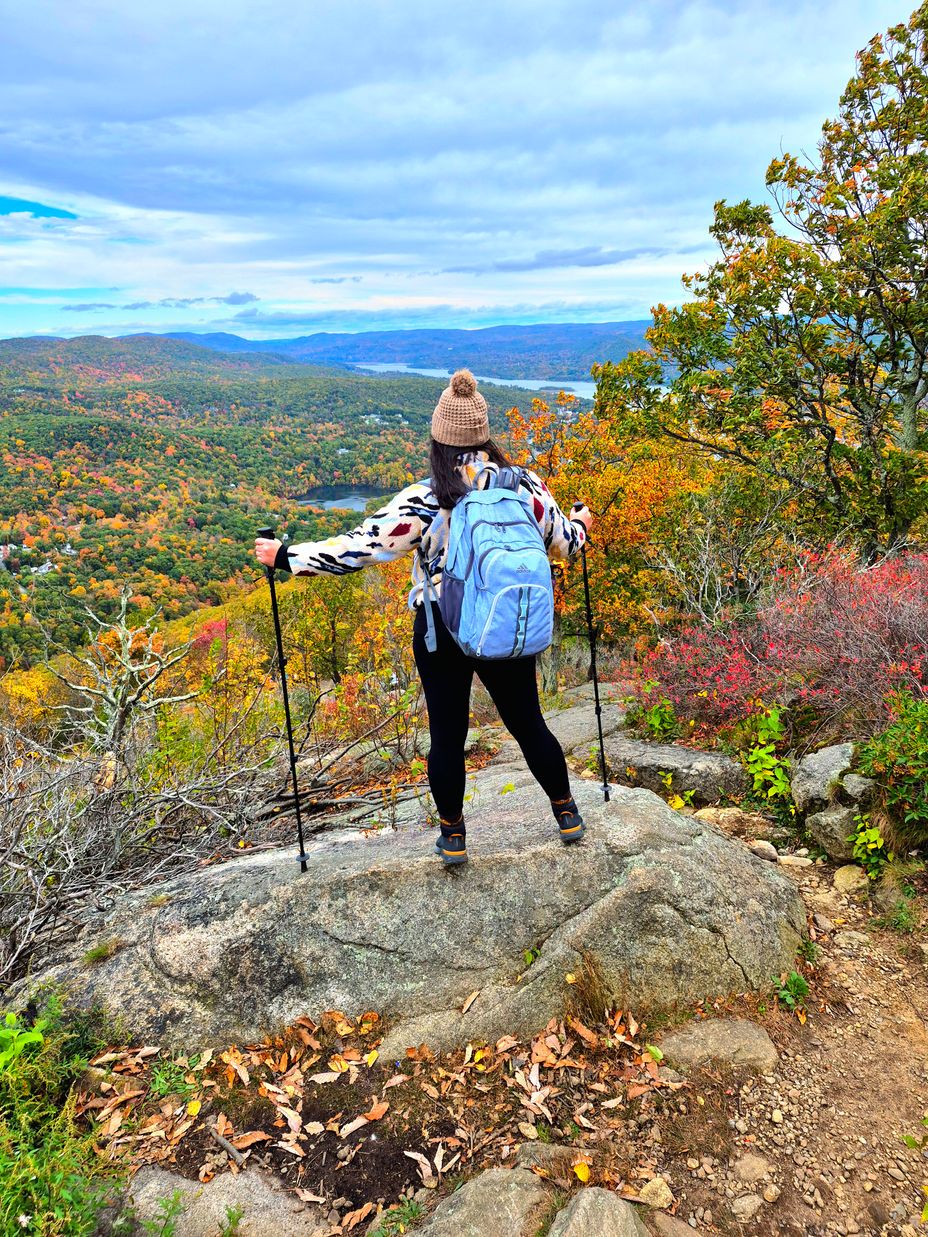
Recently, I went hiking with someone I had just met. We spent the day chasing waterfalls, walking trails, talking, laughing, climbing over rocks, and admiring the kind of beauty that makes you feel tiny in the best possible way.

A few days later, while we were talking, I made a comment about how my ADHD medication had probably worn off during our hike.

If you have ADHD, you probably know the feeling. My volume slowly rises without me realizing it. I become more animated, more expressive, more visibly excited about everything around me.

For most of my life, that realization would have filled me with shame.

Because growing up, and honestly even as an adult, I was constantly told to tone it down.

Be quieter. Act more serious. Stop talking so much. Calm down. Don’t say weird things. Don’t get too excited. Don’t embarrass yourself. Don’t be “too much.”

When you hear those messages long enough, especially as someone with ADHD, you start learning how to perform instead of simply existing.

You learn how to monitor your voice. Your body. Your facial expressions. Your enthusiasm. Your joy.

You become a social chameleon without even realizing it.

People talk a lot about “masking” in neurodivergent communities, but before I ever knew that word, I used to describe myself as someone who automatically adapted to whoever I was around. I didn’t even know I was doing it. It became survival. I learned how to edit myself in real time to make other people more comfortable.

So when I mentioned my medication wearing off during our adventure, I jokingly said that they probably noticed the difference.

And they responded so casually, so kindly, so naturally: “All I noticed was your love for waterfalls.”

I don’t think they realized how deeply that sentence hit me.

Because they didn’t describe me as annoying. Or loud. Or too hyper. Or too intense.

They saw my joy.

And maybe that sounds small to some people, but for me, it felt healing.

For one moment, I didn’t feel like someone people needed in smaller doses.

I felt safe. I felt unmasked. I felt accepted without needing to perform first.

That’s what finding your people starts to feel like.

I think many neurodivergent people spend years believing we are fundamentally “wrong,” when in reality, we may have simply been surrounded by people who only knew how to appreciate quieter streams.

But some of us were never streams.

Some of us were waterfalls.

Big feelings. Big excitement. Big curiosity. Big wonder. Big love for the things that make us feel alive.

And yes, waterfalls can be loud. They can take up space. They can overwhelm people who prefer stillness and control.

But they can also be breathtaking.

Lately, I’ve been trying to find my people by joining hiking groups and putting myself out into the world more. And honestly? It’s scary. When you’ve spent years masking, being fully yourself can feel incredibly vulnerable.

But little by little, I’m discovering something hopeful: There are people out there who do not want you smaller.

There are people who will see your enthusiasm as passion. Your intensity as sincerity. Your excitement as joy. Your differences as humanity.

People who will not make you feel like a problem to solve.

And if you are someone who still feels alone, who still feels misunderstood, who still feels like you have to constantly shrink yourself to be accepted, I want you to know this:

Your people exist.

Sometimes finding them happens slowly. Sometimes it happens on hiking trails. Sometimes it happens through hobbies, support groups, online communities, volunteering, classes, art, books, gaming, music, or shared interests.

But life really does begin changing when you stop asking, “How do I make myself easier to digest?” and start asking, “Where are the people who will let me flow naturally?”

Because waterfalls were never meant to apologize for making noise.

#ADHD #neurodivergent #audhd #unmasking #MentalHealth #latediagnosedadhd #findingyourpeople #belonging #Healing #Selfacceptance #traumahealing #invisibledisabilities #naturehealing #waterfalls #vulnerability #Hope

(edited)
Most common user reactionsMost common user reactions 9 reactions
Post
See full photo

How Trauma Shapes Us By BigmommaJ The Invisible Weight Many People Carry

You can’t always see trauma.

It doesn’t always show up as bruises or broken bones.

Sometimes it shows up as anxiety that never seems to quiet down. Sometimes it shows up as addiction. Sometimes it shows up as pushing people away before they can hurt you.

Trauma often hides in the thoughts we carry about ourselves:

“I’m not good enough.”
“I can’t trust anyone.”
“Something must be wrong with me.”

For many individuals, trauma becomes something they wear every day—shaping how they see the world, how they connect with others, and how they survive.

Understanding trauma is not only essential for healing individuals; it is critical for transforming the systems that support them, including mental health services, addiction treatment, and child welfare.

Understanding Trauma

Trauma occurs when a person experiences events that overwhelm their ability to cope and leave lasting emotional, psychological, or physical effects.

The Substance Abuse and Mental Health Services Administration (SAMHSA) defines trauma as experiences that are emotionally harmful or life-threatening and have lasting adverse effects on functioning and well-being (SAMHSA, 2014).

Trauma can take many forms, including:

*Childhood abuse or neglect

*Domestic violence

*Exposure to addiction in the home

*Systemic discrimination

*Chronic instability or loss

For many individuals involved in mental health, addiction services, or child welfare systems, trauma is not a single event. It is often complex and cumulative, developing over time through repeated exposure to adversity.

Trauma Changes the Brain

Trauma does not just affect emotions—it affects biology.

When a person experiences danger, the body activates its survival response: fight, flight, or freeze. Stress hormones such as cortisol and adrenaline surge to prepare the body to respond.
While this response is adaptive in moments of immediate danger, chronic exposure to trauma can keep the nervous system in a prolonged state of survival.

Research shows trauma affects several critical areas of the brain:

*The amygdala, which processes fear, becomes overactive, increasing hypervigilance.

*The hippocampus, responsible for memory processing, may become impaired.

*The prefrontal cortex, which regulates decision-making and emotional control, can become less effective under chronic stress (van der Kolk, 2014).

Canadian research has also emphasized the long-term developmental effects of early adversity. Studies suggest that chronic childhood stress can disrupt neurological development and increase vulnerability to mental health disorders later in life (McEwen & McEwen, 2017).

Understanding these changes helps shift our perspective.

Instead of asking “What is wrong with this person?” we begin asking “What happened to this person?”

Trauma, Addiction, and Mental Health

The relationship between trauma and addiction is well established.

Many individuals struggling with substance use are not simply seeking escape or pleasure. They are often attempting to regulate overwhelming emotional pain.

The landmark Adverse Childhood Experiences (ACE) Study found that individuals who experienced multiple forms of childhood adversity were significantly more likely to develop substance use disorders, depression, suicide attempts, and chronic health conditions later in life (Felitti et al., 1998).

Canadian public health research reflects similar findings. The Public Health Agency of Canada has reported strong connections between childhood trauma, exposure to violence, and later mental health and substance use challenges (Public Health Agency of Canada, 2020).

For many individuals, addiction becomes a coping mechanism—an attempt to numb memories, quiet intrusive thoughts, or regulate emotional pain.

Understanding this connection is essential for compassionate and effective care.

Trauma Within Systems

Trauma is not only an individual experience—it is also shaped by social systems.

Across Canada, research shows that children involved in child welfare systems often have extensive histories of trauma, including exposure to abuse, neglect, family violence, and parental substance use (Esposito et al., 2017).

Yet systems designed to support vulnerable populations are not always trauma-informed.
Without understanding trauma, behaviours may be misinterpreted as:

*Defiance

*Manipulation

*Resistance

*Non-compliance

In reality, many of these behaviours are survival responses.

Trauma-informed approaches emphasize safety, empowerment, trust, and collaboration rather than punishment or judgment (Poole & Greaves, 2012). When systems adopt trauma-informed frameworks, individuals are more likely to engage in services and experience meaningful healing.

Personal Reflection

Trauma is something many people carry quietly.

Through both my professional work and my own life experiences, I have seen how trauma can shape people in ways the outside world rarely understands.

I have seen individuals labelled as “difficult,” “attention-seeking,” or “non-compliant,” when what they were really experiencing was unprocessed pain.

I have also seen how trauma can intertwine with addiction and mental health struggles, creating cycles that are incredibly difficult to break—especially when systems respond with judgment instead of compassion.

Healing does not happen because someone is told to “move on” or “be stronger.”

Healing happens when people feel safe enough to finally be understood.

Recovery is not about pretending trauma never happened. It is about learning how to process it, make meaning of it, and reclaim parts of ourselves that trauma tried to silence.

And sometimes the most powerful part of healing is realizing this:

You are not broken.
You adapted to survive.

Moving Forward: A Call for Compassion and Change

Trauma shapes people—but it does not have to define them.

When we begin to understand trauma, something shifts.
Shame begins to loosen its grip.
Judgment begins to soften.
And compassion begins to take its place.

But healing cannot happen through awareness alone.
Our communities, mental health systems, addiction services, and child welfare systems must move toward trauma-informed care—approaches that recognize the profound impact of trauma and respond with empathy rather than punishment.

Because when we stop asking “What is wrong with this person?” and start asking “What happened to this person?” we open the door to healing.

That shift has the power to transform lives.

It is also the foundation of the work I hope to continue through Rise Above Your Norm—creating spaces where people are seen, understood, and supported as they rebuild their lives.

Because healing is possible.
And no one should have to do it alone.

BigmommaJ
#MentalHealth #traumainformed #Healing

Most common user reactionsMost common user reactions 4 reactions
Post
See full photo

What are you grieving right now?

Grief can take many forms, arise for different reasons, and last for long periods of time. It doesn’t always look the same for everyone, and it can show up in ways we don’t always expect.

💌 Let’s hold space for one another today. If you’re up to it, share in the comments or leave encouraging words, validation, or even a heart as a gentle reminder that none of us are alone. 💌

What are you grieving right now?

Share with us below. ♥️

#Grief #MentalHealth #Depression #Anxiety #PTSD #Healing #Suicide #CheckInWithMe

Most common user reactionsMost common user reactionsMost common user reactions 50 reactions 25 comments
Post
See full photo

Today I realized that nature water sounds (like ocean waves, rain, running river water, etc) really help soothe, calm and ground me

I always knew being near natural water had this affect. But I didn’t realize how much just the sound of the moving water positively affected me. The visuals are definitely calming for me too, but the sound may have the greatest affect, probably because I can really feel it. It helps me relax and to breathe more normally, especially with ocean sounds— somehow, the rythym of the waves just reminds me to breathe 🌊

This reality allows me to listen to recorded versions of these sounds and experience the same affect I get when at the ocean or a river, or when it’s raining. Which is incredibly helpful because I cannot travel or spend as much time outdoors as I once did.

#grounding #Meditation #MentalHealth #rythym #Nature #earth #copingskills #Healing #artastherapy #NaturesArt

(edited)
Most common user reactionsMost common user reactions 20 reactions 10 comments
Post
See full photo

Lesson from my accident #4 . The misery of comparison #Depression #Anxiety #Healing #Relationships #FamilyAndFriends #MentalHealth

While I was doing inpatient rehabilitation I encountered some people who expressed frustration that I seemed to be recovering faster than they were.

I reminded them that their surgery was different to mine, we have different ages and every person’s journey is different.

I encouraged them to keep pressing on. And there were days when pain management seemed impossible and they would encourage me.

We tend to judge people on their actions and judge ourselves on our intentions.

Comparison leads to misery. We never really know what is going on in people’s lives. Facebook and Instagram tend to focus on the good times people experience so they are a bad gauge of reality.

You matter. You are loved. You are unique and that is absolutely marvellous!!!

(edited)
Most common user reactionsMost common user reactions 20 reactions 4 comments