selfcare

Create a new post for topic
Join the Conversation on
7.8K people
0 stories
894 posts
Explore Our Newsletters
What's New in
All
Stories
Posts
Videos
Latest
Trending
Post
See full photo

What qualities or skills do you believe makes someone a great advocate?

Great advocacy doesn’t just follow one template — it can look like a lot of things depending on a person’s skills, talents, qualities, and what organizations, causes, or conditions they’re advocating for.

These skills and qualities can include being a good listener and speaker, being empathetic, caring, and compassionate, and knowing when to stand up for yourself or someone else.

What do you think makes a good advocate? Which of those skills are you good at? What do you think you need to work on?

#52SmallThings #CheckInWithMe #selfcare #MentalHealth #Disability #ChronicIllness #ChronicPain #RareDisease #Anxiety #Spoonie #Autism #Parenting #PTSD #BorderlinePersonalityDisorder #BipolarDisorder #Fibromyalgia #Lupus #MultipleSclerosis #Migraine #Spoonie

(edited)
Most common user reactions 5 reactions 4 comments
Post
See full photo

Letter to my soul.

Dear Soul,

Please forgive me for I am still learning how to take care of you.

Please be patient with me for I am still learning how to love you.

#Trauma #Healing #selfcare #growth

Most common user reactionsMost common user reactions 8 reactions 2 comments
Post
See full photo

The Impact of Constant Apologies on Self-Worth

I’m constantly apologizing for taking up space. I can’t even begin to tell you just how many times a day I say the words, “I’m sorry.” It’s like a reflex I can’t switch off. If I’m at the grocery store and take too long to grab an item, I’ll apologize. If I feel like I’ve said something wrong, I’ll apologize. Heck, if someone bumps into me, I’ll still utter, “I’m sorry.”

It’s a bit embarrassing, but I even find myself saying sorry to inanimate objects because the habit is that ingrained. It’s exhausting, and honestly, it’s something I’d really like to do less of.

I believe the reason I apologize so often stems from my fear of conflict. For most of my life, I grew into a people-pleaser. I’d always put others first before myself and say yes to pretty much everything.

If someone needed a ride, I’d be there. If someone needed a little extra cash, I’d somehow find a way to help. “You need me? I’m there for you” — that was always my mindset.

But honestly? It drained me. It made me feel small. I lost tiny pieces of myself every time I gave in a little more. I just wanted to fit in, to belong, to be part of the group instead of always being on the outside. I longed for acceptance, and I thought pleasing others was the only way to get it.

There’s a lot of underlying pain that comes with constant apologies. I’ve realized that every automatic “I’m sorry” shrinks my confidence and chips away at my self-worth — two things that are absolutely essential for mental well-being.

For me, it reinforces the belief that I’m a burden. That I take up too much space. And honestly? It makes me feel like no one takes me seriously — like my needs are inconveniences to everyone around me.

I’m working on breaking the apology habit. I want to be able to replace “sorry” with alternatives like:

• “I can’t right now.”

• “Thank you for waiting.”

• “I need time to think.”

It’s hard for my brain to understand how not to apologize because I’m so used to it. But I’m learning to pause before reacting out of reflex.

Being able to take up space without guilt is the affirmation I need. I have the right to speak, rest, ask, and set boundaries. I’m worthy — just as much as everyone else. Needing validation for my feelings isn’t something to be ashamed of; it’s human.

Growth begins with awareness, and every time I choose a kinder response instead of “I’m sorry,” I’m reclaiming the pieces of me that I thought were lost forever.

“Stop apologizing for taking up space. Your presence is valid, your voice matters, and your needs deserve attention.” — Unknown

#MentalHealth #Anxiety #Neurodiversity #selfcare

Most common user reactionsMost common user reactionsMost common user reactions 16 reactions 4 comments
Post

Hello

I'm completely new here. I've struggled with severe depression that caused my world to come to a hault. I'm working on healing myself, my heart, my soul, my body and mental health. I am just learning how to do self care, self love and self compassion. I am on the other side of the depression but it changed me to the core. I am learning how to live again. Please feel free to share your experiences with me too!

#Depression #Healing #selfcare #Trauma

(edited)
Most common user reactionsMost common user reactions 17 reactions 15 comments
Post

The Thanksgiving text I'm not sure I'm grateful for

My older sister texted me today with some sort of holiday greeting that I haven't yet allowed myself to read. I can't decide what's worse: hearing from a dysfunctional sibling for the sake of traditional ceremony or not being acknowledged at all. Am I glad for select holiday outreach once in a blue moon or am I more resentful that she texts me Happy Thanksgiving in order to fulfill her inner obligatory, "I'm-a-good-sister" voice? Neither is quite fitting. I am not pleased. My feelings skew toward the you-suck-for-needing-a-holiday-to-reach-out emotion. And don't think I don't see your attempt to make yourself feel better superseding a sincere wish for my enjoyment of a traditionally family-oriented holiday. Welcome to my tone-deaf family.

The last time I spoke with my older sister, about six months ago now, I was suicidal. I told her so, in so many words. She said, "that's heartbreaking" amongst other fillers. I cried. She tried to offer brass tacks advice. I showed raw emotion. She showed me her armor--her inability to be present with something that strikes her own childhood pain.

The call went on for maybe an hour. I regained composure. Then the furniture delivery she was was waiting on arrived. She apologized for having to run--the patio furniture needs to be brought in. I said I understood.

About three weeks later, she sent me a text apologizing for her lack of followup. She was worried about losing her job. Though I wish she was more worried about losing a sister, I also genuinely understood her lack of concern.

"Happy Thanksgiving," she said. I hear something like, "What a shame you want to die but hope you can enjoy your turkey and stuffing."

My sister follows in our father's footsteps in that he was a sweep-it-under-the-rug kind of guy. He did his best to dodge any real need any of us had. If it hurts, don't touch it. If it's messy or ugly or unpleasant, put it away or close your eyes. That was my father then. This is my sister now.

On this Thanksgiving, I'm grateful that I have the experience and self-care to know when to reject dysfunction, how to discern true compassion, and offer a genuine response deserving of the situation.

Nothing. I share these thoughts to give space to my processing. But I give my sister nothing. As despite whatever message sits in my phone queue, the contents amount to nothing meaningful for me.##

#CPTSD #Trauma #selfcare The sister who cannot see me

(edited)
Most common user reactions 4 reactions 2 comments
Post
See full photo

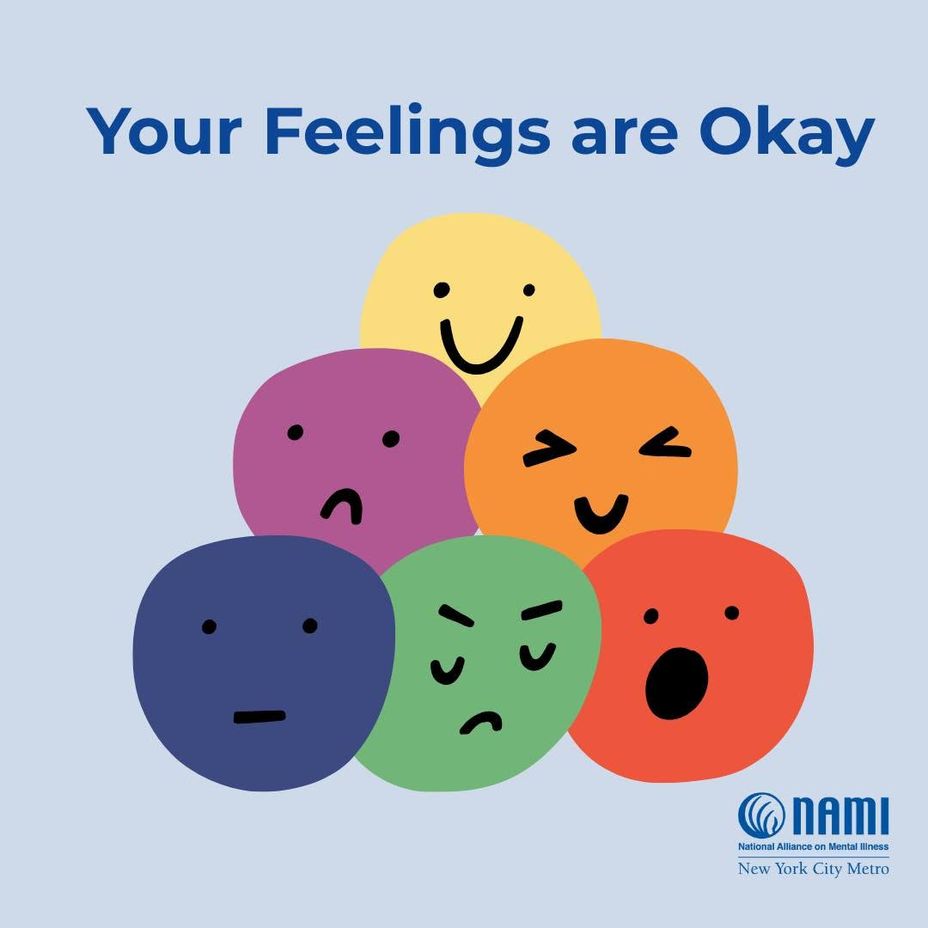
Finding Care in the Little Moments

Taking care of your mind isn’t always a big, dramatic moment. Sometimes it’s the small choices you make throughout the day to show yourself kindness. Whether it’s stepping outside for a breath of fresh air, turning to a support group, or simply letting yourself rest, those moments matter more than we think.

What’s one thing that helps you feel a little more grounded when life gets heavy?

#MentalHealth #selfcare #Kindness

Most common user reactions 7 reactions 3 comments
Post
See full photo

Why Self-Care is Essential for Everyone

If there’s one thing I believe everyone should know, it’s that self-care isn’t selfish. It’s something that is vital for our very survival. People often have myths about what self-care should be and how it should be implemented. But society can’t continue to put this shame and guilt upon the ones who struggle most.

For the longest time, I used to look at self-care as being lazy and unproductive. I thought that if I wasn’t constantly doing something—working, cleaning, helping, producing—then I was somehow failing at life. To this day, I still catch myself feeling guilty for not doing more, for not being further ahead in life, or for just simply needing rest.

In all honesty, I just wish that people wouldn’t judge me or make me feel small and ashamed about that. I’m just doing the best that I can with what I’ve got, and at some point, that has to be enough.

I’ve gone through both major and minor sprouts of depression. Let’s be honest, depression follows me around every day, but I’ve learned that some rest and relaxation is essential for functionality and stability. There have been days where I can’t get out of bed, or times when I can’t physically move, and that used to make me feel hopeless, worthless, and downright selfish.

But I’ve learned that ignoring my needs doesn’t make me stronger. It actually makes me burn out faster. It makes me anxious, resentful and completely disconnected from myself and reality.

I’m trying my hardest not to let outside judgment get to me, but it hasn’t been easy. I essentially have to convince myself that it’s okay to take time for yourself. Because if I don’t believe it, no one else will. I’m just now learning to accept and embrace my neurodivergence, and I’ve learned that I’m not any sort of stigma, I’m doing things that are right by me. It’s how I heal.

I think we all need that reminder, that caring for yourself doesn’t mean I’m neglecting others or giving up. It means that you’re choosing to show up for life as your most grounded, whole self.

So, here’s my question to you: What’s something you believe everyone should know about self-care?

“Self-care is giving the world the best of you, instead of what’s left of you.” - Katie Reed

#MentalHealth #Depression #DepressiveDisorders #selfcare

Most common user reactions 6 reactions 1 comment
Post
See full photo

Embracing Self-Kindness After Mistakes

Personally, I’ve never been good at showing myself any type of kindness when I make a mistake. My natural instinct isn’t to forgive myself. Instead, I internalize it and let it consume me entirely.

It’s always been difficult for me to let go of things I’ve done wrong. Mistakes feel deeply personal — almost like a reflection of who I am rather than what simply happened. When I make a mistake, I don’t just feel disappointment; I feel criticized, rejected, and judged. Even when no one says a word, I imagine their disapproval, and it feels like my character is being attacked.

When Shame Takes Over

Criticism is something I’ve never handled well. Honestly, I already know my flaws — I live with them every day — so when someone else points them out, it feels like rubbing salt on a fresh wound. I replay it over and over, thinking about what I could’ve done differently, how I should’ve known better, and why I can’t just get it right.

One moment that’s stayed with me for years happened when I worked as a store associate at a restaurant. I was carrying a tray of hot soup when it suddenly slipped out of my hands, spilling onto one of the guests.

In that instant, my heart dropped. I felt horrible — horrified, embarrassed, and downright like an awful person. I panicked, completely overwhelmed by guilt and shame.

I remember rushing outside to regain my composure, tears streaming down my face as I tried to calm myself down. I was crying hysterically, in full meltdown mode, feeling like I had ruined everything. I think my manager may have let me leave early that day, but even after I got home, I couldn’t stop replaying the moment.

Still to this day, it remains one of my most embarrassing and panic-filled memories — one of those moments where your body remembers the feeling long after your mind tries to move on.

The Weight of Holding On

When I mess up and make a mistake, I don’t just move on. I carry it with me for minutes, hours, days, sometimes even years. Once I make a mistake, I never forget it — because in my mind, remembering means I’ll never repeat it.

It’s a form of self-protection, but also a form of self-punishment. My intentions are good, but the impact is heavy. Carrying shame doesn’t make me better — it only makes me smaller.

Learning to Show Myself Grace

Lately, I’ve been trying to give myself more leniency and grace. I’m learning that mistakes don’t have to define me — they can instead guide me. I’ve realized that most feedback is meant to be helpful, not personal.

Sometimes, showing kindness to myself means reminding myself that I’m only human — and I’m allowed to make mistakes. Other times, I’ll cry it out and let the emotions pass through instead of holding them hostage inside.

Often, I still want to run away from the discomfort or overanalyze every little detail, but I’m learning to pause, breathe, and speak gently to myself instead of tearing myself down.

Practical Ways to Practice Self-Kindness

If you also struggle to forgive yourself, here are a few things that help me soften around my mistakes:

1. Name the emotion, not the identity.

Instead of saying “I’m so stupid,” try “I’m feeling embarrassed right now.” It reminds you that emotions are temporary, not definitions of who you are.

2. Offer yourself the words you’d say to a friend.

If a friend made the same mistake, would you judge them harshly — or comfort them? You deserve that same compassion.

3. Breathe before you spiral.

Take a few slow, intentional breaths. This helps calm the nervous system and quiet that flood of self-blame before it grows louder.

4. Let yourself release it physically.

Cry, stretch, journal, or take a walk. Your body needs a way to let go of the tension your mind holds onto.

5. Rewrite the story.

Instead of “I failed,” try “I learned.” Mistakes often carry wisdom — if you let them.

The Gentle Art of Forgiveness

I’m learning that growth isn’t about perfection — it’s about compassion. I’ll always make mistakes, but I don’t have to let them define me.

Kindness, I’m finding, begins with the way I speak to myself when things go wrong. And maybe that’s where true healing starts — in the quiet moments when I choose to forgive myself.#MentalHealth #selfcare #SocialAnxiety

Most common user reactions 17 reactions 6 comments
Post
See full photo

Your Story Matters

Every story has ups and downs — and every moment counts. 💙

What’s one thing you’re doing for yourself today?

#MentalHealth #selfcare #Journaling

Most common user reactions 5 reactions 2 comments
Post
See full photo

Buddhist Practice

One of the things I do for self-care is practice Buddhism. It is calming, grounding, and centering. The philosophy focuses on the middle way. It does not focus on extremes. The philosophy constantly reminds you to be mindful in all your activities, and to think things through before you fly off the handle and react to something. It teaches you to live intentionally, and to act as a citizen of the world while remaining active at a local level. I find the rituals involved in Buddhist practice help relive anxiety and, to a certain extent, depression. I have been practicing Buddhism for about 17 years, and I find that it makes me a happier and better person.#Buddhism #Depression #Spirituality #selfcare

Most common user reactions 4 reactions 1 comment