Dissociative Disorders

Create a new post for topic
Join the Conversation on
Dissociative Disorders
26.6K people
0 stories
2.7K posts
About Dissociative Disorders Show topic details
Explore Our Newsletters
What's New in Dissociative Disorders
All
Stories
Posts
Videos
Latest
Trending
Post
See full photo

WHY QUITTING FEELS SO GOOD

If you've ever quit something difficult and immediately felt relieved, there's a reason for that.

When something makes us anxious, uncomfortable, or afraid, walking away removes that discomfort. For a moment, we feel better. And because relief feels rewarding, our brain can start learning that avoiding difficult things is the fastest way to feel safe again.

That's why I don't think beating yourself up for quitting helps. Understanding the pattern does. The more often we escape discomfort, the easier escaping can become. But the opposite can be practiced too. We can learn to stay with something uncomfortable for a little longer and discover that we are capable of handling more than our mind initially tells us.

This matters in depression recovery too. Taking care of yourself, asking for help, changing old habits, or facing something painful can all feel harder in the short term than avoiding them. But short-term relief and long-term healing are not always the same thing.

So next time you feel the urge to quit something that genuinely matters to you, give yourself five minutes before deciding. You may still choose to walk away, but make it a decision rather than an automatic reaction.

What's something important you've been tempted to give up on lately?

Also, if you're going through a tough time right now, I want you to know that I post daily mental health videos about how to deal with painful thoughts. So if you or anyone you know is struggling and wants help, click on one of the links below or write me if you have any questions you want me to answer:

www.instagram.com/thomas_of_copenhagen

www.tiktok.com/@thomas_of_copenhagen

~ Thanks to all. Thanks for all. ~

#MentalHealth #MentalHealth #Depression #Anxiety #BipolarDisorder #BorderlinePersonalityDisorder #Addiction #dissociativedisorders #ObsessiveCompulsiveDisorder #ADHD #Fibromyalgia #EhlersDanlosSyndrome #PTSD #Cancer #RareDisease #Disability #Autism #Diabetes #EatingDisorders #ChronicIllness #ChronicPain #RheumatoidArthritis #Suicide #MightyTogether

Most common user reactions 3 reactions 2 comments
Post
See full photo

When you're stuck in your head.

Sometimes the most exhausting place to be is inside your own head. You replay conversations, worry about things that haven’t happened yet, question decisions you already made, and spend so much time thinking that you end up feeling drained without actually solving anything.

Something I’ve learned is that you don’t have to figure out every thought that appears. You don’t have to argue with it, fix it, or follow it somewhere. Sometimes you can just notice that your mind is going again and bring yourself back to what is actually happening right now.

The thoughts may still be there. That’s okay. The goal isn’t to have a perfectly quiet mind. It’s to get better at deciding which thoughts deserve your attention.

What helps you when you get stuck in your own head?

Also, if you're going through a tough time right now, I want you to know that I post daily mental health videos about how to deal with painful thoughts. So if you or anyone you know is struggling and wants help, click on one of the links below or write me if you have any questions you want me to answer:

www.instagram.com/thomas_of_copenhagen

www.tiktok.com/@thomas_of_copenhagen

~ Thanks to all. Thanks for all. ~

#MentalHealth #MentalHealth #Depression #Anxiety #BipolarDisorder #BorderlinePersonalityDisorder #Addiction #dissociativedisorders #ObsessiveCompulsiveDisorder #ADHD #Fibromyalgia #EhlersDanlosSyndrome #PTSD #Cancer #RareDisease #Disability #Autism #Diabetes #EatingDisorders #ChronicIllness #ChronicPain #RheumatoidArthritis #Suicide #MightyTogether

Most common user reactions 19 reactions 8 comments
Post
See full photo

DON'T BELIEVE EVERY THOUGHT

Depression has a way of making every thought feel like a fact.

It tells you you're not good enough. That things will never get better. That you've already failed. And after hearing those thoughts over and over again, it's easy to stop questioning them.

One of the biggest turning points in my own recovery was realizing that I didn't have to believe everything my mind said. Thoughts are automatic. They appear without permission. But just because a thought shows up doesn't mean it deserves your trust.

If your inbox was full of spam, you wouldn't assume every email was important. You'd learn to filter it. I think our minds deserve the same kind of scrutiny. Some thoughts are worth listening to. Many are just fear, self-doubt, or depression speaking.

The next time a painful thought appears, don't ask yourself, "Is this true?" Instead ask, "What evidence do I actually have for believing this?"

That one question can change everything.

What's one thought you've learned to stop believing?

Also, if you're going through a tough time right now, I want you to know that I post daily mental health videos about how to deal with painful thoughts. So if you or anyone you know is struggling and wants help, click on one of the links below or write me if you have any questions you want me to answer:

www.instagram.com/thomas_of_copenhagen

www.tiktok.com/@thomas_of_copenhagen

~ Thanks to all. Thanks for all. ~

#MentalHealth #MentalHealth #Depression #Anxiety #BipolarDisorder #BorderlinePersonalityDisorder #Addiction #dissociativedisorders #ObsessiveCompulsiveDisorder #ADHD #Fibromyalgia #EhlersDanlosSyndrome #PTSD #Cancer #RareDisease #Disability #Autism #Diabetes #EatingDisorders #ChronicIllness #ChronicPain #RheumatoidArthritis #Suicide #MightyTogether

Most common user reactions 9 reactions
Post
See full photo

THIRTY: 30 Days of DID

What’s one last thing you feel should be written about after answering all of that? Was there a question you had that didn’t make the list? Anything else you’re curious about?

(Whew! We did it!! 30 days done!!!)

***QUESTION THIRTY: What is something you feel should be written about that was not asked here?

***QUESTION THIRTY-and-a-HALF: What’s one last thing you feel should be written about after answering all of that? Talk about whatever you want.

Since these are the same question, I’m lumping them together.

Also, I don’t want to say much here, as we’ve been planning to discuss our impressions of said surveys in the next couple of TWM’s Wednesday articles.

Also also, altogether, it wound up a pretty thorough questionnaire. There are a few questions I want to revisit and expand, and quite a few I found myself branching off of in the drafts.

My initial thought is many of the questions felt geared toward survivors earlier in their discovery/recovery processes. That seems to be the way of a lot of DID-related content, however; not a lot out there for or by those in the later stages of recovery, and it’s been on my mind lately.

What about you? Was there a question you had that didn’t make the list? Anything else you’re curious about?

#DissociativeIdentityDisorder #dissociativedisorders #DissociationDisorders

*** survey credits & links can be found in the original article, "Alters and Antics" on our website. ***

THANK YOU FOR LISTENING!!

Most common user reactions 4 reactions 2 comments
Post
See full photo

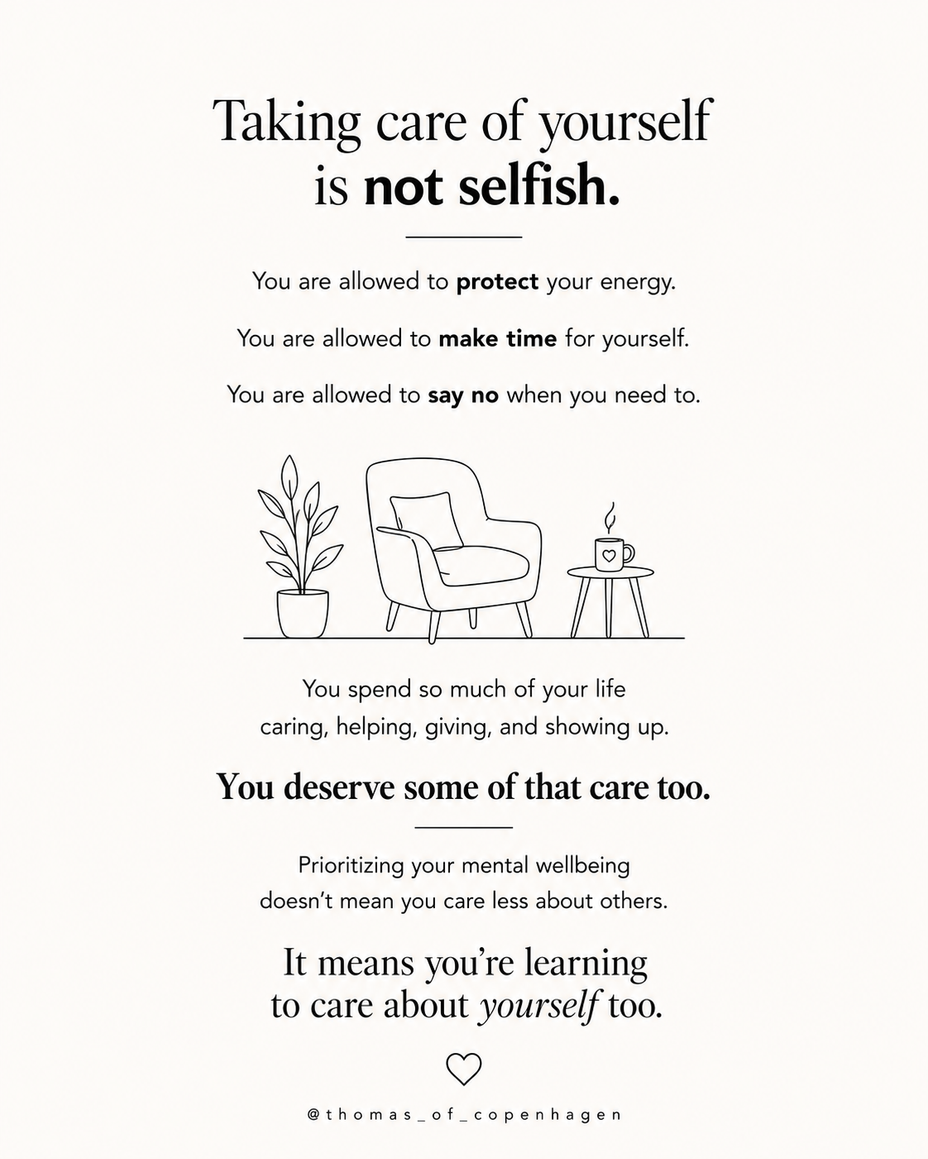
You are already enough

There’s a difference between being alone and feeling lonely. Learning to enjoy your own company doesn’t mean you stop needing other people. We all need connection, love, and support. It means realizing that being by yourself doesn’t have to be something you fear or immediately try to escape. Sometimes peace comes from discovering that you can sit with yourself, listen to what you’re feeling, and simply be okay in your own company.

How do you feel when you’re alone? Is solitude something you enjoy, or something you’re still learning to be comfortable with?

Also, if you're going through a tough time right now, I want you to know that I post daily mental health videos about how to deal with painful thoughts. So if you or anyone you know is struggling and wants help, click on one of the links below or write me if you have any questions you want me to answer:

www.instagram.com/thomas_of_copenhagen

www.tiktok.com/@thomas_of_copenhagen

~ Thanks to all. Thanks for all. ~

#MentalHealth #MentalHealth #Depression #Anxiety #BipolarDisorder #BorderlinePersonalityDisorder #Addiction #dissociativedisorders #ObsessiveCompulsiveDisorder #ADHD #Fibromyalgia #EhlersDanlosSyndrome #PTSD #Cancer #RareDisease #Disability #Autism #Diabetes #EatingDisorders #ChronicIllness #ChronicPain #RheumatoidArthritis #Suicide #MightyTogether

Most common user reactionsMost common user reactions 28 reactions 9 comments
Post
See full photo

TWENTY-NINE: 30 Days of DID

Do you have a common trait, hobby, or interest amongst parts? How do your alters like to express themselves?

***QUESTION TWENTYNINE: Do you have a common trait amongst parts, such as a trauma response (or if you want to be less personal, hobbies or interests, etc)?

Certain skills, memories, and proclivities are still “filed away” in different alters, but our greater vision and purposes align. At this point, we’re probably more alike than we are different. (I said that to PeanutButter just now, and he nodded.)

Collectively, we are creative and colorful. Playful, animated, and expressive. Artistic, musical, and passionate. Fiery, sarcastic, funny. Driven and determined. We love music and words and musing meta mystical.

And, no matter where (or who) we were in life, our goal has always been to be a career writer, and that has never wavered or been internally disputed.

***QUESTION TWENTYNINE-and-a-HALF: How do your alters like to express themselves on a daily basis?

…like anyone else?

I don’t know why this question was so hysterically difficult to wrap my mind around. It feels similar to questions on masking ourselves. Our answer to the latter was always, “we just don’t”, so I guess the answer to this one is, “we just do”?

If a part has something to say, they’ll say it. If they want to wear or do a thing, they will, and they’ll do it as themselves with no introduction or salutation required. I don’t know how much self-expression is a choice or just how things are; behavior quirks are unconscious and involuntary, not a deliberate affectation.

Regarding individual specifics, some are obvious by their speech patterns, humor, and language use (if there’s a “shiz” or a “boom” or a “yo”, that’s Splatz). Some speak via sound effects like lip pops or tongue clicks, and some with gestures or facial expressions. Bug’s grin is unmistakable, and Tower always slides at least one hand in a pocket.

We used to have a much more varied wardrobe than we do now, but our desired styles and comfort levels with them still flip flop. We don’t make drastic changes to our hair anymore, and everybody is onboard with our tattoos…

Still not sure I answered this one. Did I answer it?

#DissociativeIdentityDisorder #DissociationDisorders #dissociativedisorders

*** survey credits & links can be found in the original article, "Alters and Antics" on our website. ***

Most common user reactions 2 reactions
Post
See full photo

TWENTY-EIGHT: 30 Days of DID

In your experience, what are the hardest things about having DID in your day-to-day life? Share a memory you’ve been told of a different alter fronting.

***QUESTION TWENTYEIGHT: In your experience, what are the hardest things about having DID in your day-to-day life?

Carrying the heaviness of knowing why we have DID in the first place. Of living the life sentences for crimes enacted against me. Repairing the damage while perpetrators play ignorant and innocent.

The burden of shouldering the brunt of this diagnosis’ disbelief and denial. Of knowing there’s an entire population ready to tear me down in any way possible just for speaking up.

The weight of observing an explosion of mind-blowingly inaccurate and terrifyingly casual mis- and disinformation proliferated almost everywhere online. Fearing it’s all anyone will see about DID if they only do a surface search.

A society that willingly misunderstands. Refuses to see. Denies reality. Silences and mocks victims. Passes the buck. Protects the abusers. Perpetuates obsolete controversies and wars.

Et cetera, et cetera, et cetera.

***QUESTION TWENTYEIGHT-and-a-HALF: Share a memory you’ve been told of a different alter fronting.

Oof. How to pick?

That time Mox stole a sip of PeanutButter’s wine, thinking it juice, and being revolted? Or how Mox so consistently mispronounced PeanutButter’s “Monte Crisco” sandwich that it’s now part of our household’s lexicon?

Funniest story (to me anyway) was post-awareness but pre-diagnosis, and it involves alcohol, so stop here if you don’t want to read about that.

We no longer drink, by the way. It happened so rarely, we never liked it, and it wasn’t worth continuing. This is an old story of one of those rare occasions (and one of the last).

So. While hanging out with friends, “I” had more than usual and, for reasons unremembered, switched to an alter who was almost completely sober. No slurring. Clear-eyed. No wobbling. And when they switched out, “I” was once again a tipsy mess.

The human mind is bonkers, man.

#DissociativeIdentityDisorder #dissociativedisorders #DissociationDisorders

*** survey credits & links can be found in the original article, "Alters and Antics" on our website. ***

Most common user reactions 1 reaction
Post
See full photo

How to manage your energy

Most of us spend our time managing our calendar.

Far fewer spend time managing the thing that actually determines how well we think: our energy.

In today's video, I share why protecting your mental energy is just as important as managing your time, along with a few simple habits that can help you stay focused throughout the day. Click on one of the links below to watch it.

Question: What's one thing that helps you recharge during a busy workday?

Also, if you're going through a tough time right now, I want you to know that I post daily mental health videos about how to deal with painful thoughts. So if you or anyone you know is struggling and wants help, click on one of the links below or write me if you have any questions you want me to answer:

www.instagram.com/thomas_of_copenhagen

www.tiktok.com/@thomas_of_copenhagen

~ Thanks to all. Thanks for all. ~

#MentalHealth #MentalHealth #Depression #Anxiety #BipolarDisorder #BorderlinePersonalityDisorder #Addiction #dissociativedisorders #ObsessiveCompulsiveDisorder #ADHD #Fibromyalgia #EhlersDanlosSyndrome #PTSD #Cancer #RareDisease #Disability #Autism #Diabetes #EatingDisorders #ChronicIllness #ChronicPain #RheumatoidArthritis #Suicide #MightyTogether

Most common user reactions 4 reactions 1 comment
Post
See full photo

TWENTYSEVEN: 30 Days of DID

Do you experience variation in skill correlating to dissociation? What do you think are the biggest differences between living with DID and living without?

***QUESTION TWENTYSEVEN: Do you experience variation in skill correlating to levels of dissociation? If so, what skills stand out as most affected by dissociation?

Ugh yes.

What first comes to mind, especially while growing up, is how I’d have to finish a project in the same window I started it, or it would never get done. Or it’d be finished in a completely mismatched style. It affected artwork, schoolwork, handwriting, chorework, things I enjoyed, and things I’d get in constant trouble over, and this got super irritating real fast.

As an adult, cooking know-how was unpredictable for awhile. I occasionally lose spoken-language proficiency, and skills learned for places of employment (like forgetting how to clock in or out, or how a specific process gets handled).

It’s not as drastic anymore, but I’d say the hardest to deal with is fluctuation in motor functioning.

Some alters are physically stronger while some are much clumsier, but it’s frustrating when I fumble with tying my shoes. Or braiding my hair. Or maybe my eyeglasses are the wrong prescription for a few hours.

Worst is when there’s no detectable switch, and I’m trying to perform a task I’ve done the same way a thousand times over and suddenly I can’t do it. Or I’m doing it so wrongly or awkwardly but have no idea how to correct my own actions. (Real life example: opening a tube of breakfast sausage.)

Plus, there’s usually always some kind of mess to clean up afterward.

***QUESTION TWENTYSEVEN-and-a-HALF: What do you think the biggest differences between living as a [unifart] and living as a person with DID are?

This is an intriguing question, and I think it depends on where the system is in their recovery and/or level of functioning.

While pulling ourselves out of survivor mode and learning to live a shared life as a unit, our outer life was noticeably affected. But as we progressed, much of those differences became internal; most everything DID runs behind-the-scenes now.

I will say there’s a special kind of exhaustion that can come with DID. I think we burn more energy throughout the day, even in the boring parts of life, like running errands.

Dissociative barriers suck up energy; integration takes energy. Mitigating triggers, group decisions, switching, accounting for all needs in any given moment while maintaining a coherent, capable Self (at least in public)… all take a mental fortitude that can be difficult to maintain for long stretches at a time.

We need more reminders and context clues and calendars and To Do lists and buffer/transition time, but, these days, I don’t think our outside life looks that much different from a non-survivor.

Especially if you’re comparing it to before.

Which I most definitely am.

#DissociativeIdentityDisorder #DissociationDisorders #dissociativedisorders

*** survey credits & links can be found in the original article, "A DID-ecoder Ring?" on our website. ***

Most common user reactions 2 reactions
Post
See full photo

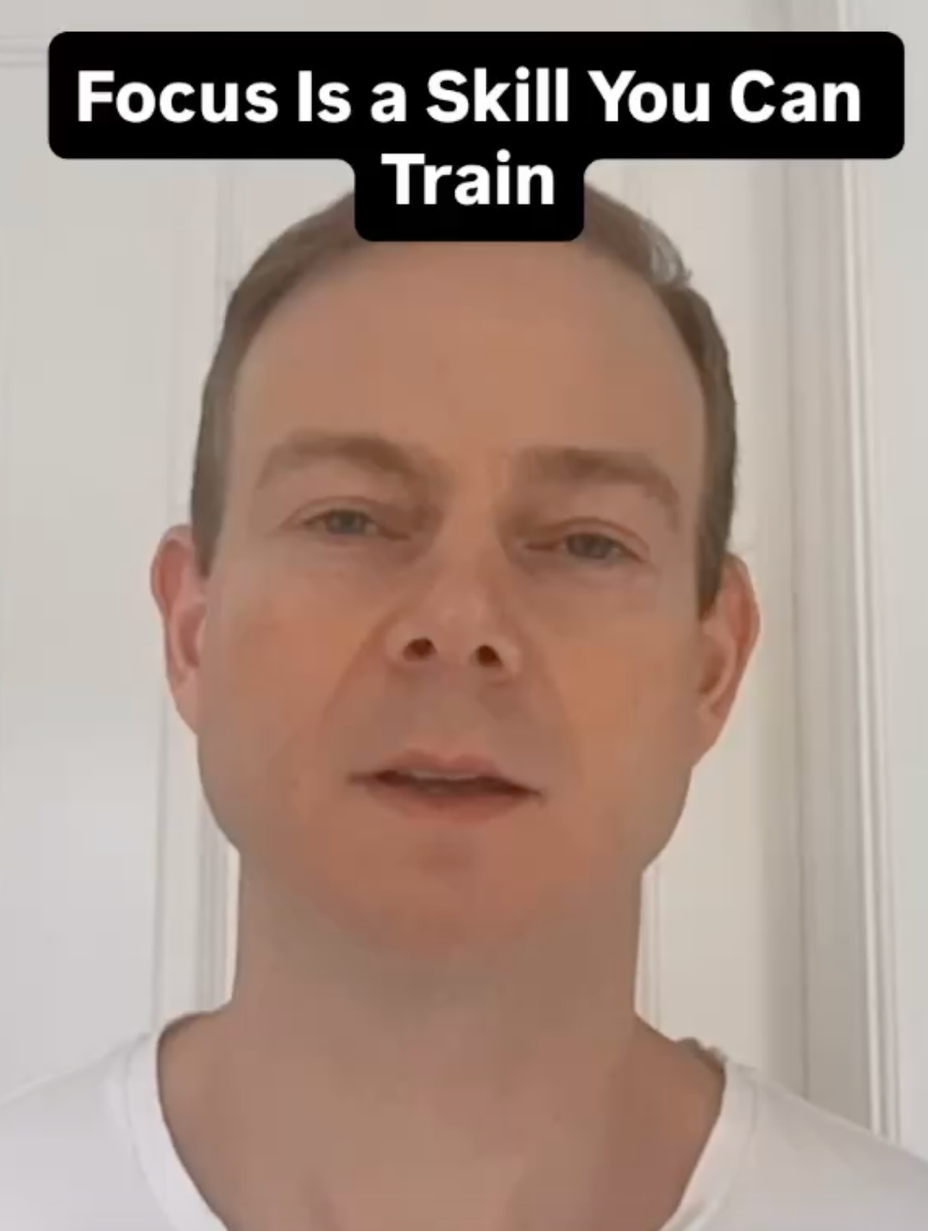
Train your focus

Have you ever sat in front of your computer, read the same sentence three times, and still couldn't focus?

It doesn't necessarily mean you've lost your ability to concentrate. More often, it means your brain needs a little help getting back into a rhythm.

In today's video, I share a simple technique you can use to rebuild your focus and get more out of your workday.

Question: What's the biggest thing that steals your attention during the workday?

Also, if you're going through a tough time right now, I want you to know that I post daily mental health videos about how to deal with painful thoughts. So if you or anyone you know is struggling and wants help, click on one of the links below or write me if you have any questions you want me to answer:

www.instagram.com/thomas_of_copenhagen

www.tiktok.com/@thomas_of_copenhagen

~ Thanks to all. Thanks for all. ~

#MentalHealth #MentalHealth #Depression #Anxiety #BipolarDisorder #BorderlinePersonalityDisorder #Addiction #dissociativedisorders #ObsessiveCompulsiveDisorder #ADHD #Fibromyalgia #EhlersDanlosSyndrome #PTSD #Cancer #RareDisease #Disability #Autism #Diabetes #EatingDisorders #ChronicIllness #ChronicPain #RheumatoidArthritis #Suicide #MightyTogether

Most common user reactions 7 reactions 4 comments