Eating Disorders

Create a new post for topic
Join the Conversation on
Eating Disorders
76.2K people
0 stories
15.4K posts
About Eating Disorders Show topic details
Explore Our Newsletters
What's New in Eating Disorders
All
Stories
Posts
Videos
Latest
Trending
Post

I Threw Away My Microwave

This is a story about eating disorders, Dissociative Identity Disorder, disordered eating, and how I fixed my damaged relationship with food. Nothing graphic, but (unlike my garlic) I do not mince my words.

***

I don’t have a microwave. Not since 2012.

When learning this, people usually respond with surprise, incredulity, and a touch of learned helplessness. They ask how I melt butter or re-warm leftovers; I tell them stovetop or oven, and, occasionally, toaster oven.

PeanutButter got rid of his when we moved in together, and neither of us miss it. In fact, when later encountering one in the office kitchen at work, I had no idea how to heat up my lunch.

"But, Motley, no microwave? Don’t you like convenience?"

Sure, I appreciate efficiency. But I had to fix my relationship with food, and that was the first step. A drastic step perhaps, but we’re no stranger to doing things differently. Or drastically. Or drastically differently.

Getting rid of my microwave got rid of instant gratification. Got rid of the ability to make an entire meal in less than five minutes. Made it harder to have seconds (or thirds, or fourths, etc.). It sutured the disconnect between my body, my mind, and my meals.

Let’s talk eating disorders, and disordered eating — both common in complex dissociative disorders and DID. Not gonna go deep into the subject as a whole, but I will give you a quick ’n’ dirty rundown of my own personal experience.

Disordered eating showed up young — some of it learned, conditioned, and engineered, and some of it my own attempts at control.

I was an average-sized child, but the collective snickers from my peers started in third grade. Pre-adolescence made me thick, toxic shame made me withdraw, and by my teens, I was easily overweight.

I started skipping meals at twelve. There was never enough time in the morning for breakfast anyway, and there was a legitimate fear of home-prepared lunches. The supper table was filled with mockery and bullying (and prods for seconds, thirds, fourths, etc.) so I’d hide in my room or stay out late enough to miss dinner.

The full-on eating disorder didn’t hit until my twenties, and I was bulimic for seven years.

It was something for which I never went into treatment, never disclosed to any therapist (though I did have it disclosed for me), and I never, ever shared it with anyone (except select online friends). This was my dirty, desirable secret, and I wasn’t going to let it get taken from me.

The fact that nobody knew became a source of pride and instigation, akin to my struggles with self-injury. And, looking back, that’s all this was, too.

I assumed I was in control, but different alters thought they were in control. We were waging an inner war with no idea how it started, with self-hating and punishment parts very prominent during this time.

Some alters would over-eat while some refused to take a bite, and different alters had different binging preferences and purging methods. Distant factions screamed at each other, each fighting to exert their will and desperation over the body. Any illusion of control quickly slipped away.

We knew something had to change.

Something drastic.

It helped to remove the convenience. Preheating trimmed away that pesky impulsivity. The more time, energy, and electricity spent preparing food, the less I would eat in both frequency and volume: a burrito is four minutes in the microwave, but forty in the oven.

I stopped buying instant, fast, and snack food, and I started teaching myself how to cook real meals.

Boiling noodles was easy. So was mashing potatoes, browning hamburger, bacon, and stew meat. I stocked my freezer with chicken breasts and bagged veggies and searched for copycat recipes of my guilty pleasures. And the first soup I made from scratch is still my current favorite (and since perfected).

Specific items aren’t allowed in our cupboards, such as high fructose corn syrup, and I am shocked at the difference that has done. I am no longer addicted to my food, and it’s really hard to explain (but you know I’ll try some day). I recognize artificiality by its flavor, and prior comfort foods are sadly but gladly verboten.

I never thought I’d be the person who reads every ingredient on the box. Never thought I’d turn up my nose at sweets or snacks. Never thought I’d be someone who chooses bowls of salad, grains, and seeds. Never thought I’d be someone who enjoys and is satisfied by it.

Every change I made stopped being about weight or control and instead became about health.

I wasn’t dieting; I was making permanent lifestyle changes. Wasn’t trying to slim down, but aiming to be healthy, fit, and strong. I wanted to be the best version of myself, one that didn’t depend on numbers or pant size, and I wanted it naturally.

I found it in intuitive eating, moderation, and balance. In paying attention to cravings, and giving my system what it asks for, physically and emotionally. Restricting, binging, and purging are habits of the past.

I eat better than I ever have in my entire life. What I eat has expanded exponentially, and I have made massive strides in how I view, prepare, and understand food. I don’t think I could ever go back to how it was, and a stroll down most grocery store aisles only affirms it.

Throwing away my microwave has increased my culinary skills, connected me with my body, and deepened my link to the planet and its offered sustenance. I’m healthy, strong, and (mostly) fit. The kitchen is a major stage for system cooperation and communication, and PeanutButter and I have a good time experimenting with dishes together.

We’re still uncovering the catalysts to our destructive eating, but I can confidently say we’ve been in the clear from our eating disorder for a decade now.

And that we’ll definitely be microwave-free for the rest of our life.

#EatingDisorders #DissociativeIdentityDisorder #MentalHealth

(edited)
Most common user reactions 3 reactions
Post
See full photo

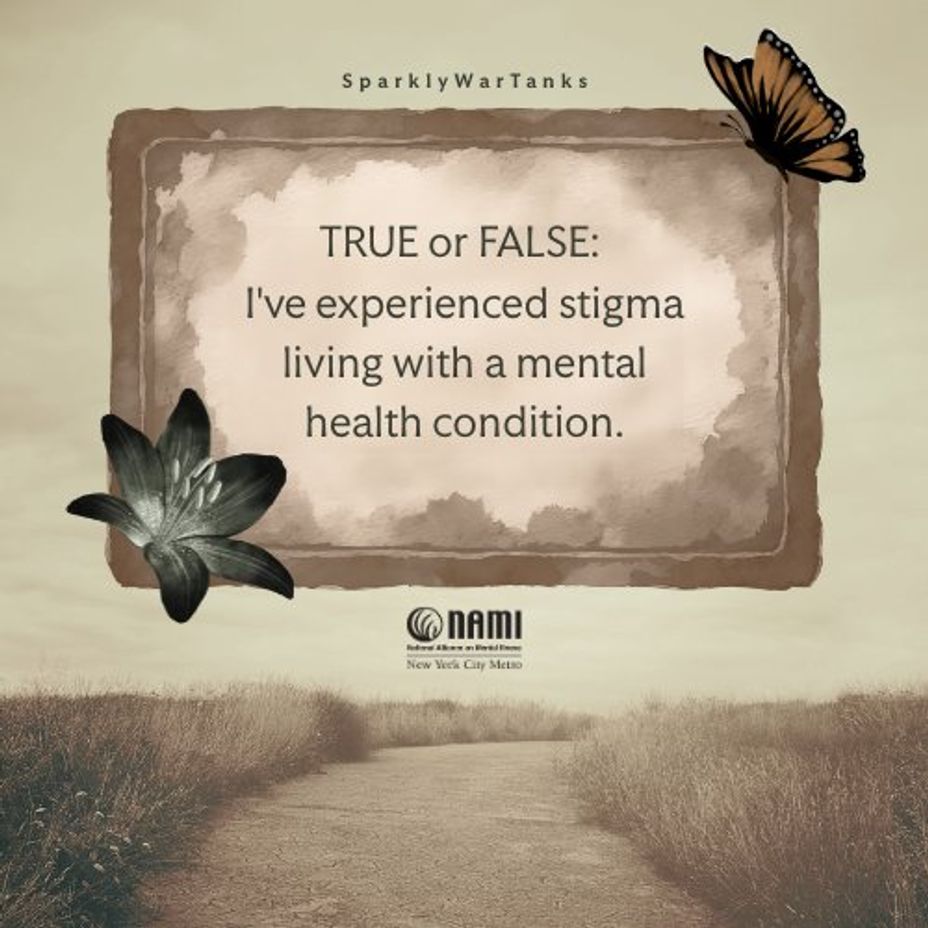
What has your health taught you about love?

Every year around Valentine’s Day, Mighty staffer @sparklywartanks reflects on what love really means to her. Having experienced a lot of rejection in the past, she’s often met with heartbreak, grief, and sadness around this time.

This year, though, she wants to reflect on how much effort she’s put into developing a better understanding of love—not only in the romantic sense, but as an energy and a practice. Her relationship with herself, as a person in recovery, hasn’t always been bright. But she has created more light by learning to love herself unconditionally, even through the darkest moments.

She’ll never give up on herself—and love has taught her that.

What about you? What has your health taught you about love?

#MightyMinute #CheckInWithMe #ChronicPain #ChronicIllness #Disability #RareDisease #MentalHealth #Anxiety #Autism #Parenting #PTSD #BorderlinePersonalityDisorder #BipolarDisorder #ObsessiveCompulsiveDisorder #EatingDisorders #Depression #Fibromyalgia #Lupus #MultipleSclerosis #Migraine #Spoonie

Most common user reactions 21 reactions 12 comments
Post
See full photo

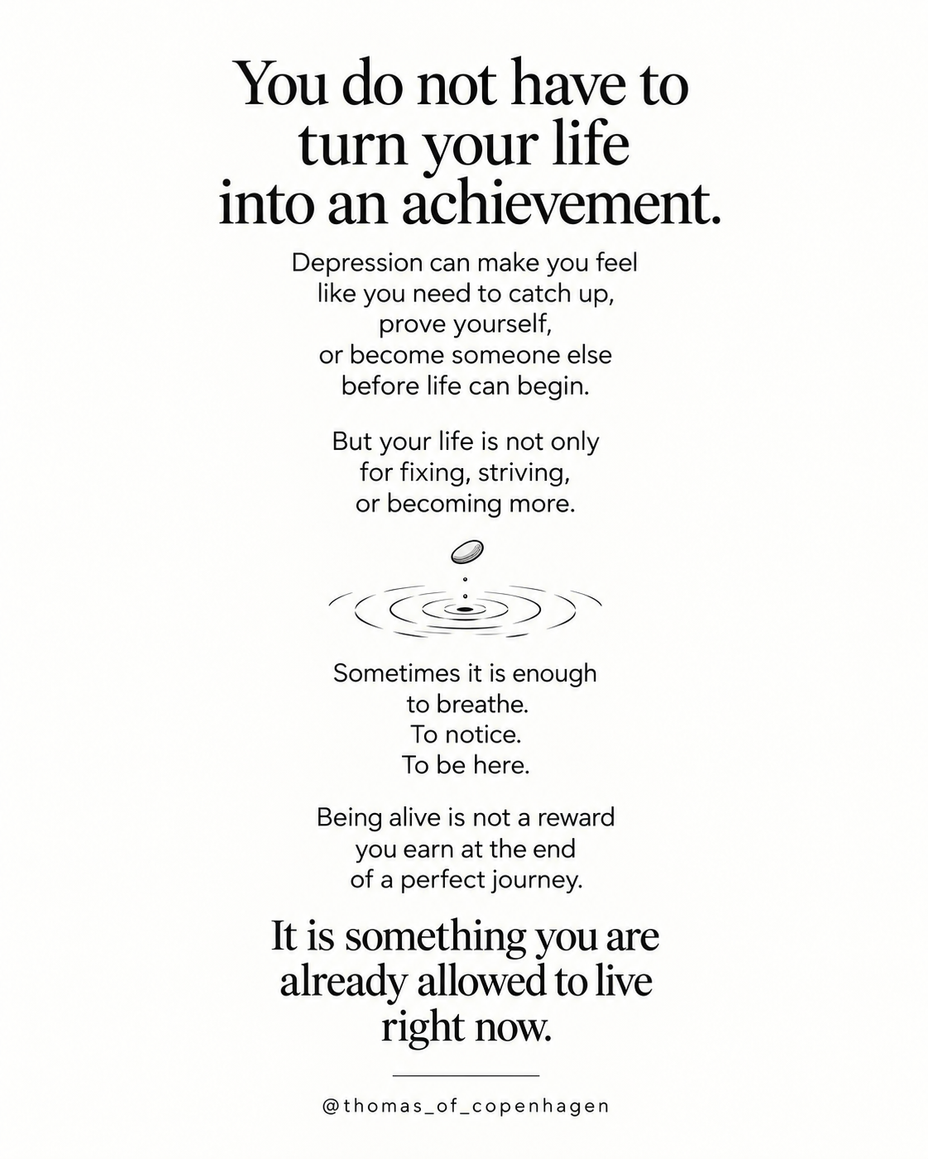
What’s your relationship with productivity?

I have a challenging relationship with productivity, as I have for most of my life. Although I’m more aware now and gentler and more compassionate with my expectations, it still feels like an uphill battle to truly understand that my worth isn’t tied to how much I produce. Cognitively, I know this—but my nervous system still relies on doing to feel adequate.

I often feel the need to show or prove to others that I’m worthy of time, attention, and affection. When I’m not doing well, I find myself unconsciously doing even more than usual, trying to bridge the disconnect I sometimes feel.

Can anyone relate? What’s your relationship with productivity? How does it impact you and your expectations of yourself?

📒 I’d love to hear your insights and experiences.

#BipolarDepression #BipolarDisorder #PTSD #ComplexPosttraumaticStressDisorder #Schizophrenia #ADHD #Parenting #ChronicIllness #SchizoaffectiveDisorder #BorderlinePersonalityDisorder #Anxiety #ObsessiveCompulsiveDisorder #Depression #MentalHealth #Selfcare #EatingDisorders #CheckInWithMe #CheerMeOn

Most common user reactionsMost common user reactions 5 reactions 6 comments
Post
See full photo

What’s a fear you want to overcome?

Fears can develop or resurface for many different reasons and at various points in our lives. Identifying, acknowledging, processing, and eventually overcoming them can take time, patience, self-awareness, and practice. That doesn’t mean the fear won’t come up again—but responding to it with more confidence, care, and compassion when it does is also part of overcoming it.

What’s a fear you want to overcome—or are currently working through? What would overcoming that fear look like for you?

#MightyMinute #CheckInWithMe #ChronicPain #ChronicIllness #Disability #RareDisease #MentalHealth #Anxiety #Autism #Parenting #PTSD #BorderlinePersonalityDisorder #BipolarDisorder #ObsessiveCompulsiveDisorder #EatingDisorders #Depression #Fibromyalgia #Lupus #MultipleSclerosis #Migraine #Spoonie

Most common user reactionsMost common user reactions 8 reactions 4 comments
Post
See full photo

People Think I Just Moved Back. That’s Not What Happened. #PTSD #PostTraumaticStressDisorder

Content warning: kidnapping, sexual violence, drugs, cartel violence, suicidal ideation, trauma. No graphic detail.

I still have nightmares about Colombia and the Colombian cartel almost every night.
People think I just moved back, but that’s not what happened.

What happened lasted longer than people realize.

It started with about two weeks of heavy drug use by my boyfriend. That’s when I realized this wasn’t just partying — it was addiction. Then he met cartel members. Then plans started forming that I didn’t fully understand at first, but I knew were dangerous.

They figured out where we lived.

The first kidnapping didn’t just “happen.”
He was taken. He was beaten. He was sexually assaulted. He was forced to take drugs. He was robbed. He ran for his life and made it back.

We went to the police. They did nothing.

After all of that, he still refused to leave.

Two days later, I fled the country. I didn’t choose to leave — I had no choice. I fled for my life. If they had taken me, I wouldn’t have been held for ransom. I would have disappeared. That’s how they operate.

I had to leave my dog behind in Colombia, in boarding. She was still a puppy. I was gone for a month and a half before I could get her back. I need people to know this part, because it felt impossible — but I did get her out. That part still wrecks me.

One day after I left, they saw him outside our apartment. They picked him up again.
The second kidnapping.

I found out while I was on my way back to the United States.

There was a ransom. Sixteen thousand dollars. A number that doesn’t sound real until it is.

Drugs were still involved. Fear was constant. My body felt nauseatingly dizzy, dissociated, unreal — like I was watching something that couldn’t possibly be my life.

He told me he wanted to die.

I was in another country, on the phone, trying to keep him alive. The hardest part of that wasn’t exhaustion — it was the fear and the responsibility. Knowing that if I said the wrong thing, or didn’t say enough, I could lose him. I had to convince him to leave. To come back. To survive.

We stayed together for six more months after that.

People don’t understand that part. They think trauma has an ending. It didn’t. It followed us home. PTSD stacked onto BPD. Abandonment wounds blew open. My eating disorder came back as my body tried to regain control. My nervous system never stood down.

And then, after all of it, we broke up.

That part still feels like shock, betrayal, and emptiness all at once. I don’t know how you survive something that extreme together and still lose each other afterward.

I’m sharing this because I need somewhere this can exist. I need to talk about it. I need to hear how other people would feel about this. I need to know I’m not crazy for still having nightmares, for still waking up in a cold sweat, for still dreaming about the cartel every night.

This didn’t end when I left Colombia.
It didn’t end when we came back.
And it didn’t end when the relationship did.

Most common user reactionsMost common user reactionsMost common user reactions 8 reactions 1 comment