Childhood Cancers

Create a new post for topic
Join the Conversation on
Childhood Cancers
1.4K people
0 stories
431 posts
About Childhood Cancers Show topic details
Explore Our Newsletters
What's New in Childhood Cancers
All
Stories
Posts
Videos
Latest
Trending
Post
See full photo

Online Cancer Second Opinion USA – Benefits, Process & Top Cancer Centers

A cancer diagnosis can be overwhelming, leaving patients and their families with many questions about the best treatment options. Fortunately, getting an online cancer second opinion in the USA has become easier than ever. Many leading American cancer centers now offer virtual second opinion services, allowing patients from across the United States and around the world to receive expert medical advice without traveling.

Whether you've been recently diagnosed, want to confirm your treatment plan, or are exploring advanced therapies, an online second opinion can provide clarity and confidence in your healthcare decisions.

What Is an Online Cancer Second Opinion?

An online cancer second opinion is a professional review of your diagnosis, pathology reports, medical history, imaging scans, and treatment plan by an experienced cancer specialist. Instead of visiting the hospital in person, patients securely upload their medical records and receive recommendations through a written report, video consultation, or telemedicine appointment.

Many U.S. cancer centers have developed virtual second opinion programs that connect patients with nationally recognized oncologists. These programs review your records and provide expert guidance without requiring immediate travel.

Why Should You Get a Second Opinion?

Getting a second opinion does not mean you distrust your current doctor. In fact, many physicians encourage it, especially for complex or rare cancers. Organizations such as the National Cancer Institute and the American Cancer Society note that second opinions can help patients better understand their diagnosis and treatment options.

Benefits include:

Confirming the accuracy of your diagnosis

Reviewing pathology and imaging results

Exploring additional treatment options

Learning about targeted therapies and immunotherapy

Finding clinical trial opportunities

Gaining confidence before starting treatment

Who Should Consider an Online Cancer Second Opinion?

An online second opinion may be beneficial if you:

Have been newly diagnosed with cancer

Have a rare or complex cancer type

Are considering major surgery

Want to compare treatment options

Have experienced cancer recurrence

Need access to specialists unavailable in your area

Live outside the United States but want expert U.S. medical advice

How Does the Process Work?

The process is generally simple and patient-friendly.

Step 1: Submit Medical Records

Patients upload documents such as:

Pathology reports

CT, MRI, or PET scans

Blood test results

Previous treatment records

Doctor's notes

Step 2: Specialist Review

Your case is assigned to an oncology specialist with expertise in your specific type of cancer.

Step 3: Receive Recommendations

Depending on the program, you may receive:

A detailed written medical report

A virtual consultation

Treatment recommendations

Answers to your questions

Some programs also coordinate follow-up discussions with the reviewing physician.

Leading USA Hospitals Offering Online Cancer Second Opinions

Several internationally recognized cancer centers provide virtual second opinion services, including:

Cleveland Clinic

Cedars-Sinai

Dana-Farber Cancer Institute

Mayo Clinic

Memorial Sloan Kettering Cancer Center

MD Anderson Cancer Center

Availability may vary depending on your location and licensing requirements.

What Types of Cancer Can Be Reviewed?

Online second opinions are available for many cancers, including:

Breast cancer

Lung cancer

Prostate cancer

Colon cancer

Liver cancer

Pancreatic cancer

Brain tumors

Blood cancers

Ovarian cancer

Kidney cancer

Skin cancer (melanoma)

Pediatric cancers

How Much Does an Online Cancer Second Opinion Cost?

The cost varies depending on the hospital and the type of consultation.

Factors affecting pricing include:

Written review versus live consultation

Complexity of the medical case

Additional pathology review

Imaging interpretation

Some insurance plans may cover second opinions, while others may require out-of-pocket payment. It's best to check with both the healthcare provider and your insurer before scheduling.

Can International Patients Use USA Online Second Opinion Services?

Yes. Many U.S. hospitals offer online cancer second opinions to international patients. These programs allow patients to submit digital medical records for expert review before deciding whether travel to the United States is necessary. Service availability depends on local regulations and the hospital's international patient policies.

Questions to Ask During Your Second Opinion

Prepare a list of questions such as:

Is my diagnosis correct?

Do you agree with my cancer stage?

What treatment would you recommend?

Are there newer treatment options?

Am I eligible for clinical trials?

What are the possible side effects?

What outcomes can I realistically expect?

These questions can help you make informed decisions about your care.

Final Thoughts

Choosing the right cancer treatment is one of the most important healthcare decisions you will ever make. An online cancer second opinion in the USA gives patients access to experienced oncology specialists without the need for immediate travel. Whether the second opinion confirms your current treatment plan or introduces additional options, it can provide reassurance, improve understanding, and support more informed decision-making.

If you or a loved one has received a cancer diagnosis, seeking an expert online second opinion from a leading U.S. cancer center may be a valuable step toward personalized, evidence-based care.

Post

Living with Survivor's Guilt

Living with survivor’s guilt is a quiet, complicated weight that might feel impossible to describe to someone. It’s the feeling of waiting in a clinic where chairs are empty—chairs that once held people you cared about, people who fought as hard as you did. When you survive cancer while others don’t, the relief of being alive often tangles with a question that never quite resolves: Why me? Or maybe the sharper version: Why them, and not me?

The truth is that cancer doesn’t offer satisfying answers. It doesn’t move according to fairness or logic. It doesn’t choose the most deserving to live or the least deserving to die. And that randomness is one of the hardest realities to accept. Survivor’s guilt often grows from the human instinct to search for meaning in everything. If something terrible happened, we want a reason—something that explains the imbalance, something that makes survival feel earned somehow.

But survival isn’t a prize for doing everything right. It isn’t proof that you were stronger, braver, or more worthy. And the people who died didn’t fail their fight. Illness simply doesn’t follow the rules we wish it did.

For many survivors, guilt shows up in ordinary moments. A birthday arrives and you think of someone who didn’t get another one. A clear blood work or scan comes back and instead of pure relief there’s a flash of someone else sitting in a hospital room hearing vastly different news. Even joy can feel complicated—like happiness itself might somehow betray those who didn’t get the same chance.

Learning to live with that tension takes time. One of the gentlest shifts a survivor can make is moving away from the question “Why me?” and toward “What now?” The first question demands an answer that may not exist. The second opens a path forward. Towards healing.

“What now?” might mean carrying forward the memory of those who didn’t survive. It might mean speaking their names, telling their stories, or simply living in a way that honors the time you’ve been given. Not because you owe the world a perfect life in exchange for surviving, but because your life—ordinary, imperfect, continuing—is itself a form of remembrance. Personally, I have found myself paying it forward to organizations that helped in my journey, and raising awareness for childhood cancer (for instance, my memoir gives back to the fight against childhood cancer and aims to give the next survivors help in finding their voice).

Being okay with not having an answer doesn’t mean the questions disappear. They may surface again on anniversaries, in hospital waiting rooms, or in quiet moments when you remember someone’s laugh. But over time, the question can soften. Instead of demanding justice from randomness, you can allow yourself to hold both truths at once: grief for those who are gone and gratitude for being here.

Survivor’s guilt often comes from love. We feel it because the people we lost mattered deeply. And that love doesn’t vanish when the guilt fades; it simply changes shape. It becomes memory, influence, and sometimes motivation to care for others who are walking similar paths.

In the end, there may never be a satisfying answer to why. The universe rarely explains itself. But survival doesn’t need to be justified to be meaningful.

Sometimes the most honest resolution is this: you lived, they didn’t, and that reality hurts. It sucks. Yet your continued life is not a mistake. It’s a continuation of a story that still has chapters left to write.

#SurvivorsGuilt #MentalHealth

Most common user reactions 4 reactions 1 comment
Post
See full photo

Childhood cancer awareness

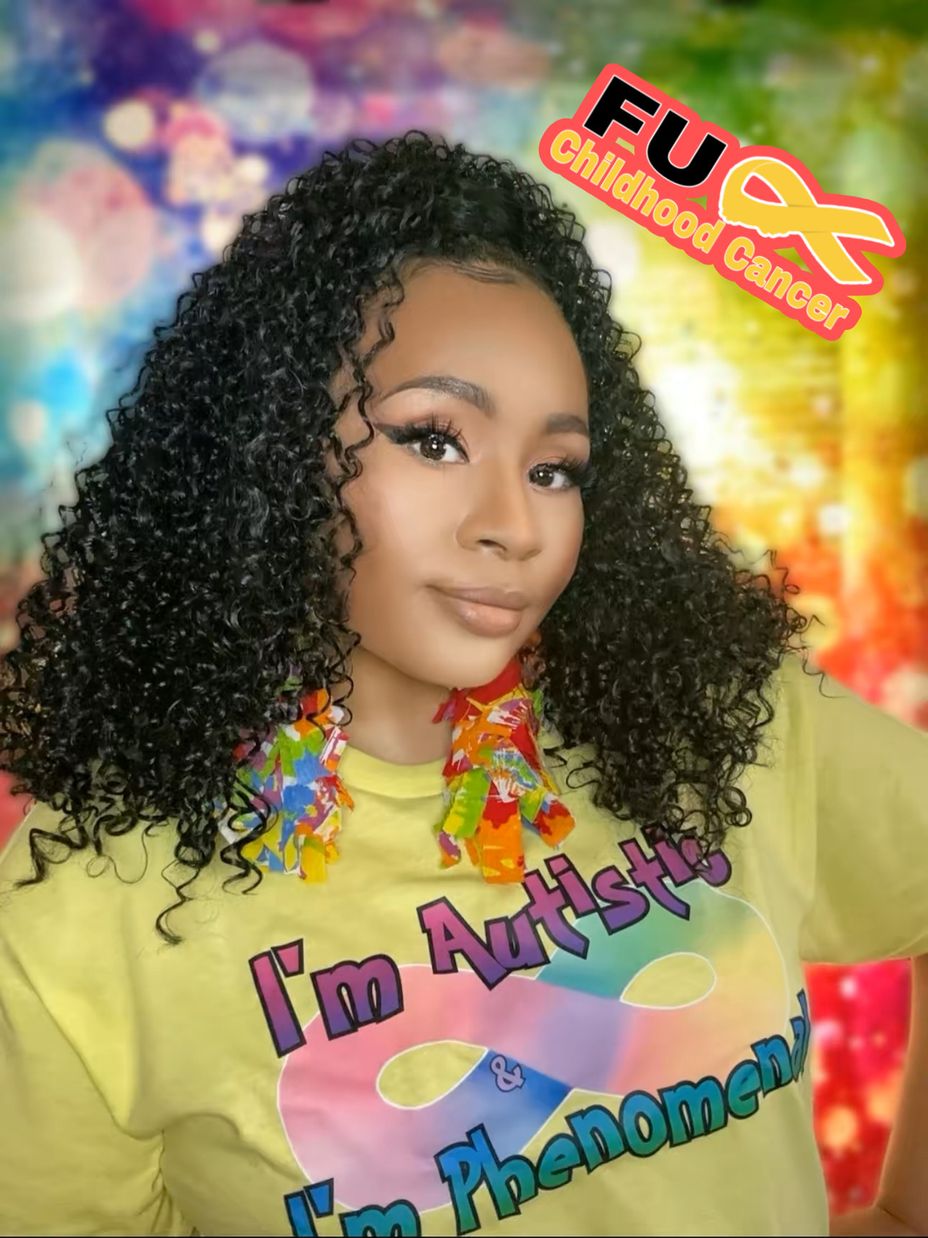
Wearing yellow this September to show love and support for Childhood Cancer Awareness. 💛✨ Every child’s fight matters let’s spread hope, strength, and awareness together #ChildhoodCancer

Most common user reactions 2 reactions
Post
See full photo

Childhood cancer awareness

Wearing yellow this September to show love and support for Childhood Cancer Awareness. 💛✨ Every child’s fight matters let’s spread hope, strength, and awareness together #ChildhoodCancer

Most common user reactions 2 reactions
Post

Question…

After doing some reading and exhausting myself to the point of bed rot, what do I do with the information I have that catholic institutions were required to follow Ethical Religious Directives and violated several while violating me, but also not because I guess the potential of “conception” is more important?

I’d talk to an attorney but I feel like I did most of the work already, I’d just be getting someone to argue for me. Idk if I can handle this though, I feel like I need to check out.

#MentalHealth #PTSD #ChildhoodCancer #marymounthospital #clevelandclinichospitals #iwanttocry

Most common user reactionsMost common user reactions 6 reactions 3 comments
Post

Question…

After doing some reading and exhausting myself to the point of bed rot, what do I do with the information I have that catholic institutions were required to follow Ethical Religious Directives and violated several while violating me, but also not because I guess the potential of “conception” is more important?

I’d talk to an attorney but I feel like I did most of the work already, I’d just be getting someone to argue for me. Idk if I can handle this though, I feel like I need to check out.

#MentalHealth #PTSD #ChildhoodCancer #marymounthospital #clevelandclinichospitals #iwanttocry

Most common user reactionsMost common user reactions 6 reactions 3 comments
Post

I'm new here!

Hi, my name is behindthecurtain. I'm looking for a community that understands, or someone who needs to be understood. Someone who might feel the same way as me and doesn't know how to put it into words. I'm struggling myself and I know that it's nice to have someone, to know that you're not alone.

#MightyTogether #Anxiety #Depression #BipolarDisorder #ADHD #PTSD #OCD #EatingDisorder #ChildhoodCancer

Most common user reactionsMost common user reactions 36 reactions 11 comments
Post

I'm new here!

Hi, my name is behindthecurtain. I'm looking for a community that understands, or someone who needs to be understood. Someone who might feel the same way as me and doesn't know how to put it into words. I'm struggling myself and I know that it's nice to have someone, to know that you're not alone.

#MightyTogether #Anxiety #Depression #BipolarDisorder #ADHD #PTSD #OCD #EatingDisorder #ChildhoodCancer

Most common user reactionsMost common user reactions 36 reactions 11 comments