Eating Disorders

Create a new post for topic
Join the Conversation on
Eating Disorders
76.5K people
0 stories
15.7K posts
About Eating Disorders Show topic details
Explore Our Newsletters
What's New in Eating Disorders
All
Stories
Posts
Videos
Latest
Trending
Post

Eating Disorder Recovery Tools Kept Asking Me to Count. I Wanted a Space That Just Asked How I Was Doing.

The first thing I noticed about most eating disorder recovery apps was how clinical they felt. Sterile screens, charts, numbers everywhere — they had the warmth of a waiting room. I'd open one to actually support my recovery and somehow close it feeling worse: smaller, more like a patient than a person. Honestly? Some of them were just kind of depressing to look at.

My own recovery hasn't been a straight line. I was diagnosed with anorexia, and over time it shifted into bulimia — the way these illnesses so often move and change shape. For a long stretch, recovery felt less like healing and more like being managed: appointments, plans, being measured and monitored. What I kept needing, and almost never found, was something that met me like a person having a hard time — not a case to be tracked.

And I understand why these tools are the way they are — a lot of them are built by clinicians, for good reasons. But recovery doesn't only happen in clinical language. It happens in the messy, human, late-night moments, and those moments don't need another chart. They need something gentle.

So I built Fern. The whole idea was to make a recovery space that feels like a deep breath instead of a doctor's office. No numbers to count, nothing to measure or compare — just soft places to check in with how you're feeling around food, ride out an urge until it passes, and reach for a coping tool when things get heavy. I wanted it to feel like a friend sitting beside you, not a system tracking you.

I'm honest about what it isn't: Fern isn't treatment, and it doesn't replace a therapist, a dietitian, or the people who love you. It's just meant to be a kind companion for the in-between moments.

If a recovery app has ever made you feel like a problem to be managed instead of a person worth being gentle with — I felt that too. That feeling is the whole reason Fern exists. You don't have to earn softness. A hard day isn't a failure; it's just a day. And the tools you lean on should feel like they're on your side.

Most common user reactions 1 reaction
Post
See full photo

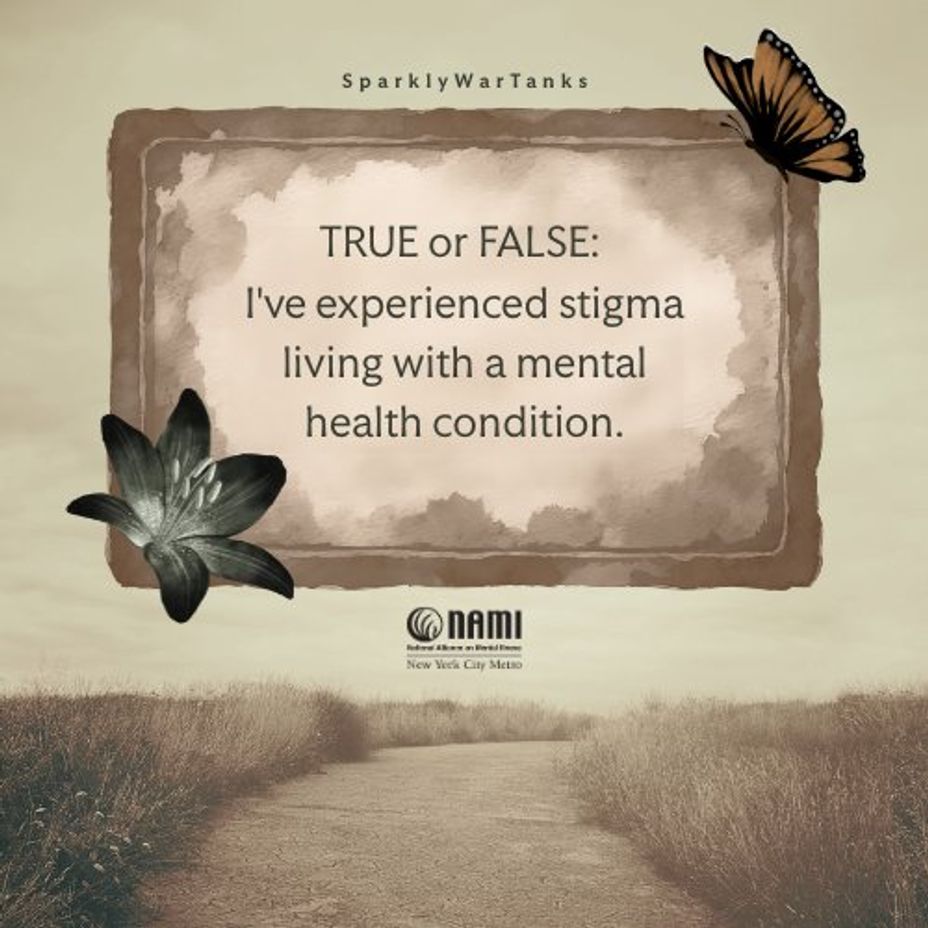
Who in your life do you feel you can have meaningful conversations about mental health with?

As an advocate for openly discussing mental health, I feel comfortable sharing honestly about my symptoms and overall experiences. Through personal storytelling and sharing my perspective, I've found it easier to navigate conversations about mental health.

I'm grateful for the spaces and people I've connected with through The Mighty and NAMI-NYC, who have given me opportunities to share openly and confidentially. Those experiences have helped me gain clarity about what recovery, support, and community look like for me.

Who in your life do you feel comfortable talking to about your mental health—or mental health in general? What is it about that person or space that makes you feel safe enough to share?

#BipolarDepression #BipolarDisorder #PTSD #ComplexPosttraumaticStressDisorder #Schizophrenia #ADHD #Parenting #ChronicIllness #SchizoaffectiveDisorder #BorderlinePersonalityDisorder #Anxiety #ObsessiveCompulsiveDisorder #Depression #MentalHealth #Selfcare #EatingDisorders #CheckInWithMe #CheerMeOn

Most common user reactionsMost common user reactions 13 reactions 5 comments
Post
See full photo

One step at a time.

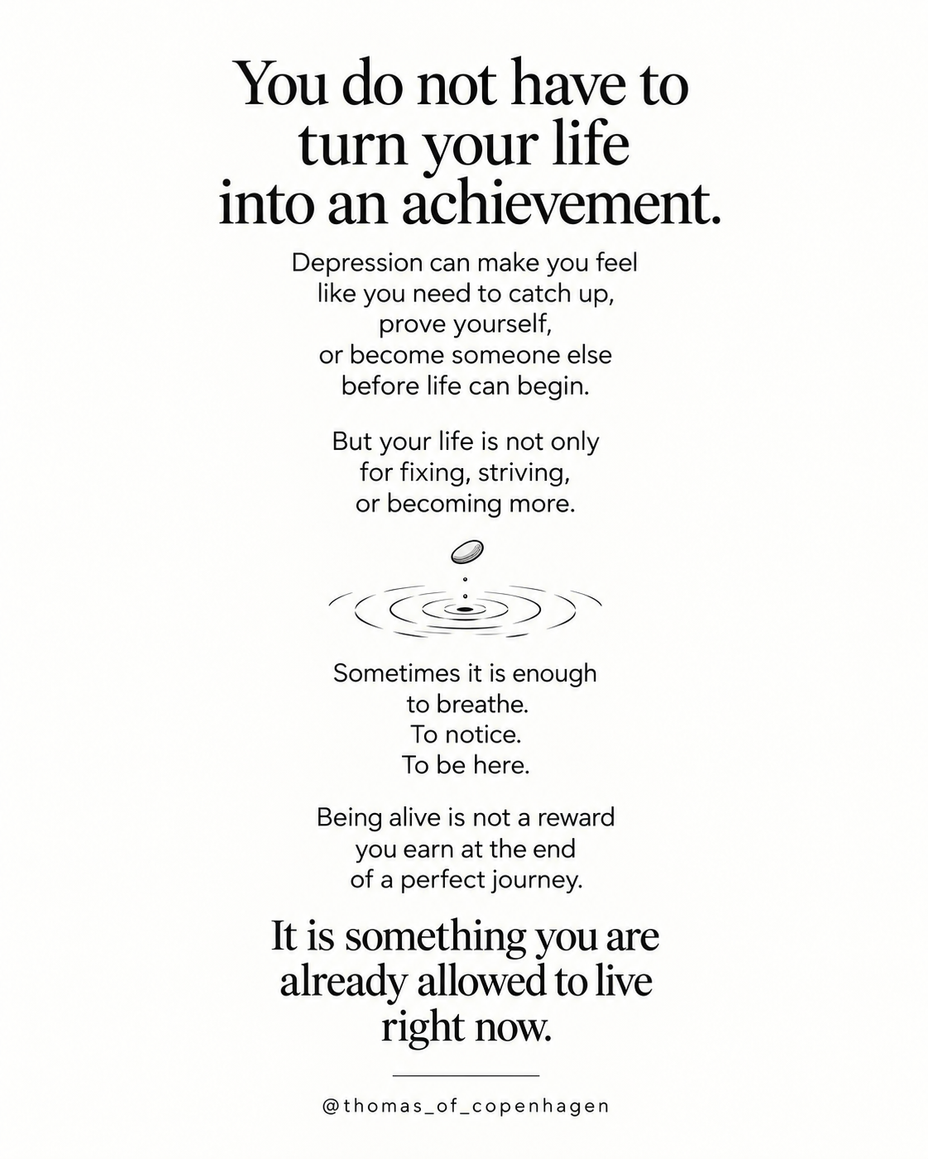
One of the things depression does best is convince us that we need to solve everything at once.

We think about next week.

Next month.

Next year.

All the things that could go wrong.

All the things we haven't accomplished yet.

All the ways our life isn't where we want it to be.

And eventually the weight of it all becomes overwhelming.

But life is rarely lived all at once.

It's lived one day at a time.

One conversation at a time.

One decision at a time.

One step at a time.

You don't need to figure out the rest of your life today.

You just need to make it through today.

And sometimes that's more than enough.

What's one small thing you're grateful for today?

Also, if you're going through a tough time right now, I want you to know that I post daily mental health videos about how to deal with painful thoughts. So if you or anyone you know is struggling and wants help, click on one of the links below or write me if you have any questions you want me to answer:

www.instagram.com/thomas_of_copenhagen

www.tiktok.com/@thomas_of_copenhagen

~ Thanks to all. Thanks for all. ~

#MentalHealth #MentalHealth #Depression #Anxiety #BipolarDisorder #BorderlinePersonalityDisorder #Addiction #dissociativedisorders #ObsessiveCompulsiveDisorder #ADHD #Fibromyalgia #EhlersDanlosSyndrome #PTSD #Cancer #RareDisease #Disability #Autism #Diabetes #EatingDisorders #ChronicIllness #ChronicPain #RheumatoidArthritis #Suicide #MightyTogether

Most common user reactions 8 reactions 3 comments
Post
See full photo

YOU DON’T NEED TO KNOW HOW

One of the biggest lies depression tells us is that we need to have everything figured out before we take the first step.

We think we need a perfect plan.

We think we need certainty

We think we need to know exactly how we're going to get from where we are today to where we want to be.

But that's not how growth works.

Most people who accomplish incredible things didn't start because they knew exactly what they were doing.

They started because they were willing to take one small step despite not knowing.

One phone call.

One workout.

One application.

One conversation.

One day of not giving up.

You don't have to know how you're going to get through the next year.

You don't even have to know how you're going to get through the next month.

Sometimes all you need to do is take the next step.

The path often becomes visible after you start walking it.

What's something in your life you've been waiting to start?

Also, if you're going through a tough time right now, I want you to know that I post daily mental health videos about how to deal with painful thoughts. So if you or anyone you know is struggling and wants help, click on one of the links below or write me if you have any questions you want me to answer:

www.instagram.com/thomas_of_copenhagen

www.tiktok.com/@thomas_of_copenhagen

~ Thanks to all. Thanks for all. ~

#MentalHealth #MentalHealth #Depression #Anxiety #BipolarDisorder #BorderlinePersonalityDisorder #Addiction #dissociativedisorders #ObsessiveCompulsiveDisorder #ADHD #Fibromyalgia #EhlersDanlosSyndrome #PTSD #Cancer #RareDisease #Disability #Autism #Diabetes #EatingDisorders #ChronicIllness #ChronicPain #RheumatoidArthritis #Suicide #MightyTogether

Most common user reactions 10 reactions 6 comments
Post

30 Days of DID: Day Two

QUESTION TWO – How do you experience #DissociativeIdentityDisorder ? Do you find your symptoms manifest more physically, emotionally, mentally, etc?

If you asked me fifteen years ago, this answer would have been very, very different.

Before, I felt crazy and out of control. There were too many me’s, and I was never the right one at the right time. My mind either too loud to hear myself think, or a howling, jumbled numbness.

Before, I heard voices. I saw silhouettes. Walls changed colors and the carpets breathed. I became immobilized with fear for no reason, paranoid and convinced I was going to die. I couldn’t sleep; I slept too much. I’d feel things, taste things, smell things; I’d choke on things that weren’t there.

Before, I struggled with eating disorders, impulsivity, and self harm. My relationships were unstable at best and toxic at worst. I would forget my schedule, my job, my address, my friends, my style, my self. I feared myself. I feared losing control. My goals changed. My name changed. The Universe changed. Nothing worked. Nothing fit. I didn’t fit.

Now, our daily memory is the strongest its ever been, and we’re no longer stuck in a permanent fog. Communication is easy; we can switch, compartmentalize, and contain at will, and can still function through what we cannot fully put away in the moment. Even our chronic anxiety seems to be on its way out the door.

Now, most of our distressing symptoms are gone. Flashbacks and dissociative phenomena don’t freak us out anymore because we understand what is happening and how to help.

Now, I’d say, most everything manifests somatically, in the body, or emotionally via passive influence. Occasionally mentally, but these days, unless faced with unavoidable life stress, unexpected triggers, or a flood of memory processing, we’re hardly symptomatic at all.

Except our handwriting. That’s still the worst.

QUESTION TWO-and-a-HALF – Who knows about your system? Who do you want to know? What [does it feel] like coming out as multiple?

Lighthouse is the one person who still works with and talks to Motley members directly on a regular basis. Nowadays, our DID only matters while on the therapist’s couch.

PeanutButter knows because we married him. It would have been impossible to have a serious relationship where our spouse didn’t know.

We used to want friends to know about us, but not anymore. Before I wised up and stopped telling people, reactions varied. From those in my personal life, I got a lot of “That explains so much!” and “I don’t doubt it one bit.” Unfortunately, it rarely ended well.

I think I’d be okay, maybe, with certain, select people knowing about our DID diagnosis – but not the details of the Motley. I’d be okay discussing DID as a concept using our experiences as examples, but nobody needs to know our inner names or how we function or who is around when.

Outsiders knowing that information feels violating, and it’s not always healthy for the other person(s) either. Plus, you can’t control how people react to it or any further spreading of it, so being choosy with disclosure is imperative.

Our blog is public, of course, but carefully and deliberately anonymous. Nobody in my real life needs to know, and I don’t need them to know. I am so much more than my DID, and while I identify as a multiple, being a multiple isn’t my identity.

***

30 Days of DID survey credits go to tumblr user "shihkas", and wordpress blogger "catalyticconvergence". Links can be found in the original post ("Snapshots into DID") on our website.

(edited)
Most common user reactions 2 reactions