Latest


Digital Underwriting and Electronic Health Records Reshaping the Health Insurance Industry
The global health insurance market encompasses financial protection solutions designed to cover medical expenses associated with illnesses, injuries, hospitalization, and other healthcare requirements. These solutions include individual health plans, family insurance policies, employer-sponsored coverage, and government-funded insurance schemes. Health insurance helps individuals and families access medical services, reduce out-of-pocket expenditure, and manage financial risks associated with healthcare costs.
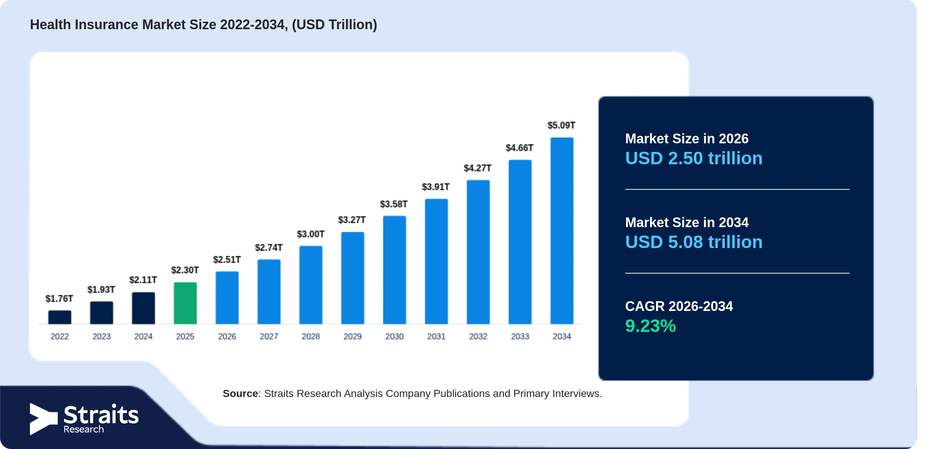
The global health insurance market was valued at USD 2.0.0.3 trillion in 2025 and is projected to grow from USD 2.0.0.51 trillion in 2026 to USD 5.09 trillion by 2034, registering a CAGR of 9.23% during 2026–2034. North America dominated the market with a 38.5% share in 2025, while Asia Pacific is expected to register the fastest regional CAGR of 9.6%.
For detailed market insights, growth forecasts, and competitive analysis, visit:https://straitsresearch.com/report/health-insurance-market
Health Insurance Market Drivers
High Healthcare Treatment Costs and Financial Protection Requirements Drive Market
High hospitalization expenses, surgical charges, and diagnostic costs expose individuals and families to substantial financial burdens during medical emergencies. Health insurance providers offer coverage plans that reduce out-of-pocket expenditure for eligible medical treatments and hospitalization services. Financial protection requirements encourage policy enrollment and create recurring premium revenue opportunities for insurers.
Chronic Disease Prevalence and Long-Term Medical Coverage Needs
Patients with chronic conditions such as diabetes, hypertension, and cardiovascular diseases require prolonged medical care, regular consultations, and continuous medication. Insurers offer policies incorporating chronic disease coverage, outpatient benefits, and hospitalization protection, subject to applicable terms and exclusions. Sustained medical care requirements encourage policy renewals and support long-term revenue generation.
Employer-Sponsored Health Insurance and Corporate Employee Benefits
Organizations incorporate health insurance into employee benefit packages to support workforce well-being and talent retention. Group insurance policies allow businesses to provide medical coverage through structured premium arrangements and customized healthcare benefits. Corporate insurance programs generate bulk policy enrollment and recurring commercial opportunities for insurance providers.
Health Insurance Market Trends
Integration of Electronic Health Records into Digital Insurance Underwriting Workflows
The health insurance market analysis shows that requirements for accurate risk assessment and faster policy processing encourage insurers to integrate electronic health records into digital underwriting workflows. Secure data exchange platforms enable authorized access to medical histories, diagnostic findings, and treatment records under applicable privacy regulations. For instance, India's Ayushman Bharat Digital Mission provides a consent-based health information exchange framework that can support streamlined insurance-related processes.
Adoption of Outcome-Based Insurance Coverage Models for High-Cost Specialty Therapies
Financial uncertainties associated with expensive gene therapies, biologics, and specialized cancer treatments encourage insurers to adopt outcome-based coverage models. Innovative reimbursement agreements link payments to predefined clinical outcomes and therapeutic effectiveness, allowing insurers and pharmaceutical manufacturers to share financial risks. Performance-linked coverage arrangements support patient access to advanced therapies and improve the financial sustainability of specialty treatment reimbursement.
Health Insurance Market Segmentation
By Provider Type
Private health insurance providers are projected to register a CAGR of 8.1%, supported by flexible policies, extensive hospital networks, and personalized coverage options. Public and government insurance providers are expected to grow at a CAGR of 6.4%, reflecting subsidized premiums, government-funded healthcare programs, and financial protection initiatives targeting underserved populations.
By Coverage
Medical insurance accounted for a 62.8% share of the health insurance market in 2025, supported by financial protection requirements associated with hospitalization, surgical procedures, and routine medical treatments. Critical illness insurance is projected to register a CAGR of 8.5%, reflecting consumer demand for lump-sum financial benefits to manage serious medical conditions and associated income loss.
By End User
SMEs accounted for a 21.8% market share in 2025, supported by employee retention strategies, affordable group insurance packages, and workforce well-being initiatives. Individuals are projected to register a CAGR of 8.2%, reflecting healthcare expenses, awareness of personal financial protection, and the availability of customizable insurance policies.
Health Insurance Market Regional Insights
North America Health Insurance Market
North America dominated the global health insurance market with a 38.5% share in 2025. Established insurance infrastructure, public financial assistance programs, and supplementary healthcare coverage contribute to regional market development.
U.S. Health Insurance Market
Income-based premium tax credits available through the Affordable Care Act Marketplace improve access to individual health coverage in the U.S. Reduced monthly financial obligations influence enrollment decisions, encouraging insurers to develop affordable policies with competitive benefit structures for price-sensitive households.
Canada Health Insurance Market
Supplementary dental coverage is undergoing structural changes in Canada following the introduction of the Canadian Dental Care Plan for eligible residents without access to private dental insurance. Eligibility restrictions preserve a distinct customer base for commercial insurers offering employer-sponsored and standalone dental policies.
Asia Pacific Health Insurance Market
Asia Pacific is expected to register the fastest regional CAGR of 9.6% during 2026–2034. Public healthcare financing initiatives, specialized pharmaceutical coverage, and wider insurance participation contribute to regional industry development.
Japan Health Insurance Market
Protection against catastrophic medical expenditure forms an important component of healthcare financing in Japan through the High-Cost Medical Expense Benefit program. Reimbursement obligations for qualifying treatment expenses exceeding prescribed thresholds emphasize actuarial forecasting, reserve allocation, and financial risk management within public insurance institutions.
China Health Insurance Market
The National Healthcare Security Administration is promoting broader pharmaceutical coverage in China by encouraging commercial insurers to incorporate innovative medicines excluded from basic medical insurance. Coverage for advanced therapies targeting cancer, rare disorders, and chronic conditions creates specialized insurance product development opportunities.
India Health Insurance Market
Geriatric healthcare accessibility is expanding in India under Ayushman Bharat Pradhan Mantri Jan Arogya Yojana, which extends hospitalization benefits to senior citizens aged 70 and above regardless of economic status. Wider beneficiary participation creates operational requirements for hospital empanelment, eligibility verification, and third-party claims processing infrastructure.
Europe Health Insurance Market
Europe is projected to register a CAGR of 5.9% during the forecast period. Corporate healthcare benefits, statutory insurance frameworks, and competition among insurance institutions influence regional commercial strategies.
 1 reaction