Postpartum Depression

Create a new post for topic
Join the Conversation on
Postpartum Depression
3K people
0 stories
295 posts
About Postpartum Depression Show topic details
Explore Our Newsletters
What's New in Postpartum Depression
All
Stories
Posts
Videos
Latest
Trending
Post

The Emotional Adjustment Period After Having a Baby

The arrival of a new baby is one of the most meaningful moments in a person’s life. While it often brings joy and excitement, it can also introduce emotional and psychological changes for new mothers. The period after childbirth, often called the postpartum adjustment phase, is a time when mothers adapt to new responsibilities, physical recovery, and changes in daily life.

This transition can bring a wide range of emotions. Some mothers feel happiness and deep connection with their baby, while others may also experience anxiety, exhaustion, or emotional sensitivity. Understanding this adjustment period helps families recognize that emotional changes after childbirth are common and manageable with the right support.

Why Emotional Changes Happen After Childbirth

After a baby is born, the body goes through significant hormonal shifts. During pregnancy, hormone levels increase to support the developing baby. After delivery, these hormone levels change quickly, which can affect mood and emotional stability.

At the same time, new mothers often face sleep disruption, physical recovery, and the responsibility of caring for a newborn. These factors together can make the emotional adjustment period more challenging.

For many women, these emotional changes are temporary and improve as the body and mind adapt to the new routine.

Understanding the “Baby Blues”

Many new mothers experience a short period of emotional sensitivity commonly referred to as the “baby blues.” This condition usually appears within the first few days after childbirth and may last for about one to two weeks.

Common experiences during this phase include:

Mood swings

Feeling unusually emotional or tearful

Irritability or restlessness

Feeling overwhelmed by new responsibilities

These feelings are usually temporary and often improve as the mother begins adjusting to her new role and receives support from family members.

Adjusting to a New Daily Routine

Caring for a newborn changes many aspects of daily life. Sleep schedules shift, personal routines change, and parents often feel the need to focus most of their energy on their baby.

This sudden change can make it difficult for new mothers to find time for rest or self-care. Over time, adjusting to a new routine becomes easier as parents learn their baby’s patterns and develop more confidence in caring for their child.

Creating small daily routines can help mothers feel more organized and emotionally balanced.

Sleep Deprivation and Emotional Well-Being

Sleep plays an important role in emotional health. However, newborn babies require frequent feeding and care throughout the night, which often leads to interrupted sleep for parents.

Lack of sleep can contribute to:

Increased irritability

Difficulty concentrating

Feeling emotionally overwhelmed

When possible, short periods of rest during the day and sharing responsibilities with a partner or family member can help reduce the effects of sleep deprivation.

When Emotional Challenges Become More Serious

While mild emotional changes are common after childbirth, some mothers may experience more persistent mental health concerns such as postpartum depression or postpartum anxiety.

Signs that may require professional attention include:

Persistent sadness or hopelessness

Severe anxiety about the baby’s safety

Difficulty bonding with the baby

Loss of interest in daily activities

Feeling emotionally overwhelmed for long periods

These symptoms are treatable, and seeking help early can make a significant difference in recovery.

The Importance of Support Systems

Support from partners, family members, and friends can greatly improve emotional adjustment after childbirth. Simple forms of support—such as helping with household tasks, offering reassurance, or providing time for rest—can reduce stress for new mothers.

Open communication about emotions and challenges also helps mothers feel understood and supported during this important transition.

Professional Mental Health Care for New Mothers

When emotional challenges continue beyond the early adjustment period, professional mental health care may be helpful. Mental health professionals who specialize in perinatal mental health understand the emotional experiences associated with pregnancy and childbirth.

Support may include:

Psychiatric evaluations to assess emotional symptoms

Therapy focused on coping strategies and emotional support

Psychiatric medication management when appropriate

These services help mothers maintain their mental health while adjusting to the demands of caring for a newborn.

The Role of Support Groups

Some mothers benefit from group therapy or postpartum support groups. These groups provide a safe space where mothers can share their experiences and connect with others going through similar challenges.

Hearing from other parents who understand the emotional journey of early motherhood can reduce feelings of isolation and provide reassurance.

Access to Care Through Telepsychiatry

Modern mental health services often include telepsychiatry, which allows new mothers to connect with mental health professionals through secure online appointments. This option can be especially helpful for parents who may find it difficult to travel while caring for a newborn.

Telepsychiatry provides convenient access to emotional support, therapy sessions, and follow-up care without leaving home.

Final Thoughts

The emotional adjustment period after having a baby is a natural part of becoming a parent. While the experience can bring great happiness, it may also involve stress, fatigue, and emotional changes as mothers adapt to their new responsibilities.

Understanding these changes, building a strong support system, and seeking professional help when needed can make this transition smoother and healthier. With the right care and support, mothers can protect their mental well-being and enjoy the meaningful journey of raising their child.

Most common user reactions 2 reactions
Post
See full photo

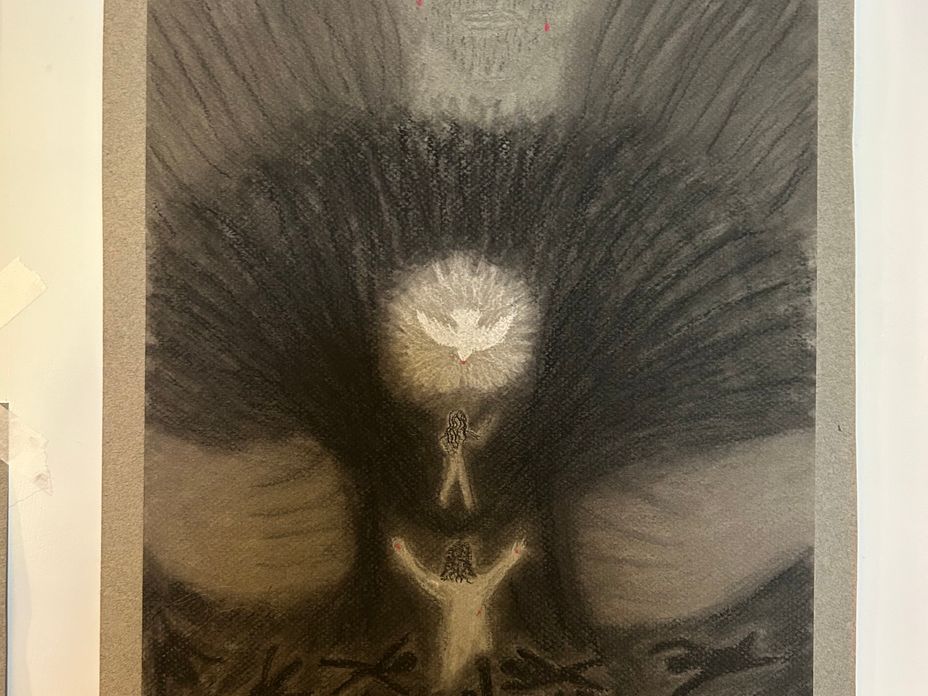
In the valley with me #MentalHealth #Depression #PostpartumDisorders #Anxiety

Thought this would be a good place to share this drawing I made during a bad postpartum depression day. I had this picture in my head and had to get it on paper. I am walking in the dark valley and you can see Jesus behind me blocking the demons from me. From above you can see the Holy Spirtit entering into the darkness with me. When y ok u zoom out and look at the big picture you realize I was in Gods arms the whole time. Each person of the Trinity is shedding blood for me. This drawing brings me such peace and reminds me I am never alone. Hopefully it can encourage someone else as well.

Most common user reactionsMost common user reactions 25 reactions 8 comments
Post
See full photo

I need to share this 🌿

My closest friend told me something the other day.

We were having coffee, laughing, and then she stopped. Her voice shook. She said the past months trying to have a baby had been really hard. Full of hope and disappointment. Full of moments no one else could see.

What surprised me was how she found little ways to cope. Talking to people who understood. Reading stories that felt like a real conversation. Finding ways to take care of her mind. She said if anyone wanted to see how people get through this, they could check out stories and support that feel like a real conversation

Hearing her made me think. Feeling anxious or sad while trying to conceive is normal. It doesn’t mean you are weak. And sometimes just knowing someone else has been through it is the first step to feeling #Wellbeing better.

#MentalHealth #PostpartumDepression #Caregiving #Depression #Parenting

Most common user reactions 4 reactions 2 comments
Post

I Thought I Was Just Tired—Turns Out I Was Drowning: What No One Told Me About Postpartum Depression

They told me I’d glow.
They said I’d be over the moon with love.
They told me to “enjoy every moment.”

No one told me I’d feel like a stranger in my own skin.
No one warned me that even though I adored my baby, there’d be days I didn’t recognize the woman holding her.

I’m a doctor. I know what a diagnosis looks like.
But postpartum depression?
That one snuck in quietly—while I was too busy pretending to be okay.

☁️ It Didn’t Look Like Depression

It looked like:
• Laughing at baby jokes but crying behind locked doors.
• Guilt about not feeling “grateful enough.”
• Feeling like I was failing at something every other woman made look effortless.

And that’s where the myths begin.

💔 The Myths That Hurt Us

Myth #1: “If you’re depressed, you won’t love your baby.”

Wrong. I loved my baby with my whole soul.
But there were nights I held her while feeling completely empty.
Love wasn’t the problem. Loneliness was. Exhaustion was. Hormones were.

Myth #2: “It’s just baby blues. Drink water.”

Baby blues are normal. Postpartum depression?
That’s a deeper ache. It’s not cured by a nap or a motivational quote on Instagram.
It needs care. Real, non-judgmental, professional care.

Myth #3: “Good moms don’t fall apart.”

Oh, we do.
In between diaper changes and bottle washes.
We fall apart quietly in showers and grocery store parking lots.
Falling apart doesn’t make you a bad mom. It makes you a human one.

🌸 The Moment I Finally Said, “I’m Not Okay”

It wasn’t dramatic.
I didn’t collapse in the hospital hallway or scream into a pillow.
I just sat on the bathroom floor one morning and whispered:

“I think I need help.”

That whisper saved me.

Because strength doesn’t always roar.
Sometimes it’s in asking for help.
Sometimes it’s in texting a friend: “Do you have time to talk?”
Sometimes it’s booking the therapy appointment you’ve been avoiding for months.

🧠 From a Doctor’s Heart: Here’s What I Want You to Know

Postpartum depression is not your fault.
It is not a reflection of your faith, your worth, or your ability as a mother.
It is a medical condition.
And like any other medical condition—it is treatable.

I say this as a doctor.
And I say this as a mother who has walked through that storm barefoot.

🌙 As a Muslim, Here’s What Gave Me Hope

My faith reminded me that even pain has purpose.

“Verily, with hardship comes ease.” (Qur’an 94:6)

And sometimes, that ease comes in the form of support groups.
Or therapy.
Or just letting yourself cry without guilt.

Allah does not burden a soul beyond what it can bear.
But mama—you don’t have to carry it alone.

💬 If You’re Reading This and Nodding Through Tears

You are not broken.
You are not behind.
You are not alone.

You are a mother—brave, exhausted, extraordinary.
You are allowed to have hard days and still be an incredible parent.
You are allowed to get help and still be strong.
You are allowed to feel sad and be grateful.
These things can coexist. And often, they do.

🌼 To Every Mama Out There

Let’s break the silence.
Let’s rewrite the narrative.
Let’s stop expecting mothers to smile through struggle just because it’s “supposed to be the happiest time.”

And if today you feel like you’re barely keeping your head above water—know this:

You are not drowning.
You are transforming.

And the version of you on the other side of this storm?
She’s stronger, wiser, and softer than ever before.

🧷 You’re Not Alone — Here’s Where to Start:
• Talk to your doctor—really. They want to help.
• Seek out mom support groups online or locally.
• Follow faith-informed therapists or wellness pages on social media.
• Text a trusted friend and just say, “Can we talk?”
• Most of all—be gentle with yourself

You’re not a bad mom.
You’re a mom who deserves to be cared for, too

Most common user reactions 5 reactions
Post

I Thought I Was Just Tired—Turns Out I Was Drowning: What No One Told Me About Postpartum Depression

They told me I’d glow.
They said I’d be over the moon with love.
They told me to “enjoy every moment.”

No one told me I’d feel like a stranger in my own skin.
No one warned me that even though I adored my baby, there’d be days I didn’t recognize the woman holding her.

I’m a doctor. I know what a diagnosis looks like.
But postpartum depression?
That one snuck in quietly—while I was too busy pretending to be okay.

☁️ It Didn’t Look Like Depression

It looked like:
• Laughing at baby jokes but crying behind locked doors.
• Guilt about not feeling “grateful enough.”
• Feeling like I was failing at something every other woman made look effortless.

And that’s where the myths begin.

💔 The Myths That Hurt Us

Myth #1: “If you’re depressed, you won’t love your baby.”

Wrong. I loved my baby with my whole soul.
But there were nights I held her while feeling completely empty.
Love wasn’t the problem. Loneliness was. Exhaustion was. Hormones were.

Myth #2: “It’s just baby blues. Drink water.”

Baby blues are normal. Postpartum depression?
That’s a deeper ache. It’s not cured by a nap or a motivational quote on Instagram.
It needs care. Real, non-judgmental, professional care.

Myth #3: “Good moms don’t fall apart.”

Oh, we do.
In between diaper changes and bottle washes.
We fall apart quietly in showers and grocery store parking lots.
Falling apart doesn’t make you a bad mom. It makes you a human one.

🌸 The Moment I Finally Said, “I’m Not Okay”

It wasn’t dramatic.
I didn’t collapse in the hospital hallway or scream into a pillow.
I just sat on the bathroom floor one morning and whispered:

“I think I need help.”

That whisper saved me.

Because strength doesn’t always roar.
Sometimes it’s in asking for help.
Sometimes it’s in texting a friend: “Do you have time to talk?”
Sometimes it’s booking the therapy appointment you’ve been avoiding for months.

🧠 From a Doctor’s Heart: Here’s What I Want You to Know

Postpartum depression is not your fault.
It is not a reflection of your faith, your worth, or your ability as a mother.
It is a medical condition.
And like any other medical condition—it is treatable.

I say this as a doctor.
And I say this as a mother who has walked through that storm barefoot.

🌙 As a Muslim, Here’s What Gave Me Hope

My faith reminded me that even pain has purpose.

“Verily, with hardship comes ease.” (Qur’an 94:6)

And sometimes, that ease comes in the form of support groups.
Or therapy.
Or just letting yourself cry without guilt.

Allah does not burden a soul beyond what it can bear.
But mama—you don’t have to carry it alone.

💬 If You’re Reading This and Nodding Through Tears

You are not broken.
You are not behind.
You are not alone.

You are a mother—brave, exhausted, extraordinary.
You are allowed to have hard days and still be an incredible parent.
You are allowed to get help and still be strong.
You are allowed to feel sad and be grateful.
These things can coexist. And often, they do.

🌼 To Every Mama Out There

Let’s break the silence.
Let’s rewrite the narrative.
Let’s stop expecting mothers to smile through struggle just because it’s “supposed to be the happiest time.”

And if today you feel like you’re barely keeping your head above water—know this:

You are not drowning.
You are transforming.

And the version of you on the other side of this storm?
She’s stronger, wiser, and softer than ever before.

🧷 You’re Not Alone — Here’s Where to Start:
• Talk to your doctor—really. They want to help.
• Seek out mom support groups online or locally.
• Follow faith-informed therapists or wellness pages on social media.
• Text a trusted friend and just say, “Can we talk?”
• Most of all—be gentle with yourself

You’re not a bad mom.
You’re a mom who deserves to be cared for, too

Most common user reactions 14 reactions 3 comments
Post
See full photo

Title: Silent Storms: Unmasking Women’s Mental Health with Compassion and Courage

Introduction:

Somewhere between caring for others and forgetting to care for themselves, millions of women carry silent storms. You’d never guess it looking from the outside—the calm smile, the to-do list checked off, the warm laughter echoing through a room. But beneath it all? There’s often an ache, a fatigue, a loneliness no one notices. I know this not just as a doctor, but as a woman, a mother, a daughter who recently lost the pillar of her world—my father.

Grief doesn’t knock; it breaks in.

That loss didn’t just leave an empty chair at the table. It triggered waves of emotional exhaustion, sleepless nights, and a strange heaviness I couldn’t explain. And yet, I still had to show up—at work, for my children, for everyone. That’s what women do, don’t we?

But why must we?

The Invisible Weight Women Carry:

Mental health struggles among women often wear a different mask—one of resilience, multitasking, and smiling through pain. From postpartum depression to burnout, from anxiety in silence to trauma tucked away for decades—women are taught to endure rather than express. And when they do speak up? They’re too often labeled as “too emotional,” “too sensitive,” or “too much.”

We are not too much. We are carrying too much.

A Doctor’s Lens, A Human Heart:

Working in medicine, I’ve seen too many women slip through the cracks. A young mother ashamed to admit she cries in the shower every night. A professional drowning in imposter syndrome. An elder in denial of her depression, having been told her whole life to “stay strong.”

I’ve been in all their shoes. And no textbook prepared me for that.

Barriers Beyond Biology:

Mental health is not just a chemical imbalance—it’s a social imbalance, too. Cultural stigmas, gender roles, financial dependence, lack of access to care, and an internalized guilt for putting oneself first—these are the chains that often keep women from healing. Let’s call them what they are: barriers built by systems, not by weakness.

Breaking the Silence, Together:

We need to change the narrative. And it starts with listening—really listening—to women’s stories without judgment or rushed solutions.

Here are small but powerful steps we can take:

Normalize therapy—it’s strength, not surrender.

Talk openly about grief, anger, guilt—emotions are valid, not shameful.

Create safe spaces for women to share without being “fixed.”

Advocate for workplace mental health support, maternity mental care, and trauma-informed approaches in healthcare.

My Personal Mission:

After my father’s death, I realized I had never truly paused to process life’s traumas. My journey through grief awakened a deeper calling in me—not just to treat symptoms, but to understand suffering. Today, I’m not just healing myself. I’m holding space for other women to heal too.

I’ve started writing, speaking, and showing up more authentically—not just as “Dr. Tamanna Islam Nishat,” but as a fellow woman on a deeply human journey.

Closing Thoughts:

If you’re reading this and carrying a silent storm—know this: you are not alone. You don’t need to have it all together. You don’t need to be everything to everyone. Your mental health matters. You matter.

Let’s rewrite the narrative of women’s mental health—not with shame or silence, but with storytelling, support, and a fierce kind of compassion.

Most common user reactions 9 reactions 1 comment
Post

Nothing left.

I feel numb and empty lately and I have nothing left to give. I’m running on fumes and am just going through the motions. With work, life, and overall day to day living. I know some of it is the postpartum that I’m still trying to navigate my way through and I’m trying to find the good in things, but I feel buried under the weight of everything that I am carrying right now and everything that is expected of me. I just want to disappear for a while and come back when I feel like me again.
#Anxiety #PostpartumAnxiety #PostpartumDepression

Most common user reactionsMost common user reactionsMost common user reactions 5 reactions 4 comments
Post

Ellen’s Story

From a young age, I stood out—not for academic brilliance, but for the quiet battles I fought within myself. While I learned to read early, the ease of those early years gave way to confusion and mental fog as schoolwork became more complex. Numbers never made sense to me; dyscalculia turned math into a foreign language, and my mind often wandered, escaping into daydreams when tasks became overwhelming. My concentration faltered, and I began to shut down under pressure. Teachers saw me as inattentive, but inside, I was fighting to stay afloat in a world that didn’t seem built for the way my brain worked.
My confidence suffered. I carried a persistent sense of inadequacy, questioning my own intelligence and worth. Though kind and deeply empathetic, I was a slow-moving perfectionist—afraid to get things wrong, yet often feeling like I did. My emotional landscape was shaped not only by academic struggles but by a complicated, often painful relationship with my mother. Born into a home where my mother had wished for a boy and suffered from postpartum depression, I grew up with a void in maternal connection. I yearned for affection but also resented it, often projecting my emotional confusion onto mother figures and even going so far as to turn off my phone’s location services as a form of rebellion and self-protection.
Despite the emotional weight I carried, I was headstrong—determined in a way that surprised those around me. A moment that became family lore happened when I was just under two years old: a toy placed out of reach on top of the refrigerator somehow ended up in my tiny hands, retrieved with stealth and purpose. It wasn’t just mischief—it was early evidence of my laser focus, my ability to pursue what I wanted, no matter the obstacle.
My saving grace as a child came in the form of teachers who saw beyond my struggles. Gail Wories, a nurturing presence during my early school years, noticed my difficulty with math and stepped in, offering one-on-one help and even restructuring her day to give us more time. When my mother dismissed my need for glasses as fakery, Gail believed me, moved me to the front of the class, and wrapped me in a hug the day I finally got the glasses I needed. I, in turn, grew emotionally dependent on teachers like Gail—adults who offered the stability and encouragement I lacked at home.
The moment I read Little Women in third grade, Gail shared the achievement with other teachers, a rare moment of recognition that made me feel seen for my strengths. Later, in high school, another key figure entered my life: Joel Noorman. Blunt but perceptive, he challenged my self-doubt by telling me (my words, not his), “You’re too smart to be this stupid.” It was the first time someone confronted my internalized beliefs head-on, and it stuck. Slowly, I began to shift—not by erasing my struggles, but by learning that intelligence comes in many forms and that my unique wiring didn’t make me broken.

Most common user reactionsMost common user reactions 6 reactions 3 comments