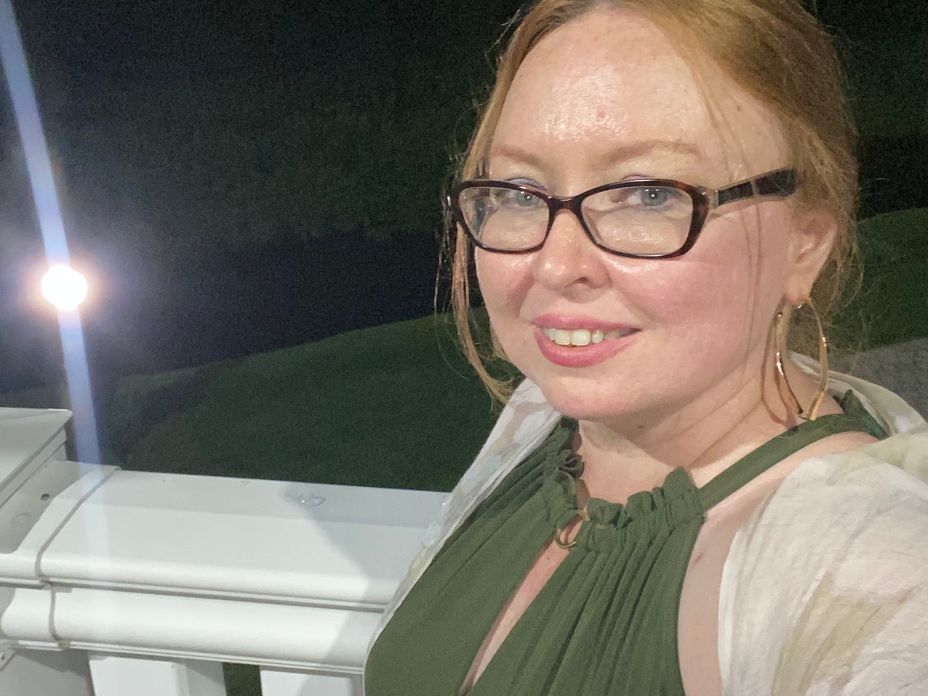
I'm new here!
Hi, my name is Jacqui2025. I'm here because I have chronic back pain and Complex Regional Pain Syndrome in my left hand. It is making me very depressed and I would like to learn how other people with chronic pain manage.
I experienced a heavy wave of rejection last night.
I noticed that my close friends had gathered together for what I can only assume was a New Year’s celebration. The thing is—I didn’t get an invite. The day before, I had spoken to one of them and we’d made plans to hang out. When the evening came and I hadn’t heard anything, I reached out. No response.
Fifteen minutes later, I saw a friend post an Instagram story of them all together, laughing and having a great time.
I texted again, asking about the get-together. Still nothing.
I felt incredibly hurt—overlooked, unseen, invisible. In my body, the pain was joined by rage. My immediate reaction was to cut them off entirely. That you don’t care, so I don’t care instinct kicked in hard. I wanted to go for the jugular and make them feel as hurt as I did.
But I’ve lived with RSD long enough to know how this usually goes.
It always gets turned back on me. I become the bad guy for having feelings at all.
Rejection sensitivity dysphoria doesn’t just show up in dramatic moments. It lives quietly inside everyday social dynamics. Missed invitations. Unanswered texts. A shift in tone. For many people, these moments sting and pass. But for those of us with RSD, they can feel catastrophic, as if our sense of safety, belonging, and worth is suddenly on trial. It’s not about wanting special treatment. It’s about how our nervous systems interpret perceived rejection as something deeply threatening.
I vented to other friends. I know they were trying to help, but nothing they said landed.
“Tell them how you feel.”
“They love you—they didn’t do it on purpose.”
“They probably just wanted to keep it small.”
To me, it all felt like phony bologna. If they cared, wouldn’t they have invited me?
Instead, I felt like an afterthought—or worse, not a thought at all. Like they secretly don’t like me, or maybe even loathe me. I’ve known these people for over twenty years. You’d think I’d cross their minds.
I know adulthood creates distance. Life happens. People move away. Some stay. I stayed too. But this group was once incredibly close. And now, the friends I still have here don’t seem to want to see me very often. My truest friends live out of state.
So, I’m lonely here. I’m alone. And when you’re lonely, everything feels sharper. Louder. More painful.
I know how this probably sounds to some people.
Why can’t she just get over it?
Why can’t she see it wasn’t intentional?
Believe me—I hear those thoughts too. And every time, they come back to bite me. I end up feeling foolish. Too emotional. Too reactive. The one who jumps to conclusions too fast.
Rejection sensitivity follows me everywhere. It leaves a lasting imprint. Today, I still feel hurt—and I know I’ll think about this for years. I’ve already laid there numb and crying, replaying every possible scenario. Every why. Every what if.
Now, I feel guilty. Guilty for venting. Ashamed for calling a few of them out and saying they all suck. Once again, my RSD has painted me as the villain.
I wish people understood how consuming and painful rejection sensitivity dysphoria can be. It’s real. It’s not something you can simply control or logic your way out of. My reactions are instinctual—and often turn inward in self-destructive ways before I even realize what’s happening.
RSD shows up when you least expect it. But it’s also always there, waiting—ready to crack and shatter you into a million pieces.
RSD is closely tied to ADHD and autism. I have both. So, for me, it’s ever-present. A given. I just want more control over it. and I want to think clearly without being clouded by intrusive thoughts. I want space between the trigger and the spiral.
It’s hard to live this way—especially when people don’t understand you.
Have you ever reacted strongly to feeling excluded or overlooked—and later wondered if rejection sensitivity played a role in how deeply it affected you?
“Rejection sensitivity doesn’t mean I am too much. It means my nervous system has learned to brace for loss.” – Unknown
#MentalHealth #Neurodiversity #ADHD #ADHDInGirls #Anxiety #AutismSpectrumDisorder #Autism
All it took was two words… “I know.”
Two simple syllables that she probably didn’t think twice about. Two ordinary words that anyone else might have brushed off without a second thought. But for me, those two words hit me like a punch straight to the chest.
One of my best friends was visiting from out of town. She was staying for a few days, and because we rarely get to see each other, I wanted to soak up every moment that I could. We spent time with friends, went to an event in the city, laughed, caught up, and just enjoyed each other’s company.
But the moment I said goodbye changed everything.
When we hugged, I told her how much I loved her. I probably said it a few times because I genuinely meant it and wanted her to feel it. Maybe I wanted to make up for the physical distance between visits. Maybe I wanted that reassurance without even realizing it. It could’ve been both.
And her response, said casually, almost automatically, was simply:
“I know.”
It wasn’t rude. It wasn’t dismissive, at least not intentionally. Just a mere response. But when those words hit my ears, something inside me shattered. It felt like I had exposed something precious and tender. I shared my love, my excitement, my vulnerability, and it was met with a shrug.
Or at least, that’s what my brain told me.
That’s what rejection sensitivity does. It turns an ordinary moment into an emotional earthquake.
And that small moment, that simple phrase, stuck with me. I replayed it in my mind over and over and wondered If I was being too much. I was worried that she didn’t mean it back. My brain spiraled quickly, like it always tends to do.
This is what rejection sensitivity feels like for me. It’s not about what people do. It’s about how my nervous system reacts. I feel everything so deeply, and the slightest perceived brush-off can send me into a barrage of shame, panic, and hurt.
What Rejection Sensitivity Actually Feels Like
Honestly, there isn’t a single day where I’m not affected by my rejection sensitivity. It’s something that sits with me in every interaction, every conversation, every moment where there’s even a possibility of misunderstanding.
Something as small as a car horn can send me spiraling. If someone honks at me while I’m driving, I immediately assume that I did something horribly wrong. My body reacts instantly—my heart races, my stomach twists, and this wave of embarrassment washes over me. I take it personally, even though I rationally know it’s just a noise.
That’s the exhausting part. My mind understands logic, but my body doesn’t.
Living with rejection sensitivity feels like you’re walking on eggshells, every emotion trembling just beneath the surface, waiting for the smallest trigger. Everything touches you, and everything gets in, even things that were never meant for you.
When someone rejects an idea that I share, I feel it physically. My heart pounds through my ears, I start trembling, and a shockwave of emotion just shocks my nervous system. It all happens in a matter of seconds. It’s not because I think my idea is perfect, it’s because rejection hits in me in the most personal way possible. It hits that vulnerable part of me. The part that tells me I’m “not enough.”
Criticism is another story entirely. I don’t handle it well, and I wish I did. My reaction tends to swing in one of two directions: I either collapse inward and cry, or I burst outward in frustration because the pain is too big for my body to hold. It’s not that I don’t want to improve, it’s just that criticism feels like an attack on my entire being.
Early Lessons: Learning to Hide
Growing up, I learned rather quickly that if I stayed quiet enough, stayed small, invisible even, I could protect myself. My Quietness became my shield. I figured that if I didn’t attract attention, I couldn’t be judged. If I didn’t volunteer answers, no one could point out if I was wrong. If I kept my thoughts to myself, no could use them against me.
I remember being in elementary school, sitting in the back of the classroom, observing while my peers confidently raised their hands. Their energy was magnetic, drawing smiles and praise from teachers. I always wanted to participate, but the thought of being wrong paralyzed me. So, I stayed silent, and the let others take the spotlight. Early on, I learned to disappear into the background, thinking that my invisibility kept me safe.
One time in college, I was required to give a speech. I remember it being well thought out, well written. I had rehearsed it over and over again and memorized each word. But when it came time to present, I nearly had a panic attack. My hands were shaking, my voice was stuttering and cracking, and I started sweating profusely. While everyone else seemed to get through their speech with ease, I was the only one that had this kind of reaction.
I went home feeling so ashamed and embarrassed, thinking that my worth was tied directly to how others perceived me. That moment stayed with me. Even now, I can still feel the humiliation, the awkwardness, and the overwhelming discomfort.
But truthfully, hiding isn’t the same as healing. And while my quietness protected me from immediate judgment, it didn’t prevent the internal hurt that built up over time.
My rejection sensitivity has shaped me in ways I didn’t even realize until recently. It taught me to be a people-pleaser, to say yes to everything, to make myself constantly available so no one ever had a reason to be disappointed in me. It taught me to anticipate criticism before it happened to adjust myself so that no one ever got upset. And it took a toll on me. It drained every part of me—my energy, my confidence, my boundaries, my joy. But it was all I knew how to do.
The Need for Reassurance
I never liked to admit it, but I need reassurance. I need to know that everything is okay, that people still care, and that they still want me around. Compliments are awkward for me because I don’t know how to receive them, but on some level, I’m searching for any sign that I’m valued.
I remember a group project in high school. I did all of the research, stayed up late crafting the final presentation, and essentially carried the entire assignment on my back. My group mates assumed that because I was the quiet, agreeable one, I would just handle everything. And even though I felt taken advantage of, the people-pleaser in me couldn’t bring myself to say no.
After we presented, I felt mortified. My group mates didn’t know the material at all. I had tried to teach them, but they either didn’t grasp it or simply didn’t care. Either way, the presentation was a disaster — and somehow, I felt like it was all my fault. Even though I was the one who put in all the effort, my hard work went unnoticed, and I didn’t receive the praise and reassurance I desired.
When rejection sensitivity gets triggered, even in the smallest ways, the inner narrative in my mind becomes brutal. I assume that everyone hates me, that I messed everything up, ore that I’m not good enough. These aren’t just dramatic thoughts, they’re automatic, and they take a major toll.
RSD affects every part of my life—my friendships, my work, my communication, my self-worth. It makes me second-guess everything that I say, everything I do, and whether people actually want me around. It makes small misunderstandings feel like catastrophes. And it leads to spirals.
email me for more:)
#MentalHealth #Neurodiversity #ADHD #ADHDInGirls #Anxiety #Depression #rejection sensitivity dysphoria
Being behind in life is something I never really foresaw in my future. I assumed that I was doing everything “right,” following the path I was supposed to. I kept up academically — even socially at times — but deep down, I knew I didn’t quite match others emotionally.
Rethinking Emotional Intelligence
I used to believe I was emotionally intelligent because I was empathetic and in tune with my feelings. But looking back, I realize that my emotional intelligence was actually quite low. I didn’t know how to regulate my emotions properly. I struggled with communication, lacked motivation, and was often defensive.
I’ve learned that emotional intelligence says, “I feel this. I want to understand it and respond thoughtfully.” The opposite says, “I feel this, and I don’t know why — so I’ll just ignore it or react impulsively.” For a long time, I lived more in the latter.
Over time, though, my emotional intelligence has grown. I’ve learned how to regulate my emotions in healthier ways — but it took patience, reflection, and a lot of unlearning. Growth like that happens slowly, and over time.
Living with a Fragile Heart
Personally, I’ve always been a fragile soul. I walk through life with my heart on my sleeve, and sometimes, that heart gets hurt too easily. Living with RSD (rejection sensitivity dysphoria) makes it a challenge to stay strong, be courageous, and stand firmly on the ground. I’m highly sensitive, easily overwhelmed, and often fear being left behind.
For years, I put myself down because I couldn’t stop comparing myself to others. When they succeeded, I felt like I had failed. When they received praise, I went unnoticed. When they were popular, I was struggling to socialize. The more I compared, the smaller I felt.
For a long time, I listened to that voice in my head, the one that kept telling me I wasn’t up to par, that I was incapable, and that I was too weak. But into adulthood, I received my mental health diagnoses, and it all finally made sense. When I reflect on those years growing up, I realized that I was lost, confused, and quite frankly, different from others.
The Trap of Comparison
Self-comparison made me feel lost and inadequate. And with time, I must say it hasn’t gotten any easier. I still compare myself to others and still feel one-step behind everyone else. I’m nowhere where I thought I’d be. I’m thirty-seven, single, no kids, no home of my own, and no real career. Sure, I work as a caregiver and part-time blogger, but still, it’s not what I pictured for myself.
I can’t help but compare myself to other people’s success when it’s constantly in your face. Social media doesn’t help because you see all of these people leading such “happy,” lives. Meanwhile, I feel like a shlub, that’s just been twiddling my thumbs for years, trying to figure out how I can fit myself into that image.
Finding Perspective
But with growth comes new perspective. And now that I’m in a better place mentally, I no longer see my life as a “failure,” I see it as someone who doesn’t follow societal standards, and who moves through life at their own pace. I’m trying really hard to notice my good qualities, and the successes that I have achieved. To be proud of myself, even if it’s just accomplishing the smallest task. I’ve realized that I’m my own person, and that I’m living my life the best way I know how—as myself.
Sure, I may not be where other people are, but I don’t think that makes me any less than. Of course, I still struggle with communication, but I’m getting better at speaking up for myself, and that is something that I never thought I’d see.
Embracing Neurodivergence
Being neurodivergent certainly isn’t my excuse, but it has helped me see life with more clarity. It’s helped me find myself again and become the person I always knew I could be. My passion is back, I’m more emotionally intelligent, and I’m continually healing in areas I needed extra help with. I may not be where I expected, but I’m proud of the person I am. Perhaps for the very first time.
Trusting My Own Timing
Learning to trust the timing of my life has meant accepting that my growth doesn’t need to look like everyone else’s. It’s taken me a long time to realize, but I’m blooming in my own season, and it’s a reassurance that I’m exactly where I’m meant to be.
“Your time is way too valuable to be wasting on people that can’t accept who you are.” - Turcois Ominek
#MentalHealth #ADHD #ADHDInGirls #neurod #RSD #Selfacceptance #PersonalGrowth
Being behind in life is something I never really foresaw in my future. I assumed that I was doing everything “right,” following the path I was supposed to. I kept up academically — even socially at times — but deep down, I knew I didn’t quite match others emotionally.
Rethinking Emotional Intelligence
I used to believe I was emotionally intelligent because I was empathetic and in tune with my feelings. But looking back, I realize that my emotional intelligence was actually quite low. I didn’t know how to regulate my emotions properly. I struggled with communication, lacked motivation, and was often defensive.
I’ve learned that emotional intelligence says, “I feel this. I want to understand it and respond thoughtfully.” The opposite says, “I feel this, and I don’t know why — so I’ll just ignore it or react impulsively.” For a long time, I lived more in the latter.
Over time, though, my emotional intelligence has grown. I’ve learned how to regulate my emotions in healthier ways — but it took patience, reflection, and a lot of unlearning. Growth like that happens slowly, and over time.
Living with a Fragile Heart
Personally, I’ve always been a fragile soul. I walk through life with my heart on my sleeve, and sometimes, that heart gets hurt too easily. Living with RSD (rejection sensitivity dysphoria) makes it a challenge to stay strong, be courageous, and stand firmly on the ground. I’m highly sensitive, easily overwhelmed, and often fear being left behind.
For years, I put myself down because I couldn’t stop comparing myself to others. When they succeeded, I felt like I had failed. When they received praise, I went unnoticed. When they were popular, I was struggling to socialize. The more I compared, the smaller I felt.
For a long time, I listened to that voice in my head, the one that kept telling me I wasn’t up to par, that I was incapable, and that I was too weak. But into adulthood, I received my mental health diagnoses, and it all finally made sense. When I reflect on those years growing up, I realized that I was lost, confused, and quite frankly, different from others.
The Trap of Comparison
Self-comparison made me feel lost and inadequate. And with time, I must say it hasn’t gotten any easier. I still compare myself to others and still feel one-step behind everyone else. I’m nowhere where I thought I’d be. I’m thirty-seven, single, no kids, no home of my own, and no real career. Sure, I work as a caregiver and part-time blogger, but still, it’s not what I pictured for myself.
I can’t help but compare myself to other people’s success when it’s constantly in your face. Social media doesn’t help because you see all of these people leading such “happy,” lives. Meanwhile, I feel like a shlub, that’s just been twiddling my thumbs for years, trying to figure out how I can fit myself into that image.
Finding Perspective
But with growth comes new perspective. And now that I’m in a better place mentally, I no longer see my life as a “failure,” I see it as someone who doesn’t follow societal standards, and who moves through life at their own pace. I’m trying really hard to notice my good qualities, and the successes that I have achieved. To be proud of myself, even if it’s just accomplishing the smallest task. I’ve realized that I’m my own person, and that I’m living my life the best way I know how—as myself.
Sure, I may not be where other people are, but I don’t think that makes me any less than. Of course, I still struggle with communication, but I’m getting better at speaking up for myself, and that is something that I never thought I’d see.
Embracing Neurodivergence
Being neurodivergent certainly isn’t my excuse, but it has helped me see life with more clarity. It’s helped me find myself again and become the person I always knew I could be. My passion is back, I’m more emotionally intelligent, and I’m continually healing in areas I needed extra help with. I may not be where I expected, but I’m proud of the person I am. Perhaps for the very first time.
Trusting My Own Timing
Learning to trust the timing of my life has meant accepting that my growth doesn’t need to look like everyone else’s. It’s taken me a long time to realize, but I’m blooming in my own season, and it’s a reassurance that I’m exactly where I’m meant to be.
“Your time is way too valuable to be wasting on people that can’t accept who you are.” - Turcois Ominek
#MentalHealth #ADHD #ADHDInGirls #neurod #RSD #Selfacceptance #PersonalGrowth
Recently, I was at a small get-together with close friends. They’re people who I love and trust deeply. The night started out lighthearted, full of laughter, shared stories, and the comfortable commotion that happens when everyone’s voices overlap. But somewhere in the middle of it all, something shifted.
A couple of people, including myself, were sitting in one of the rooms chatting and having fun. Then, all of a sudden, someone started praising one of my best friends, talking about how much they appreciated being around people who “have their life together”—people who aren’t lazy, who stay motivated, and who just handles things well.
I felt like the words were directed solely at me, a subtle dig about not measuring up. My brain immediately twisted the comment into the worst possible version of myself. In that moment, my body ached and felt weak. Tears came before I could stop them, and I had to step outside to find a space to be alone and regain my balance.
I knew I was overthinking it. Logically, it wasn’t an attack. But that didn’t stop the flood of self-doubt from rushing in. Later in the evening, when I left to say goodbye, another comment triggered the same reaction. Someone asked about what I’m doing with my life and said, “I’m glad you’re writing because otherwise I’d ask you what you’re doing?” I immediately interpreted it as criticism, and shame washed over me as if I weren’t measuring up to the standard of “success” others seemed to have.
That’s the thing about Rejection Sensitive Dysphoria (RSD) — it doesn’t care about logic. It amplifies small moments until they feel like earthquakes. A single comment can send your nervous system spiraling, making you feel like you’ve failed some invisible test.
Physically, RSD hits hard. My chest tightens, my palms get clammy, my head feels foggy, and the tears come almost before I can process why. My body reacts as if I’ve just faced a threat, even when my mind knows there’s no danger. It’s exhausting, overwhelming, and intensely personal.
Experiencing moments like these is never easy. My body reacts before my mind can catch up, and my emotions feel bigger than the situation itself. But stepping outside, taking a few deep breaths, and allowing myself to feel — without judgment — is how I regain balance.
RSD may amplify small moments, but it also reminds me that I care — deeply — about connection, authenticity, and the energy I share with others. Learning to navigate it means noticing my triggers, creating space for myself, and practicing gentle self-talk.
It’s a work in progress, and some days are harder than others. But each time I step back, breathe, and honor my feelings, I reclaim a little more of my power and peace.
“Healing begins the moment we give ourselves permission to feel.” - Unknown
#MentalHealth #rejection sensitivity dysphoria #ASD #ADHD #Neurodiversity #Blog
Hi, my name is CRPSwalkingonfire79. I'm here because I Love writing poetry about my journey with CRPS
Hi, my name is Katie. I'm mainly here because I'm searching for help for my 16 year old daughter that has been battling CRPS 1 since the age of 8 (diagnosed at 10) then type 2 after reconstructive b/l foot surgery at the age of 10 and 11. She has undergone an IHP treatment program with Childrens of Wisconsin and Rogers behavioral health when she was 12.5, that got her out of a wheelchair but caused significant spread of CRPS along with worsening PTSD, Flare ups, depression anxiety... it was horrible a nightmare to say the least. Since then she has tried ketamine infusions that seemed to slowly help her with settling the non stop flares but the clinic abruptly closed. I then found a Pain Doctor that agreed to see her all the others said they dont treat minors and would refer her to the same pain treatment program she was in at the age of 12.5. UGH so frustrating. She has had around 48 Sympathetic lumbar nerve blocks along with proper PT desensitization since the age of 13.5. She was a good responder as the crps diminished in hands and arms and from chest down to right foot and left foot and these also helped with settling flare ups. Then she banged her left knee last year a couple times now crps is being stubborn in that left knee down to foot and the blocks arent helping as much. So, she still continues to miss so much school due to flare ups. Her pain doctor connected her with a psychologist that she will start seeing december 2. He thinks that she needs to learn emotional regulation as stress is a big part of her not healing. I would agree because she stresses about missed school work and playing catch up. Teachers arent always abiding by her 504 plan with reducing her work load and giving extra time. I have sent them countless emails spoke with some over the phone and the women teachers are the worst to deal with.
She has tried breathing exercises/meditating but said she gets more anxiety from this. I am just unsure of how she is going to learn how to regulate her emotions if she reacts this way. UGH!!!
Any ideas?!?
All About RSD
RSD stands for Rejection Sensitive Dysphoria. It is a term used to describe a pattern of intense emotional reactions to perceived or actual rejection, criticism, or social exclusion. On the other hand, the cause of Rejection Sensitivity Dysphoria is unknown and it is most common in neurodivergent people. In addition, people with Rejection Sensitivity Dysphoria often experience other issues because of it like mental health issues, relationship problems, and social isolation. Last but not least, treatments for Rejection Sensitivity Dysphoria include medications, psychotherapy, and self- help strategies.
My name is Kylie Pollan, and I am a survivor of domestic violence that occurred in Ellis County, Texas. After the assault, I began experiencing severe pain, swelling, and discoloration in my right leg. I sought help repeatedly from doctors and hospitals, including Baylor Scott & White, but despite clear symptoms and imaging showing injury, my pain was often dismissed or minimized. Instead of being heard and believed, I was told that what I felt “wasn’t that bad,” or that it was something I was creating in my mind. That experience broke my trust in a system that is supposed to protect victims and help them heal.
Over time, my condition worsened, and I was later diagnosed with Complex Regional Pain Syndrome (CRPS) — a debilitating nerve disorder often triggered by trauma. This diagnosis confirmed what I had been saying for months: my pain was real. Unfortunately, by the time doctors took me seriously, the damage had already progressed, leaving me with chronic pain, mobility struggles, and emotional trauma from both the violence and the medical neglect. I’ve since relocated to Oklahoma for safety and ongoing treatment, but my heart remains with the people of Ellis County who may still be suffering in silence.
I am now working to raise awareness about how often women’s pain is dismissed, particularly among survivors of abuse. Many victims are told their pain is emotional or exaggerated, when in reality, they are living with life-changing injuries. I don’t want what happened to me to happen to anyone else. I believe that by speaking out — through advocacy programs, support centers, and public awareness — we can help improve how medical professionals and systems respond to survivors.
I am reaching out in the hope that my story can be used to help others — whether through education, awareness campaigns, or local advocacy efforts. If there are opportunities to share my experience, participate in community outreach, or contribute to training programs for victim support or healthcare sensitivity, I would be honored to help. My goal is simple: to make sure that when the next woman says she’s in pain, she’s believed, treated with compassion, and given the care she deserves.#domesticviolencesurvivor #BreakTheSilence #believewomen #godsplannotmine #faiththroughhealing