Rare Disease

Create a new post for topic
Join the Conversation on
Rare Disease
236K people
0 stories
11.5K posts
About Rare Disease Show topic details
Explore Our Newsletters
What's New in Rare Disease
All
Stories
Posts
Videos
Latest
Trending
Post
See full photo

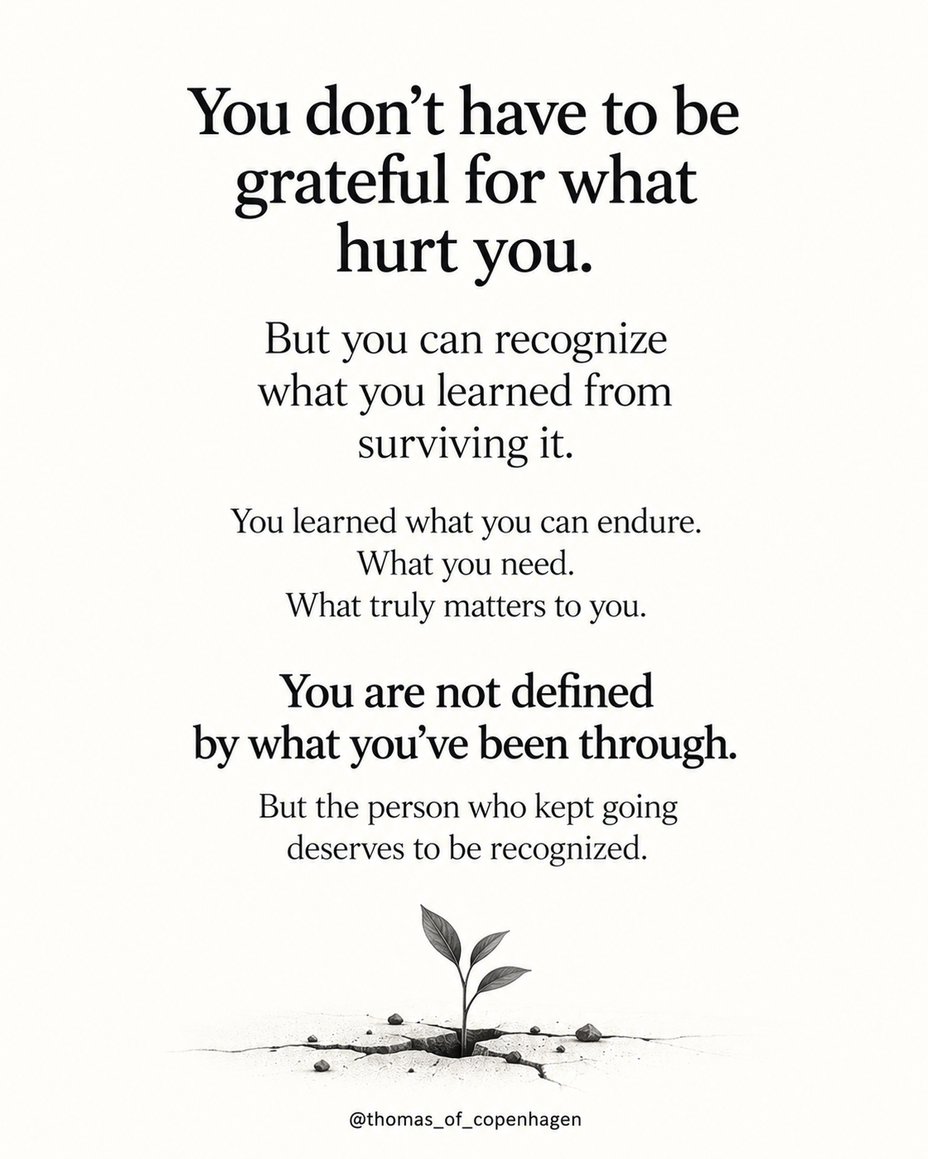
Mental self care is not optional if you want peace

Most people treat mental self care like something extra, something they will get to when life slows down, but that moment rarely comes. Your mind needs daily hygiene just like your body does. Simple practices like a short morning meditation can create clarity and intention before stress takes over. Stepping away from screens before bed gives your nervous system a chance to settle instead of staying activated. Writing down even one moment of joy each day trains your mind to notice what actually nourishes you instead of staying stuck in survival mode. These are not big dramatic changes, they are small daily choices that slowly shift how your mind works for you instead of against you. Which of these feels like the easiest place for you to start?

If you want to learn more about this, check out my video by clicking on one of the links below.

www.instagram.com/thomas_of_copenhagen

www.tiktok.com/@thomas_of_copenhagen

~ Thanks to all. Thanks for all. ~

#MentalHealth #MentalHealth #Depression #Anxiety #BipolarDisorder #BorderlinePersonalityDisorder #Addiction #dissociativedisorders #ObsessiveCompulsiveDisorder #ADHD #Fibromyalgia #EhlersDanlosSyndrome #PTSD #Cancer #RareDisease #Disability #Autism #Diabetes #EatingDisorders #ChronicIllness #ChronicPain #RheumatoidArthritis #Suicide #MightyTogether

Most common user reactions 2 reactions
Post
See full photo

What’s a skill you have that’s often a surprise to others?

Has someone’s 👀 ever gotten wide when they found out you could do something well?

There are so many unique skills and talents that each and every one of us has (even when depression tells you the opposite), and sometimes those skills and talents may even come as a surprise to others!

Mighty staffer @sparklywartanks says people are often surprised by her problem-solving skills and how quickly she can think on her feet to come up with solutions or work through challenges.

What about you?

#52SmallThings #CheckInWithMe #Selfcare #MentalHealth #Disability #ChronicIllness #ChronicPain #RareDisease #Anxiety #Depression
#Autism #Parenting #PTSD #BorderlinePersonalityDisorder #BipolarDisorder #Fibromyalgia #Lupus #MultipleSclerosis #Migraine #Spoonie

Most common user reactions 2 reactions 1 comment
Post
See full photo

A symptom I’m most accustomed to managing is ______.

When you’ve lived with chronic illness—diagnosed or otherwise—there may be certain symptoms you become used to managing or even expecting, especially if they’ve been present for a long time or for as long as you can remember. For Mighty staffer @sparklywartanks , that symptom is insomnia or irregular sleep patterns. While it remains one of the most challenging symptoms to balance, she’s learned to recognize when she needs extra support.

What’s a symptom you’re used to managing, or one you’ve lived with the longest?

#MightyMinute #CheckInWithMe #ChronicPain #ChronicIllness #Disability #RareDisease #MentalHealth #Anxiety #Autism #Parenting #PTSD #BorderlinePersonalityDisorder #BipolarDisorder #ObsessiveCompulsiveDisorder #EatingDisorders #Depression #Fibromyalgia #Lupus #MultipleSclerosis #Migraine #Spoonie

Most common user reactionsMost common user reactions 21 reactions 9 comments
Post
See full photo

To me, strength looks like…

Strength can be defined in a myriad of ways and look different for each of us. From a person’s abilities, skills, talents, and character traits, to how they carry themselves, learn, grow, overcome obstacles, and interact with others — endless characteristics and actions (both big and small) can equate to or reveal what strength can look like.

How would you define it? What does strength look like to you?

Finish today’s prompt in the comments below! ⬇️

#52SmallThings #CheckInWithMe #Selfcare #MentalHealth #Disability #ChronicIllness #ChronicPain #RareDisease #Anxiety #Depression
#Autism #Parenting #PTSD #BorderlinePersonalityDisorder #BipolarDisorder #Fibromyalgia #Lupus #MultipleSclerosis #Migraine #Spoonie

(edited)
Most common user reactions 9 reactions 5 comments
Post
See full photo

They actually work!

I’m excited to launch these #Maladiemon at our next #ChronicIllness and #RareDisease awareness day, 2/27 at the Colorado State Capitol! Register here: Register for Chronic Disease Awareness Day 2026!

Register for Chronic Disease Awareness Day 2026!

Join Coloradans living with chronic health conditions, caregivers, and advocates from across Colorado at the Capitol on February 27th, 2026. Chronic Disease Awareness Day is hosted by the Chronic Care Collaborative (CCC) in partnership with its 45+ nonprofit member organizations. The event will run from 8am to 1pm, and we would love for you to join for as little or for as long as you are able. The first part of the event will be held at the Colorado State Capitol and the second half will be held virtually and in person at the Colorado Health Capitol (303 E. 17th Ave, Denver, CO). We will follow up closer to the event with additional information about the agenda, preparation sessions, etc. Please reach out to Holly Winters (holly.winters@ccc-co.org) with any questions. Please RSVP below for Chronic Disease Awareness Day 2026. We hope to see you there!
Most common user reactions 1 reaction 2 comments
Post
See full photo

My Unbreakable Spirit

Here’s my story.

I am 17 years old, and I have broken over 50 bones in my lifetime.

That sentence usually stops people in their tracks. They picture accidents, recklessness, or extreme sports. But for me, fractures were never a result of risk-taking. They were the result of living in a body with osteogenesis imperfecta, a rare genetic condition that causes bones to break easily.

Some of my earliest memories are tied to hospitals—bright lights, the smell of antiseptic, casts that were bigger than my arms, and learning how to be brave before I fully understood what fear was. While other kids learned independence through scraped knees, I learned it through surgeries, mobility aids, and adapting my environment just to participate in everyday life.

OI shaped my childhood in ways both visible and invisible. I missed school for medical appointments and recovery. I learned how to advocate for myself at a young age—explaining my condition to teachers, peers, and even medical professionals who had never treated someone with OI before. I learned that pain doesn’t always look dramatic, and that strength doesn’t always look physical.

For a long time, people assumed my story was about limitation. What I have learned is that it is actually about resilience, creativity, and voice.

Living with a rare disease taught me that representation matters. Growing up, I rarely saw people who looked like me, moved like me, or lived like me in books, media, or leadership spaces. That absence stayed with me. It pushed me to tell my own story—not for sympathy, but for understanding.

I eventually became an author, writing children’s books centered on disability, inclusion, and difference. My goal was simple but deeply personal: to make sure disabled kids could see themselves as main characters, not side notes. Through these books, I’ve been able to raise awareness about rare diseases and start conversations that extend far beyond my own diagnosis.

My advocacy has also taken me into policy spaces. I have shared my lived experience to help explain why programs like Medicaid are not optional for people with disabilities—they are lifelines. Access to healthcare, mobility equipment, physical therapy, and specialists determines whether someone with a rare disease can attend school, pursue a career, or live independently. These are not abstract policies to me; they shape my daily reality.

Beyond policy and writing, I am deeply committed to service. I’ve co-founded and led clubs dedicated to supporting children in local hospitals, creating moments of joy and connection for kids navigating medical challenges of their own. I know firsthand how isolating illness can be, especially at a young age, and I believe community can be a powerful form of healing.

Today, I don’t define myself by the number of bones I’ve broken—but I don’t hide that number either. It is part of my story. It represents survival, adaptation, and the countless times I chose to keep going even when my body made things harder.

Being part of the rare disease community has taught me that our stories carry weight. When we share them, we educate, we humanize policy, and we remind the world that rarity does not mean insignificance.

I am still writing my story. And I share it in the hope that someone else—especially a young person with a rare condition—might see themselves reflected and feel less alone.#

Most common user reactionsMost common user reactions 5 reactions 2 comments
Post
See full photo

What are your plans for the weekend?

Happy Friday, Mighties! 🌱
How was this week for you? What are your weekend plans, goals, or intentions? Is there anything you’re looking forward to, need to prepare for, or want to prioritize?

Feel free to share with us below! 📓

#MightyMinute #CheckInWithMe #ChronicPain #ChronicIllness #Disability #RareDisease #MentalHealth #Anxiety #Autism #Parenting #PTSD #BorderlinePersonalityDisorder #BipolarDisorder #ObsessiveCompulsiveDisorder #EatingDisorders #Depression #Fibromyalgia #Lupus #MultipleSclerosis #Migraine #Spoonie

Most common user reactions 37 reactions 21 comments