Rare Disease

Create a new post for topic
Join the Conversation on
Rare Disease
237K people
0 stories
11.8K posts
About Rare Disease Show topic details
Explore Our Newsletters
What's New in Rare Disease
All
Stories
Posts
Videos
Latest
Trending
Post
See full photo

TRUE or FALSE: I know how to get ahead of my symptoms before they spiral out.

Let’s get right to it: Managing the symptoms of a health condition (or three of them! or five!) in the moment can be really tough. But on other days, when our symptoms slowly simmer or start out as just a whisper, they’re a bit easier to anticipate and get on top of.

On your more accessible or gentle days, are you able to get ahead of your symptoms before they spiral?

#52SmallThings #CheckInWithMe #Selfcare #MentalHealth #Disability #ChronicIllness #ChronicPain #RareDisease #Anxiety #Depression
#Autism #Parenting #PTSD #BorderlinePersonalityDisorder #BipolarDisorder #Fibromyalgia #Lupus #MultipleSclerosis #Migraine #Spoonie

Most common user reactions 3 reactions 3 comments
Post

They Told Me My Baby Might Not Survive Outside the Womb. She Proved Them Wrong.

In May 2026, my partner and I believed we were preparing to lose our daughter. What began as a routine pregnancy quickly became a journey into an extraordinarily rare genetic condition—one that, at the time, our doctors believed had never been documented before in a fetus during pregnancy.

At my 10- to 12-week nuchal translucency ultrasound, something immediately caught the doctors’ attention. Our baby wasn’t moving normally. She was tightly curled into a ball, with her arms and legs fixed against her body. Instead of watching the joyful movements parents hope to see, the sonographer grew quiet. We were referred to a larger maternal-fetal medicine center nearly two hours from home. There, specialists believed our daughter had body stalk anomaly, a devastating condition that is almost always fatal. We were told to prepare for the worst.

Weeks later, that diagnosis changed. The specialists no longer believed it was body stalk anomaly. Instead, they suspected amniotic band sequence, believing strands of tissue inside the uterus had disrupted her development.

Still searching for answers, we traveled to a children's hospital, and we underwent a fetal MRI, a detailed ultrasound, and a fetal echocardiogram. Again, we were told that our daughter was likely not compatible with life. She remained locked in the same curled position, showing little ability to extend her limbs. The physicians believed there was an underlying genetic condition, although they also saw amniotic bands that didn’t appear to be directly causing her deformities.

Desperate to understand what was happening, I underwent an amniocentesis. We were told the genetic results would take about two weeks. Instead, we waited more than a month. Every day felt like a lifetime.

While waiting, we sought yet another opinion at a different hospital. We weren’t ready to stop fighting for our daughter. The specialists there questioned everything we had been told before. They did not believe this was classic amniotic band sequence because the bands did not appear to be constricting her body. Instead, they described what they saw as more of a “shrink-wrap” appearance surrounding her. They were also deeply concerned by my extremely low amniotic fluid, which could interfere with our daughter’s lung development before birth. Once again, we heard the words no parent ever wants to hear: they did not believe she was compatible with life. Then the phone rang.

Our genetic counselor had the answers. Our daughter had inherited two disease-causing variants in the AEBP1 gene—one from me and one from her father—causing AEBP1-related classical-like Ehlers-Danlos syndrome (clEDS type 2), an extraordinarily rare recessive connective tissue disorder that affects collagen, which helps hold the body together.

The counselor explained that the condition could cause fragile tissues, severe joint abnormalities, poor wound healing, scoliosis, vascular complications, gastrointestinal problems, and other potentially serious complications. Then came another shocking statement. They told us they were unaware of any previously published prenatal case describing a fetus diagnosed with AEBP1-related clEDS type 2. There was almost no information to guide our doctors or help predict what would happen next. We were living in medical unknowns.

Every ultrasound raised more questions than answers. Then, on July 24, 2026, at 35 weeks and 1 day of pregnancy, everything changed. My water broke. I arrived at the hospital already four centimeters dilated. Because of our daughter’s condition, I delivered her by Cesarean section. She weighed 3 pounds 5 ounces and measured 15 inches long. Against the expectations we had heard for months…

She cried.

She was alive.

Today, she continues to surprise everyone.

She remains in the NICU but has done remarkably well. She requires only a nasal cannula delivering 21% oxygen—essentially room air. Considering the prognosis we were repeatedly given throughout pregnancy, every milestone she reaches feels nothing short of extraordinary. We know her journey is only beginning. AEBP1-related clEDS type 2 remains incredibly rare, and many questions about her future cannot yet be answered. But our daughter’s story has already taught us something powerful: Medicine depends on evidence. Sometimes, someone has to become the first evidence.

If sharing our daughter’s journey helps even one family find hope, encourages one physician to consider another diagnosis, or inspires researchers to better understand this rare disease, then every difficult mile we traveled and every heartbreaking conversation we endured will have served a purpose.

Our daughter entered this world entered this world carrying one of the rarest known connective tissue disorders.

But she also arrived carrying something else.

Hope.

#ehlersdanlossyndrone #raresyndrome #RareDiseases #zebrastrong #warrior

Most common user reactions 2 reactions 1 comment
Post

They Told Me My Baby Might Not Survive Outside the Womb. She Proved Them Wrong.

In May 2026, my partner and I believed we were preparing to lose our daughter. What began as a routine pregnancy quickly became a journey into an extraordinarily rare genetic condition—one that, at the time, our doctors believed had never been documented before in a fetus during pregnancy.

At my 10- to 12-week nuchal translucency ultrasound, something immediately caught the doctors’ attention. Our baby wasn’t moving normally. She was tightly curled into a ball, with her arms and legs fixed against her body. Instead of watching the joyful movements parents hope to see, the sonographer grew quiet. We were referred to a larger maternal-fetal medicine center nearly two hours from home. There, specialists believed our daughter had body stalk anomaly, a devastating condition that is almost always fatal. We were told to prepare for the worst.

Weeks later, that diagnosis changed. The specialists no longer believed it was body stalk anomaly. Instead, they suspected amniotic band sequence, believing strands of tissue inside the uterus had disrupted her development.

Still searching for answers, we traveled to a children's hospital, and we underwent a fetal MRI, a detailed ultrasound, and a fetal echocardiogram. Again, we were told that our daughter was likely not compatible with life. She remained locked in the same curled position, showing little ability to extend her limbs. The physicians believed there was an underlying genetic condition, although they also saw amniotic bands that didn’t appear to be directly causing her deformities.

Desperate to understand what was happening, I underwent an amniocentesis. We were told the genetic results would take about two weeks. Instead, we waited more than a month. Every day felt like a lifetime.

While waiting, we sought yet another opinion at a different hospital. We weren’t ready to stop fighting for our daughter. The specialists there questioned everything we had been told before. They did not believe this was classic amniotic band sequence because the bands did not appear to be constricting her body. Instead, they described what they saw as more of a “shrink-wrap” appearance surrounding her. They were also deeply concerned by my extremely low amniotic fluid, which could interfere with our daughter’s lung development before birth. Once again, we heard the words no parent ever wants to hear: they did not believe she was compatible with life. Then the phone rang.

Our genetic counselor had the answers. Our daughter had inherited two disease-causing variants in the AEBP1 gene—one from me and one from her father—causing AEBP1-related classical-like Ehlers-Danlos syndrome (clEDS type 2), an extraordinarily rare recessive connective tissue disorder that affects collagen, which helps hold the body together.

The counselor explained that the condition could cause fragile tissues, severe joint abnormalities, poor wound healing, scoliosis, vascular complications, gastrointestinal problems, and other potentially serious complications. Then came another shocking statement. They told us they were unaware of any previously published prenatal case describing a fetus diagnosed with AEBP1-related clEDS type 2. There was almost no information to guide our doctors or help predict what would happen next. We were living in medical unknowns.

Every ultrasound raised more questions than answers. Then, on July 24, 2026, at 35 weeks and 1 day of pregnancy, everything changed. My water broke. I arrived at the hospital already four centimeters dilated. Because of our daughter’s condition, I delivered her by Cesarean section. She weighed 3 pounds 5 ounces and measured 15 inches long. Against the expectations we had heard for months…

She cried.

She was alive.

Today, she continues to surprise everyone.

She remains in the NICU but has done remarkably well. She requires only a nasal cannula delivering 21% oxygen—essentially room air. Considering the prognosis we were repeatedly given throughout pregnancy, every milestone she reaches feels nothing short of extraordinary. We know her journey is only beginning. AEBP1-related clEDS type 2 remains incredibly rare, and many questions about her future cannot yet be answered. But our daughter’s story has already taught us something powerful: Medicine depends on evidence. Sometimes, someone has to become the first evidence.

If sharing our daughter’s journey helps even one family find hope, encourages one physician to consider another diagnosis, or inspires researchers to better understand this rare disease, then every difficult mile we traveled and every heartbreaking conversation we endured will have served a purpose.

Our daughter entered this world entered this world carrying one of the rarest known connective tissue disorders.

But she also arrived carrying something else.

Hope.

#ehlersdanlossyndrone #raresyndrome #RareDiseases #zebrastrong #warrior

Most common user reactions 2 reactions 1 comment
Post
See full photo

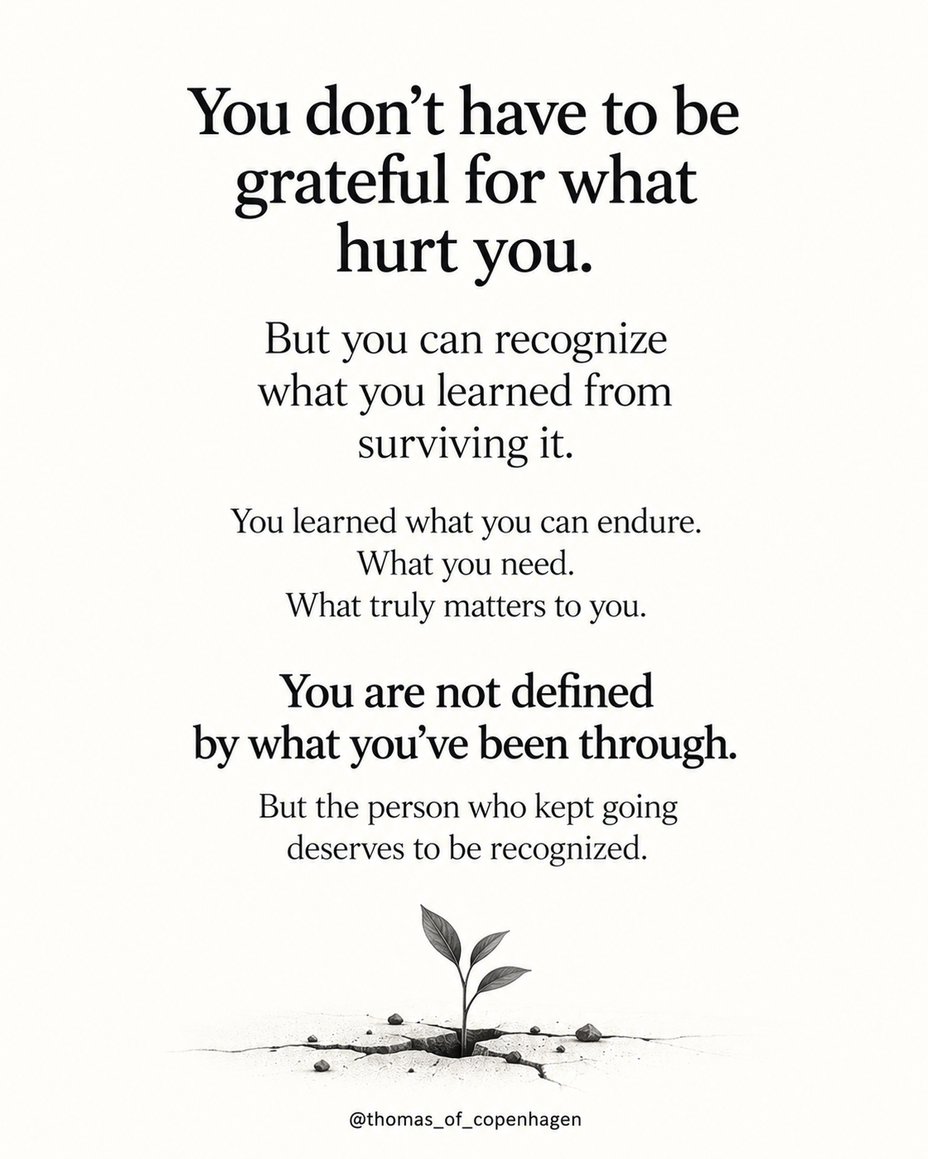
The peace within you

I used to think acceptance meant giving up. If something hurt, disappointed me, or wasn’t how I wanted it to be, accepting it felt like saying it was okay.

But acceptance doesn’t mean you approve of what happened. It means you stop spending all of your energy wishing reality were different before deciding what to do next.

You can’t control how someone treats you. You can control whether you keep giving them access to you. You can’t change what has already happened. You can decide what you carry forward from it. And you can’t make every part of life go according to plan, but you can learn to meet yourself with a little more patience when it doesn’t.

Sometimes peace isn’t finally getting everything the way you wanted it. Sometimes it’s realizing you can still build a good life with what is here.

What’s something you’ve become more at peace with as you’ve gotten older?

Also, if you're going through a tough time right now, I want you to know that I post daily mental health videos about how to deal with painful thoughts. So if you or anyone you know is struggling and wants help, click on one of the links below or write me if you have any questions you want me to answer:

www.instagram.com/thomas_of_copenhagen

www.tiktok.com/@thomas_of_copenhagen

~ Thanks to all. Thanks for all. ~

#MentalHealth #MentalHealth #Depression #Anxiety #BipolarDisorder #BorderlinePersonalityDisorder #Addiction #dissociativedisorders #ObsessiveCompulsiveDisorder #ADHD #Fibromyalgia #EhlersDanlosSyndrome #PTSD #Cancer #RareDisease #Disability #Autism #Diabetes #EatingDisorders #ChronicIllness #ChronicPain #RheumatoidArthritis #Suicide #MightyTogether

Most common user reactions 18 reactions 10 comments
Post
See full photo

How can you take a break today?

Whether it's going outside for fresh air, taking a few moments to collect your thoughts, or carving out a few hours for self-care, taking intentional breaks can help prevent burnout and overwhelm, especially on those more busy days.

What are some ways you can take a break today?

💌 Friendly reminder: You are worthy of taking the breaks you need today.

#52SmallThings #CheckInWithMe #Selfcare #MentalHealth #Disability #ChronicIllness #ChronicPain #RareDisease #Anxiety #Depression
#Autism #Parenting #PTSD #BorderlinePersonalityDisorder #BipolarDisorder #Fibromyalgia #Lupus #MultipleSclerosis #Migraine #Spoonie

Most common user reactionsMost common user reactions 5 reactions 4 comments
Post
See full photo

What's the most challenging part about living with an autoimmune condition?

Living with an autoimmune condition is complex, involving fluctuating and unpredictable symptoms, as well as adjusting various parts of your life to accommodate your health needs—or even getting a proper diagnosis and treatment.

What's the most challenging part about your condition?

📖 Want to read more on what Mighties have shared? Check out this story here: What Others Often Don't Understand About Autoimmune Diseases

#AutoimmuneDisease #ChronicIllness #ChronicPain #MentalHealth #CheckInWithMe #Disability #RareDisease #ChronicFatigue #Migraine #Insomnia #Fibromyalgia #HashimotosThyroiditis #GravesDisease #RheumatoidArthritis #Lupus #MultipleSclerosis #Type1Diabetes #Psoriasis #SjogrensSyndrome

What Others Often Don't Understand About Autoimmune Diseases

"Believe me when I say I would rather not be ill at all."
Most common user reactionsMost common user reactions 6 reactions 2 comments
Post
See full photo

Behçet’s: the misunderstood gateway disease. Rare, complex, and often accompanied by conditions doctors don’t always connect. #BehcetsDisease

#BehcetsDiseaseWhen Stanford diagnosed me with Behçet’s at seven years old, I had absolutely no idea what I was being handed. I barely knew how to pronounce it—especially because everyone seemed to pronounce it differently. I certainly didn’t understand that this would become the most misunderstood disease of my life. Behçet’s isn’t just sores and embarrassment. Try losing your teeth, having pieces of your tongue fall away, losing more than 90% of the vision in one eye, dealing with blood clots, heart disease, neurological complications, brittle bones and days when walking becomes difficult. Then add the other diseases and conditions that seem to travel alongside it, and you’re left wondering how one body can possibly hold all of this. I’ve spent decades being tested, retested, doubted, relocated closer to hospitals that understand rare disease, and becoming an unwilling expert in my own body. Behçet’s doesn’t just mutate—it humiliates, consumes, and invites complications I never asked for. It’s a continual inexplicable battle.

Most common user reactions 2 reactions 1 comment
Post

I’m new here!

Hi, my name is Jerry. I suffer from a rare disease that causes debilitating pain and loss of mobility. I also have struggled to get and keep adequate pain relief from doctors and pharmacies.

#MightyTogether #ChronicPain

Most common user reactionsMost common user reactionsMost common user reactions 4 reactions