Depresssion

Create a new post for topic
Join the Conversation on
440 people
0 stories
29 posts
Explore Our Newsletters
What's New in
All
Stories
Posts
Videos
Latest
Trending
Post
See full photo

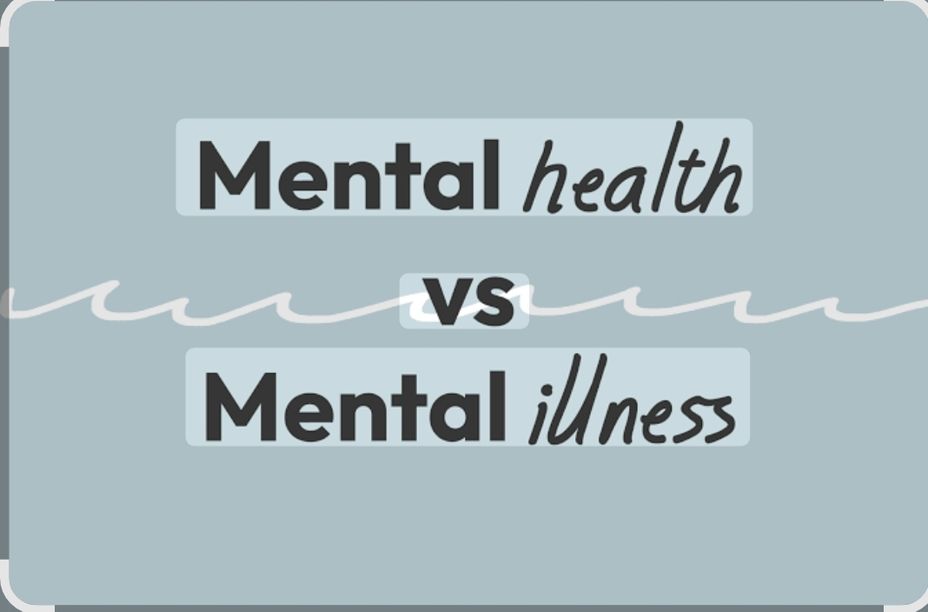
Mental Health vs. Mental Illness: Understanding the Difference Matters By BigmommaJ

For years, I heard the words mental health and mental illness used as if they meant the same thing.

In conversations, systems, and even care settings, the lines were often blurred. While the intention was often awareness, the impact was confusion—and stigma.

Understanding the difference between mental health and mental illness isn’t about semantics. It’s about language that heals instead of harms. It’s about helping people feel seen instead of labeled.

Mental Health: Something We All Have

Mental health refers to our emotional, psychological, and social well-being. It affects how we think, feel, cope, relate, and function day to day (World Health Organization [WHO], 2022). Mental health exists on a continuum, and every individual moves along that continuum throughout their life.

Mental health includes:
Emotional well-being – how we experience and regulate emotions Psychological well-being – how we process stress, trauma, and internal narratives Social well-being – our ability to form and maintain relationships.

Good mental health does not mean the absence of stress, sadness, or struggle. Rather, it reflects the capacity to adapt, cope, and function—even during difficult life circumstances (Public Health Agency of Canada [PHAC], 2022).

Mental health is influenced by biological factors, early attachment, trauma exposure, social determinants of health, and lived experience (Mental Health Commission of Canada [MHCC], 2021).

Mental Illness: A Clinical Reality, Not a Personal Failure

Mental illness refers to diagnosable conditions that significantly affect a person’s cognition, mood, behavior, or functioning. These conditions are identified using standardized diagnostic criteria, such as those outlined in the Diagnostic and Statistical Manual of Mental Disorders (DSM-5-TR) (American Psychiatric Association [APA], 2022).

Common categories include:

*Anxiety disorders

*Mood disorders, such as major depressive disorder and bipolar disorder

*Trauma- and stressor-related disorders, including post-traumatic stress disorder (PTSD)

*Psychotic disorders

*Personality disorders

Mental illness is not a personal weakness or character flaw.

Research consistently demonstrates that many mental health disorders are associated with trauma exposure, chronic stress, neurobiological factors, and systemic inequities (MHCC, 2021; SAMHSA, 2014).

With appropriate, trauma-informed treatment and support, individuals living with mental illness can and do lead meaningful, productive, and connected lives.

Where Mental Health and Mental Illness Intersect
Mental health and mental illness are interconnected, but they are not interchangeable.

An individual may:

Live with a diagnosed mental illness while experiencing periods of strong mental health
Experience poor mental health without meeting diagnostic criteria for a mental illness
Move between stability and distress across different stages of life.

Protective factors—such as supportive relationships, access to care, and emotional regulation skills—can improve mental health outcomes, even in the presence of mental illness (PHAC, 2022).

Understanding this distinction helps reduce stigma and supports early intervention.
Promoting Mental Health Through a Trauma-Informed Lens Promoting mental health is not about “positive thinking” or ignoring pain. Trauma-informed care emphasizes safety, trust, empowerment, and connection (SAMHSA, 2014).

Evidence-based mental health promotion includes:

Sleep, nutrition, movement, and nervous system regulation
Secure, supportive relationships
Access to therapy, psychiatry, and community-based supports
Early intervention, particularly for children and trauma-exposed populations
Reducing stigma through education and compassionate language Healing occurs in safe relationships—not in isolation.

Personal Reflection: Why This Distinction Matters to Me

I’ve lived on both sides of this conversation. Professionally, I’ve worked with families navigating systems that often misunderstood their pain. Personally, I’ve carried diagnoses that felt heavier because of how they were spoken about—not because of what they actually meant.
For a long time, I believed struggling meant I was failing. That needing help meant I was weak. That my mind was something to fight instead of understand.

What I have learned—through recovery, motherhood, loss, and rebuilding—is this:
Mental illness explained my pain. It never defined my worth.

When we confuse mental health with mental illness, we erase nuance. And when nuance disappears, so does humanity.

Understanding the difference gave me language for compassion—toward myself and others. It allowed me to stop asking, “What’s wrong with me?” and start asking, “What happened to me—and what do I need to heal?”

Final Thoughts

Understanding the difference between mental health and mental illness helps shift conversations from judgment to empathy, from fear to understanding.
Struggling does not mean broken.

Diagnosis does not mean hopeless.

Healing does not mean linear.
Mental wellness is not about perfection. It’s about support, safety, and being seen. Sometimes, rising above your norm begins with learning a new language for your pain.

BigmommaJ
#MentalHealth #BorderlinePersonalityDisorder #Depresssion #MoodDisorders #Anxiety

Most common user reactions 2 reactions
Post
See full photo

There was a time when I didn’t know how to like myself. Mostly because I never understood who I truly was. I would always picture myself as someone else. Someone confident, talkative, and more capable. Because inside, I felt small and had no clue how to decipher my emotions.

I always felt off, like I was constantly falling short. Socially. Emotionally. Professionally. I’m extremely sensitive, somewhat spacey, and the poster child for the “quiet” girl. So, felt like I was inept. Not productive enough, not fast enough, and not the easiest person to understand.

I learned to mold myself into what others needed me to be. I’d mask my discomfort, my confusion, and even my personality. I was the master at pretending everything was fine, when clearly it wasn’t. I was an emotional wreck inside, and the longer I did it, the more disconnected I became from who I was underneath it all.

Diagnosis Wasn’t the End—It Was the Beginning

Getting my diagnoses later in life changed everything for me. It didn’t happen overnight though. There was a lot of back-and-forth emotions for me. But ultimately, it was like a light being turned on in a long forgotten dark room.

Suddenly, there were reasons for the things I’d hated myself for. The forgetfulness. The brain fog. The emotional extremes. The overstimulation. The shutdowns. The way I’d disappear into daydreams just to cope. They weren’t moral failures. They weren’t character flaws. They were real, they had names, and they weren’t my fault.

From Criticism to Compassion

It wasn’t easy to shift how I treated myself. I’d spent decades internalizing that I was a problem to fix. That I had to earn love, rest, and peace by being good enough or useful enough.

But slowly, therapy, self-reflection, new experiences, and writing helped me being to extend gentleness to the parts of me I used to shame.

I started noticing how hard I was trying. How much I carried. And how much I cared, even when my brain made things harder than they needed to be.

I Still Have Bad Days

There are days where I slip back into old patterns—self-blame, overthinking, comparison. Days where my brain feels like static. Days where the fog is thick and I don’t know where I went.

But now, I know what’s happening. I don’t label myself a failure. I don’t abandon myself anymore. I might be starting over from scratch, but I’m discovering parts of myself that I didn’t know existed.

Becoming My Own Safe Place

My relationship with myself is getting better each day. I’m continually growing, and I think I’m headed in a more positive direction. I’m not trying to be easy to understand, but I’m trying to be real.

I may not always love myself, but I have a newfound respect for myself now. And that’s definitely not something I could say a few years ago.

#MentalHealth #ADHD #AutismSpectrumDisorder #BipolarDisorder #Depresssion

Most common user reactionsMost common user reactions 4 reactions 1 comment
Post

Living with bpd can be very torturous at times especially growing up and not understanding it. How did you stim to slow down your outburst? Numb out!

#BorderlinePersonalityDisorder #MentalHealth #Anxiety #Depresssion #PTSD

Most common user reactions 1 reaction 1 comment
Post
See full photo

Lonely Start

I’m writing this after reading several articles on how to combat loneliness.

Often the first one is to reach out to close friends.

There are several reasons this is not working for me. First, I don’t have any close friends I lost them or push them away due to my mental illness. Second, in the past year many of my immediate family have been put on the do not contact toxic list. So reaching for the phone is not helpful.

How can you be lonely if you’re married? My wife works and goes into the office several times per week. I am home and have been for almost 4 years with a complex mental disabilities. Most of it, in the past three years anyway there’s been a balance of her working from home and going into the office.

In order for her to be productive and mentally fit we agreed I won’t bother or distract her while she is quote “working”. Her location of being home or in the office does not play a factor in the agreement to let her do her job.

Another popular suggestion is to join social media or in person clubs or meetings. Due to my severe social anxiety I feel I would never be able to speak up with enough confidence to participate in clubs. (Getting hooked on social media as a distraction also not an option)

For example, “a Mets fan club” I still would not enjoy myself as I would think I’d likely not make friends anyway and feel inferior. No reason to join a club and become a wallflower. Knowing myself a all the buildup and anxiety before and after meetings would not be worth it.

The challenge is therefore left to me to fill my day with activities and constant distractions to fight the negative self-talk that pulls me to darkness. It tells me why bother, you have no purpose there’s no reason to get out of bed.

Anyone else has similar stories suggestions to share please feel free to comment below. Be Well!

#MentalHealth #Men #Depresssion

Most common user reactions 5 reactions 1 comment
Post
See full photo

Why this group exists

Just a gentle reminder as to why I created this group. As a Pastor I am all too aware that churches have not always handled the issue of mental health with the compassion and sensitivity that it should have. Thankfully things are starting to change.

This group is for encouragement, support, prayer requests and honest discussion. So, lets treat each other with respect and sensitivity. There are pretty of other places for theological debate.

#Faith #Christianity #Hope #Depresssion #MentalHealth

Most common user reactions 2 reactions 16 comments

Post

Depression Thoughts

I have opened up a lot about my mental illnesses to my friends and family in recent years.
What I get is a big mixture of "I'm so glad you're talking about it," to "well, we are all F***Ed up, I knew you were too."
What I do not feel though, is heard or understood. Like on FB, if you're not happy, friendly and up beat at least 75-85% of the time. People drop you. So that just makes me feel like I am resented for being me.
I do not communicate with memes, jokes, sarcasm, or innuendo well. At least, not in written form. So if I try to be up beat and jovial, people still are like "so glad you feel better"
Buy I have been in perpetual depression since my dad was diagnosed with cancer in 2020. I am lost and cannot find my way out fighting grief since his death and the death of my service animal in 2021. So I am not better.
I want to literally spend all day, every day in bed with books, my teddy bear and warm blankets. Because I have no interest in anything.
If I behaved the way I feel, no one would be okay with what was going on. Friends, family, they would be freaked out because I wouldn't be there.
But I fight this so much. And I am tired.
Tired of the physical invisible illnesses. Tired of the mental diseases that leave me exhausted, broke, sick, and suicidal on the regular. Tired of just wanting to know how to make things work for my family, only to have everything blow up in my face day after day.
I am tired of living.
I don't want to die.
I am not trying to end my life.
I just do not want to be what I am any more.
I have no one to talk to about it. People say "so be different!" How!? How do I train myself to be different? Who can teach me? What books do I read? What work books? Is there a guide?
What do I need to do to stop being this lump of nauseated, depressed, migraine ridden, impulse driven, exhausted, manic insomniac, lethargic, apathetic 400lb lump!?
I'm so tired of being alone in wanting to change.
#Depresssion #BipolarDisorder #BorderlinePersonalityDisorder #GastroesophagealRefluxDisease #Asthma #IrritableBowelSyndromeIBS #Obesity #ChronicMigraineSyndrome #PMDD #CatamenialEpilepsy #DegenerativeNerve

Most common user reactions 1 reaction 4 comments