Mood Disorders

Create a new post for topic
Join the Conversation on
Mood Disorders
9.6K people
0 stories
656 posts
About Mood Disorders Show topic details
Explore Our Newsletters
What's New in Mood Disorders
All
Stories
Posts
Videos
Latest
Trending
Post
See full photo

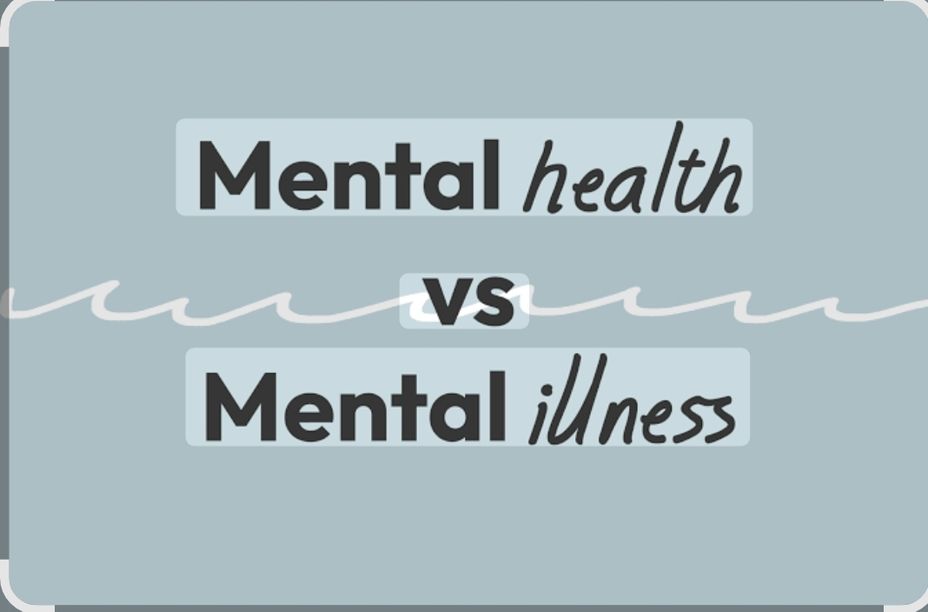
Mental Health vs. Mental Illness: Understanding the Difference Matters By BigmommaJ

For years, I heard the words mental health and mental illness used as if they meant the same thing.

In conversations, systems, and even care settings, the lines were often blurred. While the intention was often awareness, the impact was confusion—and stigma.

Understanding the difference between mental health and mental illness isn’t about semantics. It’s about language that heals instead of harms. It’s about helping people feel seen instead of labeled.

Mental Health: Something We All Have

Mental health refers to our emotional, psychological, and social well-being. It affects how we think, feel, cope, relate, and function day to day (World Health Organization [WHO], 2022). Mental health exists on a continuum, and every individual moves along that continuum throughout their life.

Mental health includes:
Emotional well-being – how we experience and regulate emotions Psychological well-being – how we process stress, trauma, and internal narratives Social well-being – our ability to form and maintain relationships.

Good mental health does not mean the absence of stress, sadness, or struggle. Rather, it reflects the capacity to adapt, cope, and function—even during difficult life circumstances (Public Health Agency of Canada [PHAC], 2022).

Mental health is influenced by biological factors, early attachment, trauma exposure, social determinants of health, and lived experience (Mental Health Commission of Canada [MHCC], 2021).

Mental Illness: A Clinical Reality, Not a Personal Failure

Mental illness refers to diagnosable conditions that significantly affect a person’s cognition, mood, behavior, or functioning. These conditions are identified using standardized diagnostic criteria, such as those outlined in the Diagnostic and Statistical Manual of Mental Disorders (DSM-5-TR) (American Psychiatric Association [APA], 2022).

Common categories include:

*Anxiety disorders

*Mood disorders, such as major depressive disorder and bipolar disorder

*Trauma- and stressor-related disorders, including post-traumatic stress disorder (PTSD)

*Psychotic disorders

*Personality disorders

Mental illness is not a personal weakness or character flaw.

Research consistently demonstrates that many mental health disorders are associated with trauma exposure, chronic stress, neurobiological factors, and systemic inequities (MHCC, 2021; SAMHSA, 2014).

With appropriate, trauma-informed treatment and support, individuals living with mental illness can and do lead meaningful, productive, and connected lives.

Where Mental Health and Mental Illness Intersect
Mental health and mental illness are interconnected, but they are not interchangeable.

An individual may:

Live with a diagnosed mental illness while experiencing periods of strong mental health
Experience poor mental health without meeting diagnostic criteria for a mental illness
Move between stability and distress across different stages of life.

Protective factors—such as supportive relationships, access to care, and emotional regulation skills—can improve mental health outcomes, even in the presence of mental illness (PHAC, 2022).

Understanding this distinction helps reduce stigma and supports early intervention.
Promoting Mental Health Through a Trauma-Informed Lens Promoting mental health is not about “positive thinking” or ignoring pain. Trauma-informed care emphasizes safety, trust, empowerment, and connection (SAMHSA, 2014).

Evidence-based mental health promotion includes:

Sleep, nutrition, movement, and nervous system regulation
Secure, supportive relationships
Access to therapy, psychiatry, and community-based supports
Early intervention, particularly for children and trauma-exposed populations
Reducing stigma through education and compassionate language Healing occurs in safe relationships—not in isolation.

Personal Reflection: Why This Distinction Matters to Me

I’ve lived on both sides of this conversation. Professionally, I’ve worked with families navigating systems that often misunderstood their pain. Personally, I’ve carried diagnoses that felt heavier because of how they were spoken about—not because of what they actually meant.
For a long time, I believed struggling meant I was failing. That needing help meant I was weak. That my mind was something to fight instead of understand.

What I have learned—through recovery, motherhood, loss, and rebuilding—is this:
Mental illness explained my pain. It never defined my worth.

When we confuse mental health with mental illness, we erase nuance. And when nuance disappears, so does humanity.

Understanding the difference gave me language for compassion—toward myself and others. It allowed me to stop asking, “What’s wrong with me?” and start asking, “What happened to me—and what do I need to heal?”

Final Thoughts

Understanding the difference between mental health and mental illness helps shift conversations from judgment to empathy, from fear to understanding.
Struggling does not mean broken.

Diagnosis does not mean hopeless.

Healing does not mean linear.
Mental wellness is not about perfection. It’s about support, safety, and being seen. Sometimes, rising above your norm begins with learning a new language for your pain.

BigmommaJ
#MentalHealth #BorderlinePersonalityDisorder #Depresssion #MoodDisorders #Anxiety

Most common user reactions 2 reactions
Post

Community

Community.
It’s funny—to step into one
and feel like you should already know how to lead it.
To feel like a mentor by instinct.
A brother, a sister, an auntie.
Someone steady for those searching for family,
for the brokenhearted.

To feel half empty,
spread thin like butter across too much bread,
yet still able to offer more than words—
advice,
a simple meal,
companionship,
love.

To recognize the lost in children and adults alike,
each just trying to isolate a little less,
to be seen without being stared at.
To go from decades of solitude
to dozens of new faces in weeks,
learning how to share pieces of myself
without bleeding out—
pouring carefully, not emptying,
offering warmth without erasure.

To have worn so many masks
that my face forgot its own shape.
To have built personalities like scaffolding—
temporary, necessary, exhausting—
only to realize
that being myself
was the only thing anyone needed.

What I have to give
is love, understanding, patience, kindness.
They cost nothing.
They are renewable.
They fill my cup instead of draining it.

So I ask myself:
Is this people-pleasing or relationship-building?
Is it hypervigilance or empathy,
or simply the recognition
that I carry light
and can set it down beside someone else
without losing my own?

Vulnerability is the birthplace of change.
And I am ready.

Ready to unmask.
To unburden.
To unravel
and stitch myself back together
with intention.

I am learning and unlearning—
again and again—
that I didn’t have to do it alone,
that I don’t have to do it alone now.

To find the missing pieces.
To melt the gold.
To fill the fractures with love,
therapy,
medication,
with men and women
who see the real me
and do not flinch.

Who watch me stumble and fall
and offer hands, not ultimatums.
Kind words, not commands.

To do what my father could not.
To be who he cannot.
To repair what he did not break—
but broke in me.

To unhear and unlearn and unremember
the voice that became my inner weather:

You’re weak.
You hit like a girl.

"This is what I am paying for?"

If five thousand dollars fell from the sky—
would you catch it?
If it saved you?
If it saved your family?

That question became an argument.
An argument sharp enough
for him to regret my education,
to throw it back at me,
to call it worthless—
while I hold a master’s,
while I have built more with less,
gone further on thinner ground.

I have done more with less help.
I have survived without a net.

Emotions are chaotic and messy
when numbness finally cracks.
They arrive loud,
uninvited,
terrifying.

Feel.
Feel.
Feel.
Stay.

Sit with it.
Breathe with it.
Write it down
before it writes you.

Change what you can.
Accept what you cannot.
Learn the difference.
Find the wisdom.
Find the courage.
Find the serenity
that comes from staying.

Face the future—
whether real or imagined,
whether prophecy or trauma
wearing a disguise.

Let the other voice sink back underground—
the one dripping venom,
fed by years of abuse,
by inherited self-loathing
soaked into skin,
into muscle,
into memory.

This body learned survival early.
This brain hardened where it had to.
Scarred—
emotionally, financially, physically—
but still standing.

This mind is done running.
Done pretending
that who I am
is something to escape.

I am a helper.
I help others
and I am learning to help myself.

I do not have to empty my cup
to fill someone else’s.
There is room here—
enough space
to hold others
because I am finally holding myself.

Look for the helpers.
Be a helper.

I am a helper
who asks for help.

And I want to stay angry
because anger feels safer
than grief—
safer than the pain,
the sadness,
the loss
of what cannot be repaired
by the one who broke it.

But I am learning
to brave the depths of my own soul,
to descend instead of recoil,
to name and process the trauma
rather than keep it caged at the surface—

so the pain doesn’t live
one breath away from eruption,
so it doesn’t stay coiled
just beneath my skin,
waiting to spill.

So it can move.
So it can settle.
So it can finally loosen its grip
and make room
for something quieter than survival.

#MentalHealth #CheerMeOn #Grief #Depression #Anxiety #Addiction #MajorDepressiveDisorder #MoodDisorders #SubstanceUseDisorders

Most common user reactions 8 reactions 2 comments
Post
See full photo

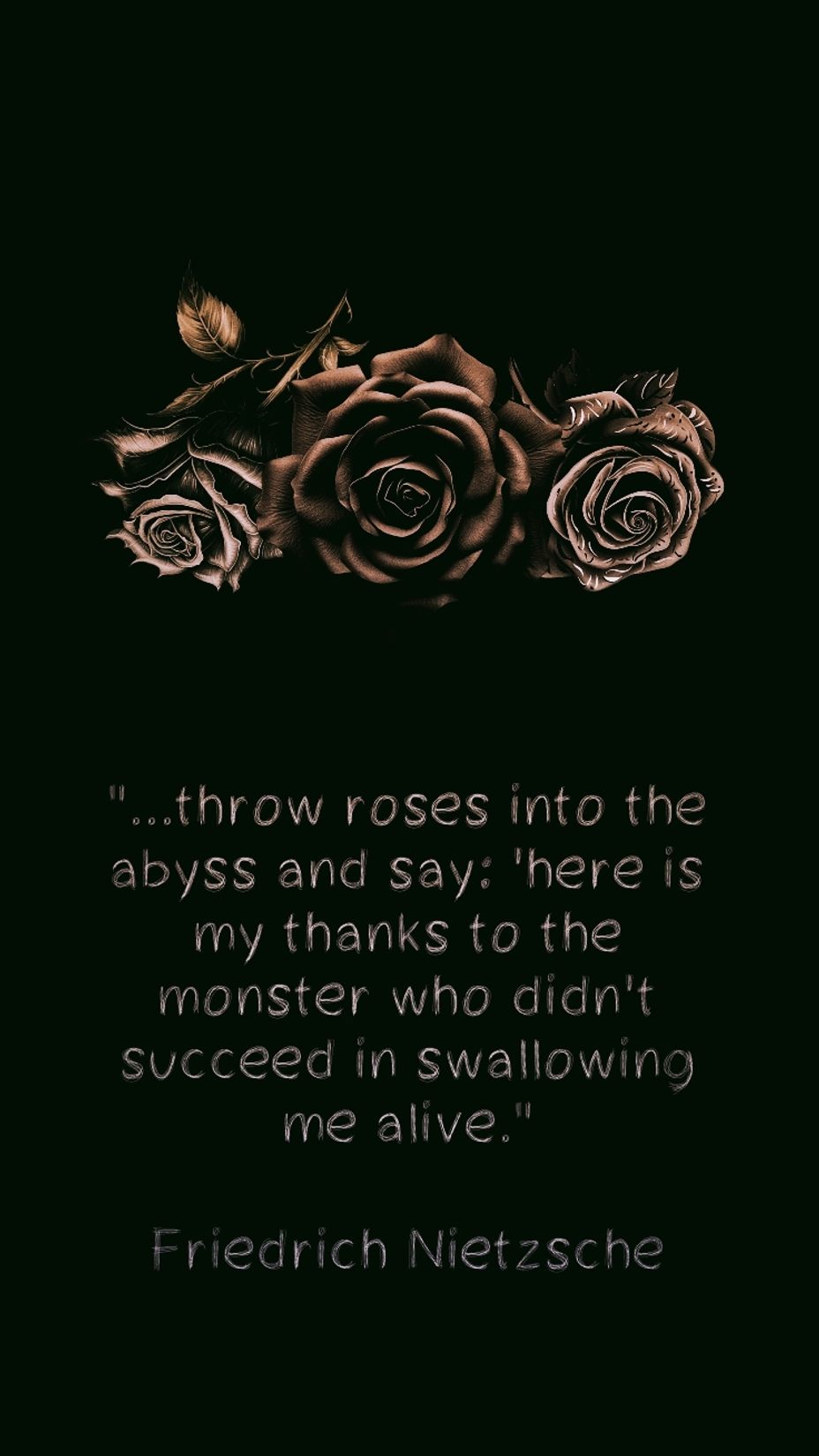
THROWING ROSES INTO THE ABYSS

"...throw roses into the abyss and say: 'here is my thanks to the monster who didn't succeed in swallowing me alive."

Friedrich Nietzsche

This haunting line from Nietzsche's final autobiographical work captures one of his most profound ideas: the transformation of suffering into gratitude.

The "monster" represents all the forces that tried to destroy him — illness, isolation, rejection, despair. The "abyss" is that dark void of meaninglessness and pain we all face at times.

But instead of cursing what nearly broke him, Nietzsche offers roses. Why? Because those struggles forged who he became. The monster that failed to consume him made him stronger, deeper, more alive.

This isn't toxic positivity or pretending pain doesn't hurt. It's something more radical: acknowledging that our greatest trials, the ones that nearly destroyed us, often become the source of our greatest strength and wisdom.

**The paradox:**
We thank the monster not for the suffering itself, but for *failing* to defeat us. For leaving us standing, transformed, capable of throwing roses into that same darkness.

Have you ever looked back at something that nearly broke you and felt, unexpectedly, a strange gratitude for surviving it? #MentalHealth #SchizoaffectiveDisorder #Schizophrenia #BipolarDisorder #BorderlinePersonalityDisorder #BorderlinePersonalityDisorderBPD #Addiction #MoodDisorders

Most common user reactions 5 reactions 2 comments
Post
See full photo

The Bipolar Donation Program: Liberating Problems in Order to Create New Ones 👌 #BipolarDisorder #Mania #MoodDisorders

This week previous I had a textbook example of what bipolar looks like once it has manifested itself in the mind. I decided that I needed to spruce up my clothes and make a few additions and get rid of some of my attire. Well it went well I thought until I got a moment of clarity 😂🤦🏽‍♂️

Below is a link to a blog I wrote about it if you’re curious to read it.

The Bipolar Donation Program #MentalHealth #MightyTogether

The Bipolar Donation Program

There are moments in bipolar life that arrive fully formed, like divine instructions. This one came on an ordinary morning, with an extraordinary certainty: I needed a new wardrobe, not in a litera…
Most common user reactionsMost common user reactions 7 reactions 1 comment
Post
See full photo

Anhedonia - When nothing is everything you feel

My emotions suppressed, switched off when I’m depressed.
Where once were anger, sadness, despair and fear, there’s now only nothingness everywhere.
There was frustration, exhaustion, tiredness and pain - now searching for feelings is all in vain.

I was too tired of this life as it cut my heart like a knife.
Now I no longer feel - my emotions turned off.
„Does it taste good?“ she asks, and I nearly scoff.
I nod, absentmindedly, at her - she doesn’t know that it’s not like before; what I once enjoyed eating, feels now like a chore.

I stare blankly ahead.
She whispers „She looks so sad.“
She doesn’t know that my heart‘s heavy indeed - of comfort it surely is in need.

The sky so grey, it matches my mood;
like clouds I feel so far removed.
The weight of emotions was too much to bear, cracking my heart open bare.
Now nothingness is everything my heart can spare.

I look outside, not trying to hide.
Rain splatters the windowsill,
the wind rages, never to still.
Leaves fall away and are caught in the whirl; in a violent dance they swirl.
A leaf falls down - brown colour, texture crisp.
I‘m sure if I touched it, it would crumble to nothing but mist.

I feel that way too, so hollow inside - and
deep down I know I would too, if someone tried.
But I won’t let people close,
because isolation is what I chose.
So I stay on my own, trapped inside.
Can someone die while still alive?
Because I might.

[Picture by Paul Pastourmatzis, Unsplash]

#MentalHealth #Depression #MajorDepressiveDisorder #MoodDisorders #CPTSD

Most common user reactions 15 reactions 5 comments
Post
See full photo

You Don’t Know - Next to Normal

[I recently discovered the Musical Next to Normal and fell in love with it.
The pic is a drawing I made.
The song describes what Depression actually feels like…]

Do you wake up in the morning and need help to lift your head?
Do you read obituaries and feel jealous of the dead?
It's like living on a cliffside, not knowing when you'll dive
Do you know, do you know what it's like to die alive?

When a world that once had colour fades to white and grey and black
When tomorrow terrifies you, but you'll die if you look back

You don't know
I know you don't know
You say that you're hurting
It sure doesn't show
You don't know
It lays me so low
When you say, "Let go"
And I say, "You don't know"

The sensation that you're screaming, but you never make a sound
Or the feeling that you're falling, but you never hit the ground
It just keeps on rushing at you day-by-day-by-day-by-day
You don't know, you don't know what it's like to live that way

Like a refugee, a fugitive forever on the run
If it gets me, it will kill me, but I don't know what I've done

#MentalHealth #Depression #MajorDepressiveDisorder #BipolarDepression #BipolarDisorder #MoodDisorders

Most common user reactionsMost common user reactions 7 reactions
Post

Understanding my mood disorders

Suffering from mood disorders from many years having low self esteem and having social anxiety was extremely high so far i overcome all these problems and i realize that the suffering and mental agony took me so down that i couldn't connect to the world however despite all these suffering i am recovering and able to cope with the crowd and managing my fear and evolving to ignore the people who wanted me to scare

Most common user reactionsMost common user reactionsMost common user reactions 11 reactions 3 comments
Post
See full photo

Coping Mechanisms: Writing a Manifesto 📄📖📝🖌️📚 #BipolarDisorder #MentalHealth #Depression #Anxiety #Writing

As you may or may not know, I use writing as a coping mechanism for my difficult times with my Bipolar Disorder. It’s not exclusively a coping mechanism though, I also write when I’m not struggling as I thoroughly enjoy it. The choosing of a topic or subject, the research on said topic or subject, the structuring of the narrative that you have created, then the tweaking of your narrative to make it more fluid, clear and/or comprehensible.

Here is a link to the Manifesto that I have started to write. There’s 3 parts so far and all of them are a work in progress, so if you have any ideas, comments, suggestions or anything please, please, please let me know in the comments section below. I’m receptive to negative comments too so if you have a negative opinion about my work then please do share it, I’m not going to be offended, I will actually be happy with it as it’s a great way to learn and improve 👍

The Sanderson Manifesto 📄

#MightyTogether #ADHD #DistractMe #Selfcare #MoodDisorders

The Sanderson Manifesto 📄

A collection of nonsensical hypotheses that reconfigure the underlying mechanics of human existence 🤯👌🤣 Part I: Parabolically on Prozac – Arc of a Medicated Life The Sanderson Manifesto Part …
Most common user reactions 3 reactions