Retinitis Pigmentosa

Create a new post for topic
Join the Conversation on
Retinitis Pigmentosa
180 people
0 stories
25 posts
About Retinitis Pigmentosa Show topic details
Explore Our Newsletters
What's New in Retinitis Pigmentosa
All
Stories
Posts
Videos
Latest
Trending
Post

I joke about this but really… #ChronicIllness #MentalHealth

I want to post something that’s light compared to the last one, and just to perhaps have some fun on this kinda internal joke I have. I say “I won the gene lottery” for the worst genes!
It’s not very sad to live with it for me, perhaps because I grew up in an environment so bad I had to learn to adapt fast, which makes me going blind not suffer so much though after 5 years actively dealing with constant spurts of vision loss, I finally feel some grief.
But really if I would list… disabilities? Well, ASD and blindness are together. Very likely to have won the ADHD gene too but I didn’t get to test yet because of money and because the overall test checks for ASD, ADHD and “being Gifted” and I’m already proven to have ASD and a “Gifted Brain” so I don’t want to pay a lot of money right now just to check if ADHD is here too. Now eyes? Congenital cataracts with retinal dystrophy followed by partial ophthalmoplegia, partial lagophthalmos, nocturnal lagophthalmos, light strabism and an amblyopic eye that never worked until some weeks ago and activated because my dominant eye got to the useless bar. Also was lucky to win the myopia and astigmatism genes but those are common in society. Then there’s the very specific genes from each of my parents… heart disease and hypertension weren’t on my bingo card until I actually got to a point where I apparently earned it from my dad. Then a very aggressive gastritis from my mum, and also coming from her… loose ligaments and double joint.
Aside from my effed mental health that is more mine than anyone else’s, I basically won the gene pool. I try laughing about it because if I’d cry for all of it I’d be even more miserable, but what most of that brings me isn’t the grief really, it’s a free ticket for being constantly annoyed and tired, always in fatigue and although my patience is almost endless, I do get frustrated and annoyed by having to go doctor after doctor trying to solve my issues, adjust medications, and overall, trying to find an ophthalmologist who actually will effing listen to me on testing for Retinitis Pigmentosa Sine Pigmento because I have all the symptoms, but nothing is visible on my retina, and that’s why this kind of RP I mentioned, is called “Sine Pigmento” (If you didn’t understand the term, it’s Latin for “without pigment”)

Most common user reactionsMost common user reactions 4 reactions
Post

How concepts makes knowing yourself harder: my view on my blindness. #Blindness #MentalHealth

It’s such a weird concept for me when it comes to my condition.
I grew up low vision due congenital cataracts, even having made surgery at 3yo. My first experience in the visually impaired world wasn’t known for me. I never realised I saw so little compared to others, I never had something to take as reference so for me: it was just normal. I was just clumsy. It’s normal for people with myopia to have to wait the bus to be like 2 metres from you to signalise for it to stop. That’s how I grew up until an eye doctor tell me: “you must not lie and guess the letters. If you lie and guess them I won’t be able to properly diagnose, so if you can’t see them, just tell me.”
And that was my first time hearing the term “low vision”, at 18yo, the same year my retinal dystrophy decided to manifest, basically about 6 months before I became legally blind.

What makes it even weirder for me is taking years to know I have a retinal dystrophy, and to now be self aware to know the symptoms it displays. Not a self diagnostic but also not an opinion of a doctor but a guess I have.

My condition seems to be Retinitis Pigmentosa Sine Pigmento. A form of RP that’s really hard to catch because it doesn’t show itself as most forms of RP do.

And it’s a hard thing to grab because I didn’t know I was night blind until recently, I thought I couldn’t see at night because I have photophobia and the street lights and cars messed with my vision. I had to discover my night blindness in a very out of the box way. I knew I had tunnel vision but that’s one of the aspects that made realising the night blindness even harder.

For those with congenital aumarosis (100% blind by birth with no other condition in play), what they see, is absolutely nothing, and humans usually can’t grasp the idea of absolutely nothing. There are some tests you can do to have a partial idea of what it is, but it’s not black, it’s absolutely nothing. And for some reason, that’s a concept I understand. So when it comes to my tunnel vision there’s no blackness outside of my visual field, and I don’t have enough visual memory to even know if this lack of field of view was once lower, I have no idea what’s outside of my field of view, and it’s not blackness, it’s just nothing at all, and I even had to try to explain to blind people about nothingness because they acquired blindness and they see full black or full white, or just gray.

So I never even noticed the night blindness, because it portrays as street lights and vehicles headlights, and just a deep darkness that makes everything basically black, and I just didn’t understand that besides the lights, the blackness meant I couldn’t see. Until the day I went into a darker place with sunglasses and I couldn’t see, then it came, late again, but came, what night blindness looks like.

So basically: tunnel vision, check; night blindness, check; getting darker becomes something similar to static on a tv, check. I will go for a diagnosis to know if it’s RP or if it’s another retinal dystrophy that has similar symptoms, I plan on going after it this year, I just need to have some time to breathe since I haven’t stopped since September and I’m basically burned out.

Most common user reactions 2 reactions
Post

Support needs are needs. #AutismSpectrumDisorder #Blindness #MentalHealth #Depression

Have you ever expressed you’re a level 2 support autistic person and people would invalidate you because “you came to this appointment by yourself”?

People think of autistic people as two sides of a coin, like it’s black and white, but the “scientific” name already says ‘spectrum’. And that spectrum isn’t only on some classic functional tasks, not only that, but autism usually comes with other comorbidities, like me who has a personality disorder, probably undiagnosed ADHD, and many body structural differences that might be related, such as dispraxia. And my luck is just right for me to also be born with congenital cataracts, an eye disease that also loves to come with something else, such as glaucoma (not my case) or in my case, retinal dystrophy, that might be retinitis pigmentosa, I still don’t know which type of dystrophy I have.

So even trying to put autism into three categories, you still have a whole spectrum on each, the only way I see that makes this classification possible is the wording:
1. Support Needs
2. Substantial Support Needs
3, Constant Substantial Support Needs

This wording makes it vague enough to make a classification possible, and due to people viewing autism as black and white, the support needs level 2 ends up being the one people often forget, invalidate and misunderstand.

I’m a type of person who’ve been through forced independence, I started catching busses by myself at 10 when I started going to school by bus after having gone through very aggressive bullying on the school van that would get me to school. Autism wasn’t so spoken about, much less autism on females assigned people, so I had to learn a lot of social cues, communication, non-verbal communication skills (tho I’m still terrible at them), social norms, expressiveness and knowing how to pick my words when talking. It’s exhausting, I suffer from autistic burnout for years, and one of the causes is the constant task of knowing how to articulate my needs, or bend myself to be flexible, despite having cognitive rigidity, because others wouldn’t do it, even being neurotypicals. So at first glance people can’t realise I’m on the level 2 category, because my adapting skills are very sharp and I adapt fast to new situations. That’s why I pointed this to blindness, because I got blind, and I adapted. I had no one to teach me how to use a cane so I taught myself. I’m still waiting for the daily activities rehab part from the blind foundation but I just can’t stop my life to sit and wait. I want to learn how to make my own make up, and I basically started making my own make up already, I need to learn the techniques for that, but while I wait, I just do my best to be able to do something.

I might not show so much support needs on socialising, learning communication skills and articulation, because I adapted. But if I get to a meltdown, there’s nothing that will make myself snap out of it, I need intervention from people to help me and avoid that I put myself at risk. Usually after a meltdown I have a shutdown too, so I just fall asleep without much control over it.
To catch the tube by myself I need to listen to music so I keep calm, and nowadays there’s a musical I listen to absolutely every time I need to go out, that helps me self regulate. I stim a lot and often get censored by people close to me, and I have to remind them that I need to make constant and repetitive movements when I’m overwhelmed. But this is not where it ends.
When it comes to my body, I don’t know when I need to pee unless I’m urgently needing it, so UTIs are basically my daily companions. I can’t feel satisfied after eating, so sometimes I need someone to give me a hint that I’m not eating in a healthy way. I don’t like most of the stuff that can make you gain weight but I’m obese because other factors. I have insanely high tolerance to pain, I might break a bone, and it happened before, and not know it, because well it might hurt but it’s too little to actually give me some concern. At the same time I am extremely sensible to my internal organs, so I know EXACTLY where I feel what I feel. If I feel chest pain I won’t jump to conclusions that I might be having a heart attack because I know if it’s a pain on the boobs, the lungs, the heart, the esophagus, etc. it even got me confused lately because I’m feeling a pain on a place I don’t know which organ could even be there to ache, other than my intestines, but the pain doesn’t give the vibe of intestinal cramps. So all that already show how much substantial support I need just for functioning a bit. But I also need support when it comes to daily tasks.

I hashed depression in here too because of this. Me getting depressed makes me not take care of my house and myself, and I do have very severe depression, that can be very crippling sometimes. And also have to deal with PDA. So trying to humiliate me, or repeat many times to me that my house needs cleaning actually makes me not clean it. My mum had to find the right words and empathy to make me start reacting and taking care of myself and everything. But I still need this support. Sometimes if I try giving myself rules, I don’t really follow them, I just feel frustrated when I do something out of the pattern I usually follow and then the repercussion is that I don’t know where I left something. And this is why I hashed blindness too. Because being blind means I have to be even more strict with organising routines so I know where everything is, and can find it later. But without clear instructions of what I have to do… I just don’t know how to. Yes I adapt, yes I try my best, yes I do without waiting, but I’m still not able to find directions without someone to direct me. It might sound silly, but my support needs actually makes me need direction from a third person. So I want so bad to get to the daily activities habilitation so I can learn how to organise stuff properly.

This is a bit frustrating for me to express, because I don’t want to use my depression, autism or blindness as crutches to justify a messy house. But I know that I need someone to direct me on some tasks, or I just can’t do it myself. And I wish people could understand how that is a need, and not me talking BS. Even if it’s not a classic need from a person with substantial support needs, it still is my need, just like there are people with ASD that can’t cross a street by themselves. It’s a need, and instead of invalidation and ableism, the world would be better if only everyone’s needs would be respected.

Most common user reactionsMost common user reactions 3 reactions 3 comments
Post

What Is Usher Syndrome?

What Is Usher Syndrome?
Usher Syndrome is a genetic disorder that causes progressive hearing loss, vision loss or retinitis pigmentosa. Not to mention balance problems. Last but not least, even though there is no cure available, there are treatments available that focus on managing symptoms through hearing aids and cochlear implants, vision aids, rehabilitation, and early intervention, while research explores gene therapies and drugs to slow degeneration.

Post
See full photo

The Death Spree seems to never end. #Depression #Anxiety #Grief

So… I am kinda praying for the superior forces, the gods, whoever is able to, just give me and my boyfriend a break.
So very recently he got a new cat, or rather this new cat invited himself into my bf’s house. And today we discovered he has cancer.
I cried for a while in a room alone just to have some composure and be able to be a pillar of support to my boyfriend, be the shoulder he can cry on when he needs.
I asked the universe to please let me feel less tired, so I can be more of a use, to be able to not need so much rest and leave my bf hanging when he needs someone to support him, and I’m his main line of support because of some reasons.
Why did I title this post referring to a death spree?
Late 2021 to early 2022, his cat, that was so close to him, died of feline leukaemia.
2023 my cat who was almost 19 years old, just one and a half year younger than me at the time also died, and I fell into very severe depression relapsing almost to 0%.
2024 he lost both his grandmothers, and that also added more to worry as I was really worried of my MIL and FIL because they just lost their mums.
Also 2024 I lost a friend to pneumonia. Tho I’m young I have lots of older friends and she was over 60.
2025 about a month and a half my boyfriend lost his oldest cat that grew up with the one who died of feline leukaemia. She died of a cardiac arrest after having a second rectum prolapse and was in recovering from the surgery.

What kills me inside is that all of this is happening, we have no pause to pull ourselves together, both me and him are getting stuff happening that aren’t only our cats getting sick, one of mine didn’t die but she had to get emergency surgery for a ≈1 centimetre diameter stone on her bladder.

And worse is that he has an alcoholic dad and that makes me so sad, because my grandpa died out of liver cirrhosis due to alcohol abuse, and my friend’s father also died last year due to liver basically becoming non existent after so many years of alcohol. So I know his father is being a time bomb at this point. His mum wants so much for him but she doesn’t know how to express that and ends up being really harsh and that adds up a lot to his emotional. And as for me, I’m living in a toxic environment that I want to leave so badly but I just don’t have the money to go somewhere else and I’m doing so many stuff, from job hunting, to doctors appointments to blindness rehab that I’m just so tired all the time, I go to sleep at night tired, I wake up tired, and I have to basically suck it up because the world doesn’t stop regardless if I need time, if I need a pause, time doesn’t stop, and I’m forced to continue a fight I’m just overwhelmed of.

My psychologist asked me today if my case is Retinitis Pigmentosa, which 100% leaves with light perception only, couldn’t be that when I lose it all, the technology is better? And I had to reply with a big rant about how we are seeing an inversion of values, a regression, a war scenario. And I told her that yes, technology have the potential, but how can I trust humanity will seek it?

I’m really tired and I just don’t want to deal with more death. To some cats and dogs are only animals, to some, mourn for a pet is being fussy. To me? I mourn for my cat all the time and I cry so much sometimes because I remember her and I just miss her so much. I know people is born and dies everyday, people and pets, but it would be nice to just get some time to process, to mourn, to cry, and to stand up stronger rather than just stand up because there’s still a war to win, but the troubles’ army is made of thousands and we are just 2 people. How are we supposed to just get through it? I know we need, but I’m really tired.

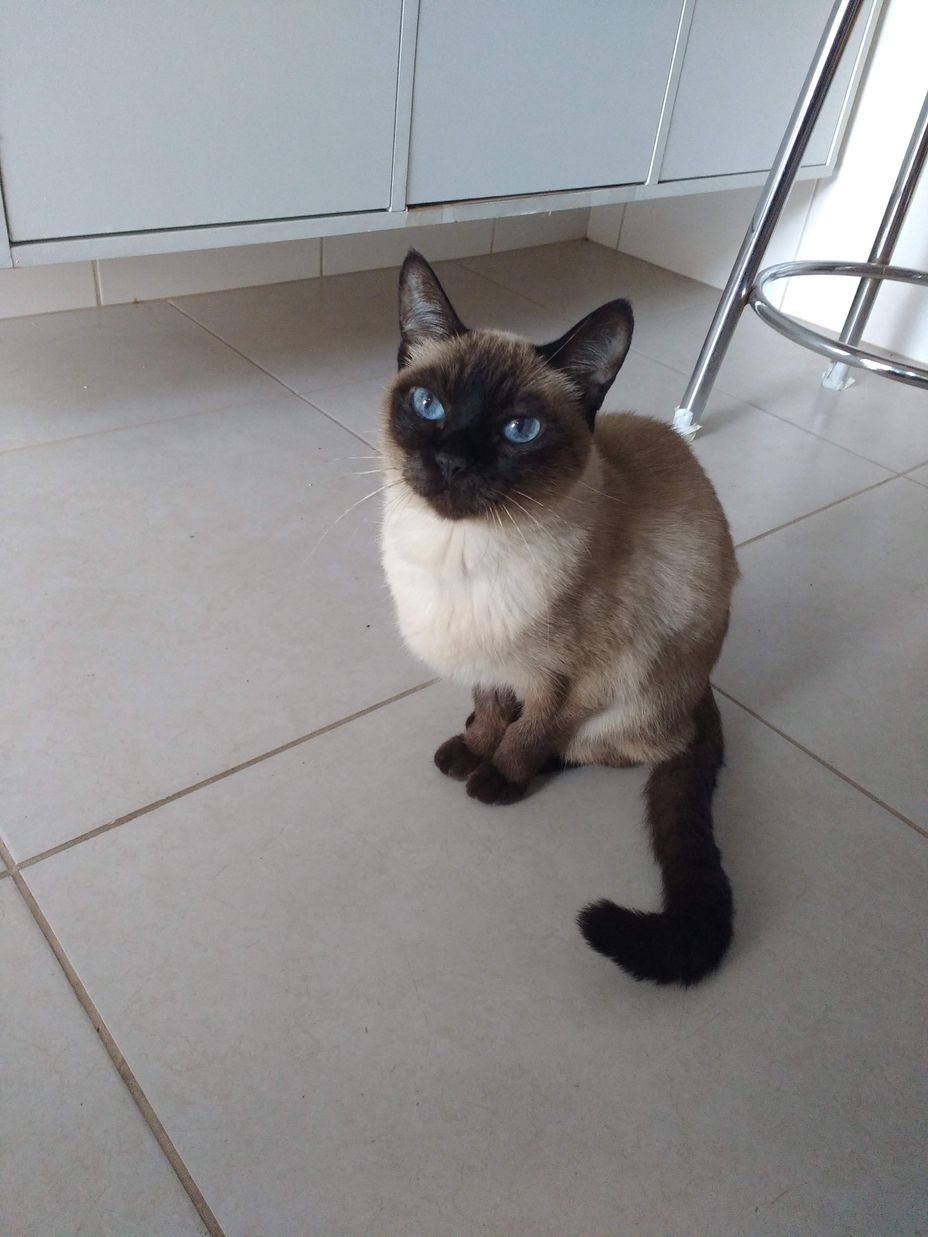
Here’s a photo of my now deceased cat, so I can look at this post and remember her, not with grief, but with love.
I love and miss you Mabel…
And I also love and miss Miaki and Sophie.
I didn’t know you so much, but I hope you’re well in the afterlife grannies.
I hope you achieved your spiritual goal Lilly.

And I seriously hope that you can hold on for longer that anyone of us believe, FIL.

Most common user reactionsMost common user reactions 3 reactions
Post
See full photo

Dealing with the Emotions of a Disability Diagnosis

I gradually lost my sight over the course of a 12-year period, starting at just 18. This process was not without its emotion and challenges. Having been both an athlete and a scholar, I needed to reset the expectations I had for myself but what I also learned, sometimes the hard way, is I had to do the same for those around me.

The diagnosis of any #Disability  affects the person at its center the most. However, those who love or care for that person also go through a range of emotions, including grief, anger, sadness, and anxiety. The first days, months, and years of processing a diagnosis can make for awkward and uncomfortable encounters between a person learning to navigate their new normal and the friends, family and caregivers doing the same alongside them.

In the years since my own diagnosis of #RetinitisPigmentosa , I’ve mentored many and had conversations with even more on the emotions that follow learning you or someone you love has a disability. Through these conversations and my own journey, I can share three things that I know to be true when it comes to showing up for someone during this process.

1) For those who have received a diagnosis, you have every right to the emotions that follow. Rage, grief, and shock are all normal parts of realizing the plan you had for your life will now be different. As difficult as it is, try to realize that people who care for you are also recognizing this at the same time. The hopes and ambitions they had for you are also shifting, which can lead to overcompensating in some areas, and underperforming in others. I have found this to be especially true in parent/child relationships. My advice is to try to have some sympathy by acknowledging their feelings and saying you will talk when you are ready about whatever the issue or problem bothering everyone most is. Sometimes that promise is enough to keep things from boiling over.

2) For those who love someone coming to terms with a diagnosis, the most important things to give are respect and space. I was once at a conference where a father expressed his dismay that his daughter had not yet left her room to meet people with her same disability. I gently reminded him that if his daughter was there, but not yet ready to mingle, that was still progress. Instead of fretting that his daughter was not present, I recommended the dad take the time to meet people that may be worthwhile for his daughter to know when she was ready. Forcing timetables or tasks is a quick way to make a difficult time even harder for all involved.

3) For caregivers, try to continue behaving as normally as possible. As I began to lose my sight, people were quick to trip over common phrases that they thought might offend me – like “Doug, did you watch the baseball game last night?” They’d quickly follow up by saying “I mean, listened. I’m so sorry. I know you can’t watch it. Did you listen to the game?” Now, I can laugh at it, but at one point, it made me feel even more isolated than I had already been feeling. From using colloquialisms to keeping normal traditions – let your friend or family member with the diagnosis set the tone rather than self-limiting.

These hard-won lessons took decades to distill, understand and practice. This process is hard. But on the other side of this work are deeper loves and friendships than anyone would think possible – and from there, the second part of your life, not the one you planned but the one that is - can begin.

#Blindness

3 comments
Post

How Blindness Led Me to My Life’s Work

When I was 18 years old, I started to lose by vision. As an athlete, the signs, at first, were small – missed passes from my teammates on the basketball court. Losing a fly ball in the air at my baseball games. Not following my golf ball’s trajectory on the course. I went to see a doctor thinking that it was something perhaps with my brain and was shocked to eventually learn I had Retinitis pigmentosa (RP) – a rare, degenerative eye disease that makes cells in the eye breakdown over time – eventually causing vision loss. I have one of the most severe cases of RP that one can have – and by age 30 I was completely blind.

For years, as I worked through a range of emotions, I always knew one thing - I was determined to not let RP define who I am or what success I find in my life. Up until the point of my diagnosis, I had planned on being a doctor – and while that course was, and remains, unavailable, higher education and career fulfillment is absolutely not. Through a lot of tenacity, problem-solving, failure and entrepreneurship, two years ago I found myself starting a new job at NSITE just outside Washington, DC. Here, I have found my deepest purpose – helping blind and low vision individuals find jobs, while also helping companies and products make their tools more accessible to everyone. In my spare time – I’m entering my fourth year as a goalie for the U.S. National Blind Hockey Team because being blind has never dimmed my love of sports!

The journey to this role and this life was not a straight line. I hope as part of this community I can share a bit about my path in the hopes it shows other blind and low vision individuals how they can find fulfilling personal and professional lives, even in the wake of the unexpected.

I’m always happy to talk to anyone who has lost vision at any stage of life, to help them understand what steps they can take to come to terms with their diagnosis, and when ready, start to think about what is next.

I look forward to learning more from you all, too.

#Blindness #RP #Blind

1 comment