Mood Disorders

Create a new post for topic
Join the Conversation on
Mood Disorders
9.62K people
0 stories
664 posts
About Mood Disorders Show topic details
Explore Our Newsletters
What's New in Mood Disorders
All
Stories
Posts
Videos
Latest
Trending
Post
See full photo

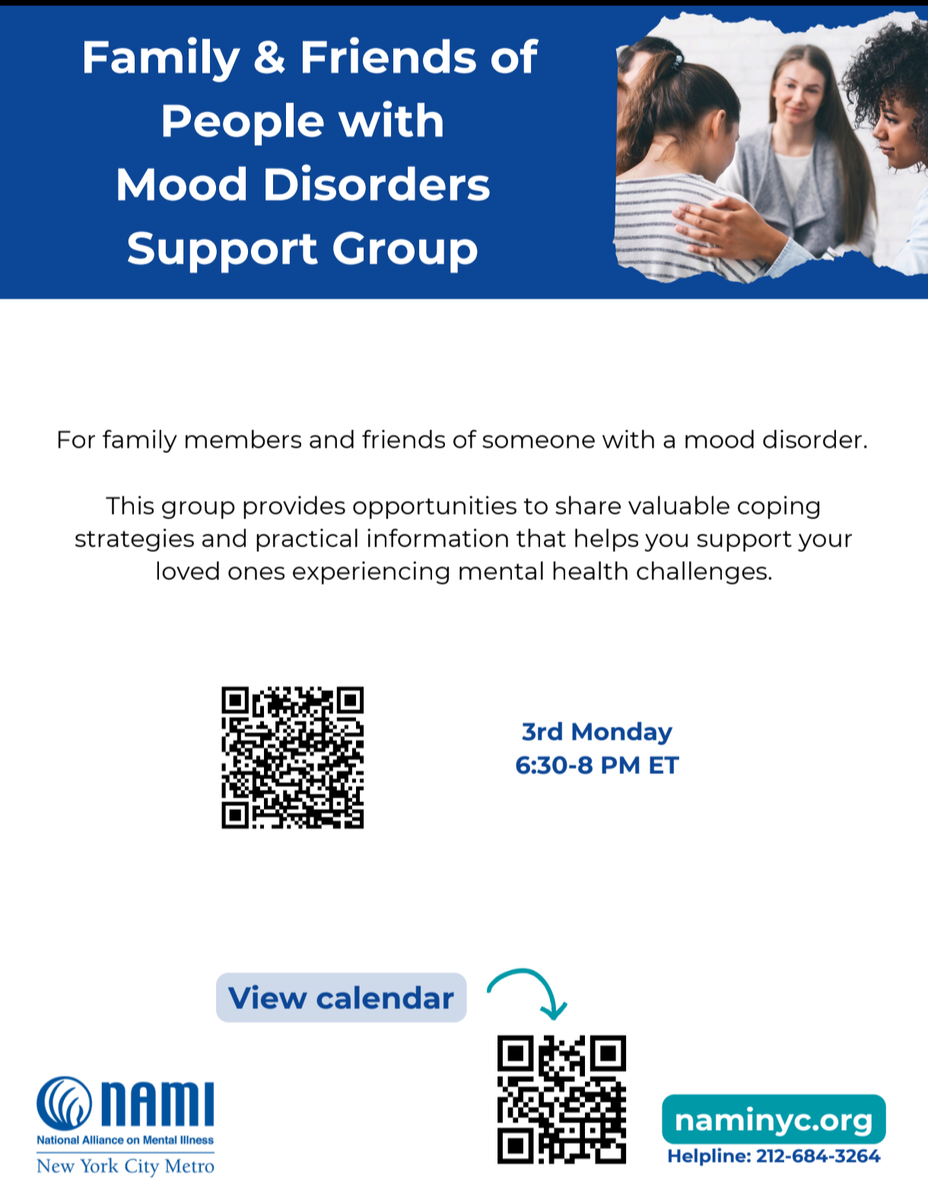
Family & Friends of People with Mood Disorders Virtual Support Group! 3rd Monday of the month, 6:30-8 PM ET

Family & Friends of People with Mood Disorders virtual support group is for family members and friends of someone with a mood disorder.

This group provides opportunities to share valuable coping strategies and practical information that helps you support your loved ones experiencing mental health challenges.

Mood disorders include: major depressive disorder, bipolar disorder (mania – euphoric, hyperactive, over inflated ego, unrealistic optimism), persistent depressive disorder (long lasting low grade depression), cyclothymia (a mild form of bipolar disorder), and SAD (seasonal affective disorder). (From www.mentalhealthamerica.net/conditions/mood-disorders)

💻 If you'd like more information or would like to join, you can find the link here. Virtual groups are every 3rd Monday of the month, 6:30-8 PM Eastern Standard Time. Closed captioning is available: naminycmetro.org/programs/family-friends-of-people-with-mood-disorders

#BipolarDepression #BipolarDisorder #Mania #PersistentDepressiveDisorder #SeasonalAffectiveDisorder #Cyclothymia #Parenting #ChronicIllness #Depression #MentalHealth #Selfcare #CheckInWithMe

Most common user reactionsMost common user reactions 3 reactions
Post

Friendship Zoom Notes

6 Deaf--Blindness----A combination of hearing & vision loss that affects a student's ability to communicate, access information, & navigate the environment.
Examples: Usher Syndrome, CHARGE Syndrome, Cortical blindness

7 Traumatic Brain Injury----An acquired injury to the brain caused by an external force that results in physical, cognitive, or emotional challenges.
Examples: concussion, brain hemorrhage, accidents

8 Emotional Disturbed-----A condition that affects students ability to learn due to emotional or behavioral challenges.
Examples: Anxiety, Depression, Mood disorders

9 Developmental Delay----A delay in one or more areas of development that impacts a student's learning or progress
Examples: speech delay, motor skill delay, cognitive delay

10 Deafness----A student's total or neal total hearing loss that can impact communication & learning
Examples: profound deafness & prelingual deafness

11 Multiple Disabilities----The combination of 2 or more disabilities that significantly impact a students learning & daily functioning
Examples: Autism Intellectual Disability & Cerebral Palsy----Vision Impairment

12 Other Health Impairment----A chronic or acute health condition that limits a students strength, vitality, or alertness, affecting their learning
Examples: Asthma, ADHD, & Diabetes

13 Specific Learning Disability-----A disorder in basic psychological processes that affects a students ability to listen, think, speak, write, or do math.
Examples: Dyslexia (reading), Dyscalculia (math), Dysgraphia (writing)

Most common user reactions 1 reaction
Post
See full photo

The Memoir of My Life - A Story About My Life with Bipolar Disorder #BipolarDisorder #MentalHealth #MoodDisorders

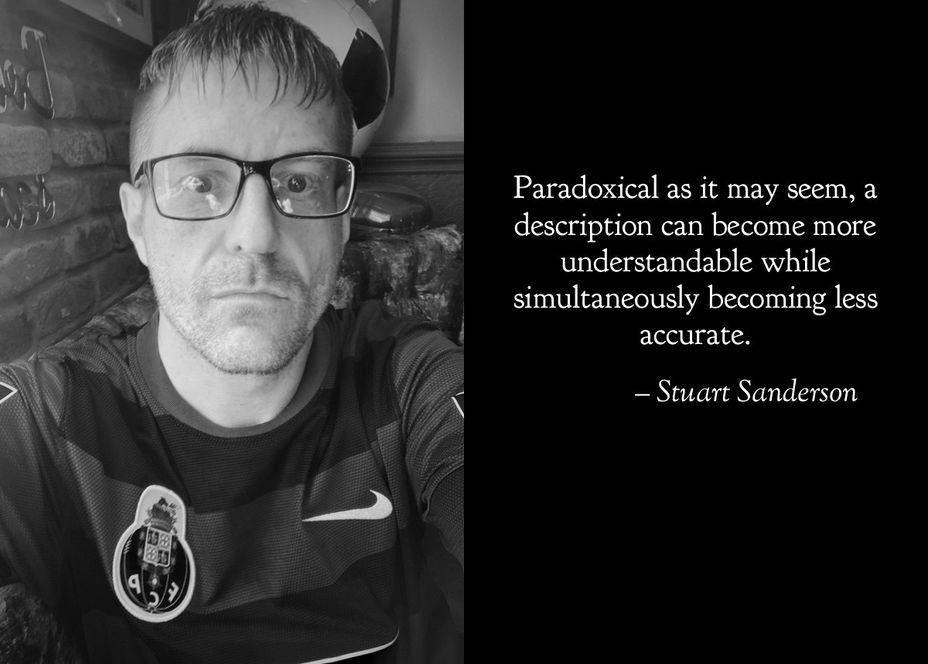
“A Diagnosis Isn’t an Explanation” is a personal exploration of mental illness, identity, addiction, perception and the struggle to understand oneself.

Drawing on lived experience, the book examines the difference between receiving a diagnosis and truly understanding the person living with it. It explores the internal battles that can remain invisible to others, the misunderstandings that arise when behaviour is viewed without context, and the ongoing search for an explanation that goes beyond a medical label.

This is not a clinical textbook or a polished account written with the benefit of perfect hindsight. It is an honest, sometimes uncomfortable expression of one person’s experiences and attempts to make sense of them.

The writing is presented largely as it emerged, preserving its imperfections and individuality rather than reshaping it to meet conventional expectations.

Ultimately, this book is about being human behind the diagnosis, questioning what we think we understand about ourselves and others, and recognising that naming a condition is not the same as understanding a person.

My Memoir of Life

#MightyTogether #Depression #Anxiety #ADHD #MentalHealth

My Memoir of Life

“There is a point at which language stops working. Not because there is nothing to say, but because there is too much that cannot be said”
Most common user reactions 3 reactions
Post
See full photo

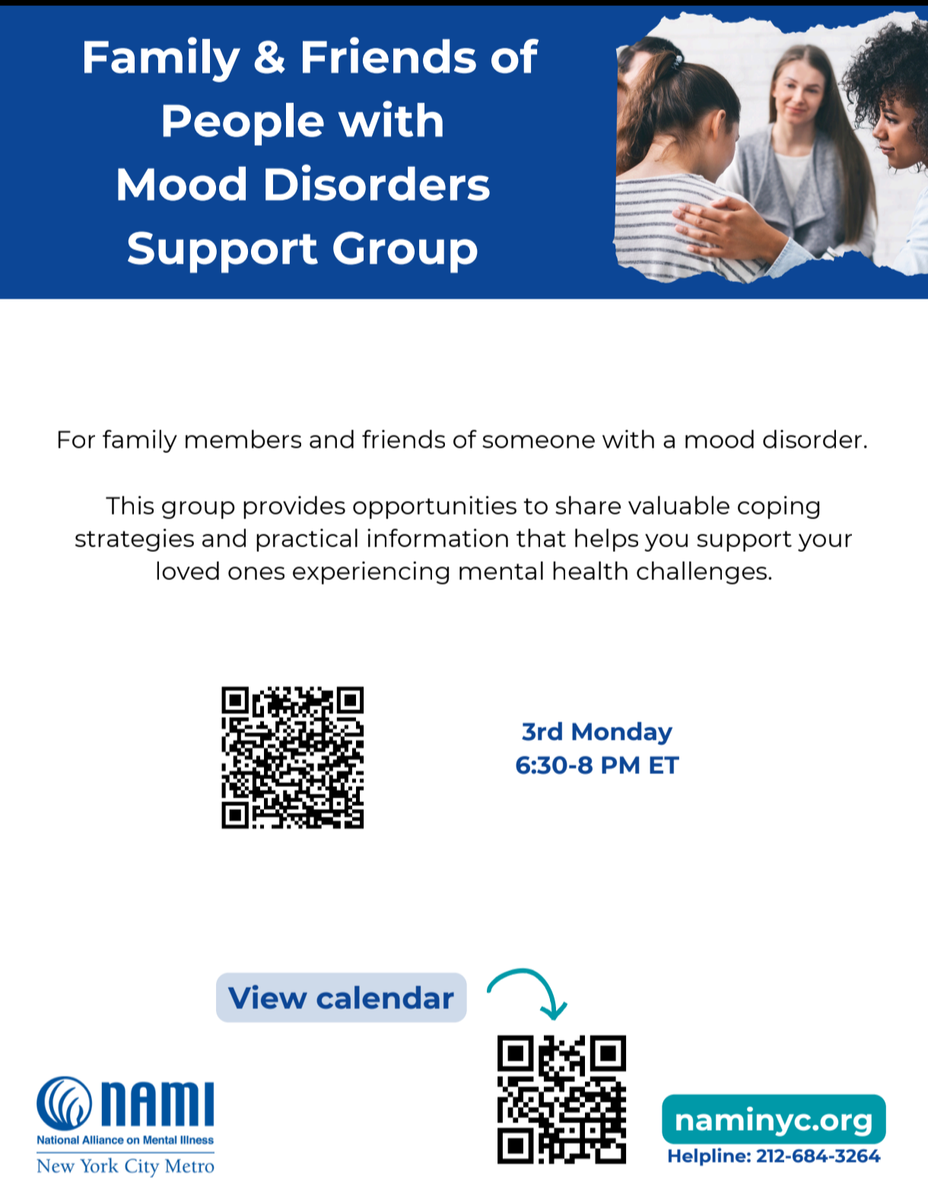
Family & Friends of People with Mood Disorders Virtual Support Group! 3rd Monday of the month, 6:30-8 PM ET

Family & Friends of People with Mood Disorders virtual support group is for family members and friends of someone with a mood disorder.

This group provides opportunities to share valuable coping strategies and practical information that helps you support your loved ones experiencing mental health challenges.

Mood disorders include: major depressive disorder, bipolar disorder (mania – euphoric, hyperactive, over inflated ego, unrealistic optimism), persistent depressive disorder (long lasting low grade depression), cyclothymia (a mild form of bipolar disorder), and SAD (seasonal affective disorder). (From www.mentalhealthamerica.net/conditions/mood-disorders)

💻 If you'd like more information or would like to join, you can find the link here. Virtual groups are every 3rd Monday of the month, 6:30-8 PM Eastern Standard Time. Closed captioning is available: naminycmetro.org/programs/family-friends-of-people-with-mood-disorders

If you have any questions, feel free to comment below!

#BipolarDepression #BipolarDisorder #Mania #PersistentDepressiveDisorder #SeasonalAffectiveDisorder #Cyclothymia #Parenting #ChronicIllness #Depression #MentalHealth #Selfcare #CheckInWithMe

Most common user reactionsMost common user reactions 2 reactions
Post

I'm new here!

Hi, my name is Nastaran. I’m a Master’s graduate in Clinical Psychology, deeply dedicated to the practice and principles of Dialectical Behavior Therapy (DBT). My clinical focus centers on personality disorders, mood disorders, and anxiety disorders—working with individuals to build lives worth living by bridging acceptance and change.
#MightyTogether

Most common user reactions 1 reaction
Post

Carers Supporting Carers of teen/young adults

My daughter didn’t grow up sick.

One day she was healthy—living her life like any other young person—and then something changed.

And what followed wasn’t clarity… it was a grey area.

A stretch of time where I didn’t fully understand what was happening.
Where I could see she wasn’t okay—but I didn’t yet know how to respond.

And if I’m honest, there were moments where I questioned it.

Not because I didn’t care—
but because I was trying to make sense of something that didn’t make sense.

There were voices around me too:
“Teenagers these days all think something is wrong with them.”
“Maybe she just needs to push through…”

And somewhere in all of that, I found myself stuck between:
She’s clearly struggling…
and
Is she doing everything she can to help herself?

So I did what I thought was right.

I tried to fix it.

I tried to manage her day, suggest solutions, encourage, push gently…
constantly offering advice because I wanted so badly to make her feel better.

Until one day she said something that stopped me in my tracks:

“Mum, I know you mean well, but you’re just reminding me how sh***y my life is.”

And another time:

“I feel like a character in your video game.”

That hit hard.

Because I realised—I wasn’t actually supporting her the way she needed.
I was trying to control something that wasn’t mine to control.

That was my turning point.

I began to understand that this is her journey.

And my role isn’t to fix it.
It’s to be beside her. To support her. To really see her.

⸻

What I’ve also come to understand is this:

Chronic illness is layered.

Because behind everything…
they are still young people trying to figure out who they are.

They’re still navigating identity, friendships, independence, and their future—
but without the same energy, freedom, or certainty.

And as mothers, we’re holding all of it.

The illness.
The emotions.
The uncertainty.
And the grief of what we thought life might look like.

⸻

This space is for mothers like me.

Mothers who:

• Didn’t get it perfect from the start

• Have questioned, doubted, and learned along the way

• Are trying to shift from fixing to supporting

• Are carrying more than most people realise

You don’t have to filter yourself here.

You can be honest about:

• The guilt
• The frustration
• The love
• The exhaustion

This is a space where we support each other—not by having all the answers,
but by understanding what this really feels like.

If you feel comfortable, introduce yourself.
Where you’re at in your journey, and what you need right now.

You’re not alone in this ❤️ XOXO

#CarersSupportingCarers
#ChronicIllness
#MALS
#POTS
#AutonomicDysfunction
#CHS
#ADHDInGirls
#adhdyoungadults
#Anxiety
#Depression
#MoodDisorders
#Bipolar2

(edited)
Most common user reactions 6 reactions
Post
See full photo

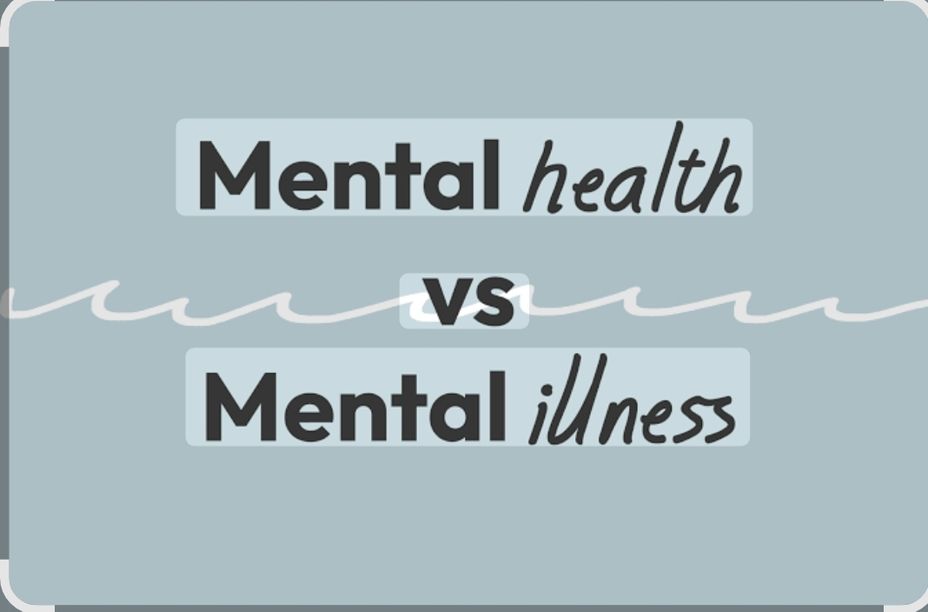
Mental Health vs. Mental Illness: Understanding the Difference Matters By BigmommaJ

For years, I heard the words mental health and mental illness used as if they meant the same thing.

In conversations, systems, and even care settings, the lines were often blurred. While the intention was often awareness, the impact was confusion—and stigma.

Understanding the difference between mental health and mental illness isn’t about semantics. It’s about language that heals instead of harms. It’s about helping people feel seen instead of labeled.

Mental Health: Something We All Have

Mental health refers to our emotional, psychological, and social well-being. It affects how we think, feel, cope, relate, and function day to day (World Health Organization [WHO], 2022). Mental health exists on a continuum, and every individual moves along that continuum throughout their life.

Mental health includes:
Emotional well-being – how we experience and regulate emotions Psychological well-being – how we process stress, trauma, and internal narratives Social well-being – our ability to form and maintain relationships.

Good mental health does not mean the absence of stress, sadness, or struggle. Rather, it reflects the capacity to adapt, cope, and function—even during difficult life circumstances (Public Health Agency of Canada [PHAC], 2022).

Mental health is influenced by biological factors, early attachment, trauma exposure, social determinants of health, and lived experience (Mental Health Commission of Canada [MHCC], 2021).

Mental Illness: A Clinical Reality, Not a Personal Failure

Mental illness refers to diagnosable conditions that significantly affect a person’s cognition, mood, behavior, or functioning. These conditions are identified using standardized diagnostic criteria, such as those outlined in the Diagnostic and Statistical Manual of Mental Disorders (DSM-5-TR) (American Psychiatric Association [APA], 2022).

Common categories include:

*Anxiety disorders

*Mood disorders, such as major depressive disorder and bipolar disorder

*Trauma- and stressor-related disorders, including post-traumatic stress disorder (PTSD)

*Psychotic disorders

*Personality disorders

Mental illness is not a personal weakness or character flaw.

Research consistently demonstrates that many mental health disorders are associated with trauma exposure, chronic stress, neurobiological factors, and systemic inequities (MHCC, 2021; SAMHSA, 2014).

With appropriate, trauma-informed treatment and support, individuals living with mental illness can and do lead meaningful, productive, and connected lives.

Where Mental Health and Mental Illness Intersect
Mental health and mental illness are interconnected, but they are not interchangeable.

An individual may:

Live with a diagnosed mental illness while experiencing periods of strong mental health
Experience poor mental health without meeting diagnostic criteria for a mental illness
Move between stability and distress across different stages of life.

Protective factors—such as supportive relationships, access to care, and emotional regulation skills—can improve mental health outcomes, even in the presence of mental illness (PHAC, 2022).

Understanding this distinction helps reduce stigma and supports early intervention.
Promoting Mental Health Through a Trauma-Informed Lens Promoting mental health is not about “positive thinking” or ignoring pain. Trauma-informed care emphasizes safety, trust, empowerment, and connection (SAMHSA, 2014).

Evidence-based mental health promotion includes:

Sleep, nutrition, movement, and nervous system regulation
Secure, supportive relationships
Access to therapy, psychiatry, and community-based supports
Early intervention, particularly for children and trauma-exposed populations
Reducing stigma through education and compassionate language Healing occurs in safe relationships—not in isolation.

Personal Reflection: Why This Distinction Matters to Me

I’ve lived on both sides of this conversation. Professionally, I’ve worked with families navigating systems that often misunderstood their pain. Personally, I’ve carried diagnoses that felt heavier because of how they were spoken about—not because of what they actually meant.
For a long time, I believed struggling meant I was failing. That needing help meant I was weak. That my mind was something to fight instead of understand.

What I have learned—through recovery, motherhood, loss, and rebuilding—is this:
Mental illness explained my pain. It never defined my worth.

When we confuse mental health with mental illness, we erase nuance. And when nuance disappears, so does humanity.

Understanding the difference gave me language for compassion—toward myself and others. It allowed me to stop asking, “What’s wrong with me?” and start asking, “What happened to me—and what do I need to heal?”

Final Thoughts

Understanding the difference between mental health and mental illness helps shift conversations from judgment to empathy, from fear to understanding.
Struggling does not mean broken.

Diagnosis does not mean hopeless.

Healing does not mean linear.
Mental wellness is not about perfection. It’s about support, safety, and being seen. Sometimes, rising above your norm begins with learning a new language for your pain.

BigmommaJ
#MentalHealth #BorderlinePersonalityDisorder #Depresssion #MoodDisorders #Anxiety

Most common user reactions 2 reactions