Latest
Overcoming Inner Criticism
Still learning. Still growing. Still trying. 🤍🦋
#MentalHealth #Neurodiversity #Depression #selfcare #Selflove #MightyTogether
 14 reactions •
3 comments
14 reactions •
3 comments


Still learning. Still growing. Still trying. 🤍🦋
#MentalHealth #Neurodiversity #Depression #selfcare #Selflove #MightyTogether
14 reactions •
3 comments
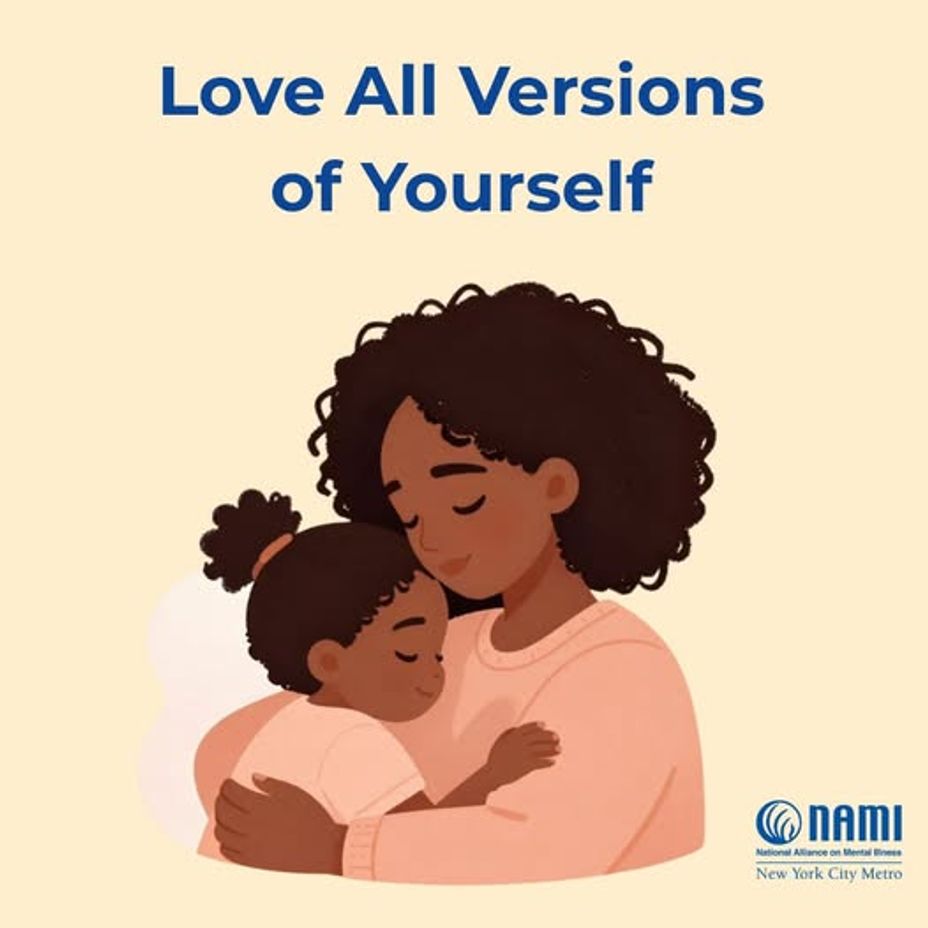
Every version of you deserves love.

 6 reactions
 There was a time in my life when my heart carried more pain than hope.
After losing the chance to have the baby I dreamed of, I lived with fear. Fear that I would never know the joy of motherhood. Fear that my opportunity had been taken from me forever.
That fear followed me quietly.
Every time I thought about the future, it whispered the same question: What if it never happens for you?
When my niece was born, I was still carrying that storm inside me. My mind was filled with worries about finances, the future, and all the things that could go wrong.
But something beautiful happened that I did not expect.
Slowly, gently, that little girl began to heal parts of me I didn’t even know were broken.
She became my comfort.
The baby I once looked at with uncertainty became the little soul who brought peace back into my life.
• She is my protector.
• My little fighter.
• My joy.
When I am sick, she nurses me with the seriousness of someone much older.When I cry, her tiny hands wipe away my tears.
• She calls me beautiful.
• She tells me I am amazing, intelligent, and sweet.
• She looks at me with admiration, as if I am the most important person in the world.
And in her eyes, I feel seen.
I feel wanted.
I feel loved.
She taught me something I did not understand before.Motherhood is not only about carrying a child for nine months.Sometimes motherhood is about loving a child with your whole heart and choosing every day to show up for them.
• She became my reason to wake up with purpose.
• My reason to become stronger.
• My reason to keep going even on the hardest days.
She is my rainbow baby — the beautiful light that appeared after the storm.She didn’t just bring joy into my life.She brought back my hope.And every single day, I promise myself that I will do my best to be the woman she believes I am.
Because loving her has become one of the greatest gifts of my life.
Reflection — Pages of My Becoming
Sometimes life does not give us the story we imagined.But sometimes it gives us something even more beautiful — love in a form we did not expect.
She is my rainbow after the storm.
And through her, I learned that healing can come in the smallest, most powerful ways.
Listen to the still small voice within-Gemini💜.
Honestly i can attest to this, four years i chose myself, healed from my postpartm depression now its my turn to give hope and educate others❤️..
#Healing #PostpartumDisorders #Selflove
8 reactions •
1 comment
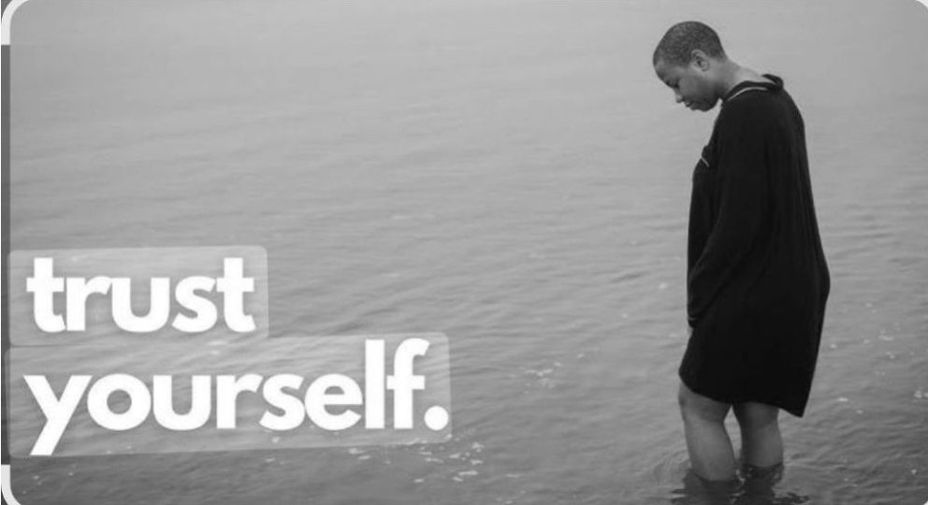
Trusting other people can feel terrifying.
But trusting yourself after you’ve doubted your own thoughts, emotions, choices, or worth? That can feel almost impossible.
For many individuals living with trauma histories, addiction, or borderline personality disorder (BPD), the deepest rupture is internal. Somewhere along the way, we stopped believing ourselves.
When Self-Trust Breaks
Self-trust erodes slowly:
*When your feelings were dismissed.
*When you were told you were “too sensitive.”
*When trauma distorted your sense of safety.
*When addiction led you to act against your values.
*When intense emotions made you question your reality.
Individuals living with Borderline Personality Disorder often experience emotional dysregulation, identity disturbance, and fear of abandonment (American Psychiatric Association, 2022). Emotional states can feel absolute and overwhelming, which contributes to chronic self-doubt.
Over time, the internal narrative becomes:
“I can’t trust myself.”
Trauma Changes the Brain — Not Your Worth
Chronic trauma affects neurobiological functioning. Research shows:
*Increased amygdala activation (heightened threat perception).
*Reduced prefrontal cortex regulation under stress.
*Alterations in stress-response systems (HPA axis dysregulation).
These findings are well documented in trauma research (Shin et al., 2006; Teicher & Samson, 2016).
This is not weakness. It is adaptation.
The hopeful reality is neuroplasticity — the brain’s capacity to reorganize and form new neural pathways through repeated regulation and therapeutic intervention (Doidge, 2007).
Addiction and the Collapse of Self-Trust
Addiction compounds the rupture.
Substance use disorders are classified as chronic, relapsing medical conditions that alter reward circuitry, impulse control, and executive functioning (American Psychiatric Association, 2022). According to Centre for Addiction and Mental Health, addiction impacts the brain’s dopamine system and decision-making processes, making relapse a neurological vulnerability — not a moral failure.
Each broken promise can erode internal credibility.
Rebuilding self-trust requires starting small and creating consistent behavioral evidence of change.
What Rebuilding Self-Trust Actually Looks Like
1. Regulate Before You Decide
Emotional regulation is foundational. Dialectical Behaviour Therapy (DBT), developed by Marsha Linehan, emphasizes distress tolerance and emotion regulation skills as primary interventions for BPD (Linehan, 2015).
Regulation strategies may include:
*Diaphragmatic breathing
*Grounding exercises
*Sensory modulation
*Brief physical movement
Decisions made from regulation are more reliable than those made during emotional flooding.
2. Keep Micro-Promises
Behavioral consistency restores internal reliability.
Research in behavioral psychology supports the concept that repeated small successes increase self-efficacy (Bandura, 1997). When you keep small commitments, you accumulate evidence that you are dependable — especially to yourself.
3. Separate Feelings from Facts
Cognitive distortions — such as emotional reasoning and catastrophizing — are common in trauma and BPD presentations (Beck, 2011).
Feeling: “He hasn’t texted. I’m unlovable.”
Fact: “He hasn’t responded yet.”
Cognitive restructuring is a core component of evidence-based therapies including Cognitive Behavioral Therapy (CBT) and DBT (Beck, 2011).
4. Understand Shame’s Role
Shame significantly predicts relapse, depression severity, and self-harming behaviors (Tangney & Dearing, 2002).
The Canadian Mental Health Association highlights that stigma and internalized shame worsen recovery outcomes.
Self-compassion interventions have been shown to improve emotional resilience and decrease self-criticism (Neff, 2011).
Replacing “I’m crazy” with “I’m dysregulated” is not semantics — it is neurocognitive reframing.
Implications for Child Welfare and Clinical Practice
Attachment disruption in early childhood significantly affects emotional regulation capacity and identity formation (Bowlby, 1988; Teicher & Samson, 2016).
Within child welfare systems, individuals often internalize labels such as “non-compliant” or “resistant.” Trauma-informed care frameworks emphasize understanding behavior as adaptation rather than defiance (Substance Abuse and Mental Health Services Administration [SAMHSA], 2014).
Restoring autonomy and internal safety must be prioritized if we want sustainable recovery and relational stability.
A Personal Reflection
There was a time I did not trust my thoughts, my decisions, or my emotional reactions.
Recovery taught me something clinical — and deeply human:
Emotional intensity is not pathology by itself. Dysregulation without skills is.
Now, when I feel activated, I pause. I regulate. I gather data. I respond rather than react.
That pause is self-trust rebuilding in real time.
Conclusion
Trusting yourself again does not mean you will never struggle.
It means:
*You regulate before reacting.
*You keep small promises.
*You challenge distortions.
*You replace shame with informed language.
*Self-trust is not perfection.
It is repair.
And repair is evidence of growth.
BigmommaJ
#trustyourself #Selflove #MentalHealth
4 reactions I am deserving of all the good that life has to offer.
For decades, I didn’t believe it. I measured my worth by what I endured, by how much I gave, by how well I survived. I learned that goodness had to be earned through suffering. Pain became proof. I held it close, convinced that survival alone justified my place.
I remember mornings in the quiet house, tea gone cold, replaying every failure. I remember declining a dinner invitation because I hadn’t finished enough work that day, as though companionship had to be earned through productivity. My mind whispered that I was only entitled to struggle, that joy was reserved for those who hadn’t stumbled. For years, I listened.
But slowly, I began to notice moments that didn’t fit: a sunrise that caught me unaware, a friend’s laughter spilling across a room, a smile from someone who owed me nothing. These moments weren’t rewards. They were just good. They existed outside merit, beyond suffering.
I began to unlearn.
I noticed the ways I resisted joy, how I held back anticipating disappointment. I wasn’t practicing gratitude; I was preparing for debt, expecting any ease to be balanced with pain. But good things are not contingent, and joy does not require proof. Love is not a punishment waiting to be collected.
I do not need to prove myself to receive. I do not need to demonstrate resilience or perfection to earn a warm cup of coffee, a quiet afternoon, or a conversation that lingers into laughter. Being here, continuing, choosing to live with intention: this is enough.
There are still mornings when this belief feels fragile. I flinch at ease, waiting for loss to follow. But each time I linger in the warmth of kindness or the brilliance of a sunset, I practice receiving without guilt. I open my hands, not in expectation but in readiness, and I let life arrive as it will.
This is a quiet liberation: understanding that goodness is not a reward but part of the rhythm of living. It is as natural as breathing, as necessary as water, as rightful as the space I occupy. The world does not tally my struggles to calculate my share of happiness. Good things arrive, unbidden and unearned, when I allow them.
So I practice. I take joy in small things. I let moments linger. I smile at nothing. I answer kindness with acceptance rather than suspicion. I breathe in the world as it comes, understanding that life’s goodness is not conditional, and neither is my right to it.
This practice has become essential to my wellness. For years, I approached self-care as penance, something to fix what was broken rather than nurture what was whole. But recognizing that I deserve goodness shifts everything. When I begin my day affirming my worthiness, I stop treating rest as laziness and joy as indulgence. I allow myself nourishment without guilt, boundaries without apology, pleasure without justification.
It transforms how I move through the world, making space for what sustains me: the morning walk I take not to earn my breakfast but because my body deserves movement and light; the time I spend reading, creating, or simply sitting in stillness because my mind deserves peace; the relationships I cultivate because connection is a fundamental human need, not a reward for good behavior.
Wellness, I have learned, is not about perfection or punishment but about tending to myself with the same compassion I would offer a friend. It begins with this single, revolutionary belief: I am deserving of care, of kindness, of all the good that life has to offer.
#MentalHealth #MentalHealthAwareness #Depression #BipolarDisorder #Recovery #Selfworth #Selflove #Healing #PersonalGrowth #Mindfulness #resilience #mentalhealthmatters #Endurance #Joy #Gratitude #wellness #LifeLessons #innerstrength #Survivor #EmotionalHealth
7 reactions •
1 comment
There is a kind of chaos that doesn’t just interrupt your life
it becomes your life. It’s waking up already tired. It’s carrying invisible weight.
It’s surviving day after day while quietly wondering when it will finally be your turn to breathe.
And somewhere in that chaos, many of us begin to believe a lie:
that our worth is tied to how well we’re coping. But worth was never meant to be proven by perfection.
“I learned how to survive before I learned how to live,
how to stay quiet in storms I didn’t create.”
When Chaos Becomes Your Normal For many of us, chaos isn’t new. It’s familiar. It’s what we adapted to as children, what we endured in relationships, what trauma taught us to expect. When chaos becomes your normal, peace feels uncomfortable. Stillness feels unsafe.
Healing feels like something you’re not quite allowed to have. So you keep moving. You keep showing up. You minimize your pain and tell yourself you’re “fine.”
“I wore strength like armor,
even when it was cutting into my skin.”
But survival, no matter how impressive, was never meant to be your final destination.
The Lie Chaos Tells You About Your Worth
Chaos has a voice. And it’s cruel.
It tells you that because your life is messy, you must be broken. That because you struggle, you are weak. That because you’ve fallen before, you will always fall again.
But struggle is not a flaw — it’s a response to pain.
You didn’t lose your worth when you became overwhelmed.
You didn’t give it up when addiction, trauma, or heartbreak entered your story.
You didn’t fail because healing isn’t linear.
“I thought being strong meant never breaking, but breaking was how the light finally got in.”
Your worth doesn’t disappear in chaos — it reveals itself there.
You Are Worthy Even Here
Even if:
1.You’re rebuilding your life again
2.You’re in recovery and some
days are heavier than others
3.You’re parenting while healing wounds no one ever tended
4.You look put together on the outside but feel fractured within
You are still worthy.
Worthy of rest.
Worthy of gentleness.
And if you need to hear this today, let me tell you:
You are worthy of help without guilt.
“I am learning that rest is not weakness, and asking for help is not failure.”
Healing doesn’t ask you to be perfect. It asks you to be honest.
Finding Your Worth in the Middle of the Storm.
Finding your worth in chaos doesn’t mean waiting until life settles down.
It means choosing to see yourself clearly while the storm is still raging.
It looks like:
1.Setting boundaries instead of explaining your pain
2.Choosing self-compassion over self-punishment
3.Letting go of the version of you that only knew how to survive
4.Believing peace isn’t something you have to earn
“I stopped waiting to be worthy,
and started believing I already was.” Your worth is not the reward for healing. It is the foundation healing stands on.
Rising Above Your Norm
There was a time I believed chaos was all I deserved.
That peace was reserved for other people — stronger people, better people.
But rising above your norm doesn’t mean erasing your past.
It means refusing to let it define your future.
You can honor the part of you that survived without forcing yourself to stay in survival mode forever.
“I am no longer just surviving
I am becoming.”
And if you need to hear this today, let me tell you:
You are not behind.
You are not broken.
You are not failing.
You are finding your worth —
right in the middle of the chaos you live in.
Choose Yourself, Even Here
If you are living in chaos, let this be the moment you stop believing that pain is the price of your existence.
Stop waiting to be healed before you believe you are worthy.
Stop shrinking your needs to make others more comfortable.
Stop convincing yourself that survival is all you’re allowed.
Choose yourself — even here.
Even tired.
Even unsure.
Even in the middle of the mess.
Speak up.
Ask for help.
Set the boundary.
Take the first step toward support, recovery, or rest.
You do not have to do everything alone to prove your strength.
You do not need to earn compassion — you deserve it.
And you are not weak for wanting more than survival.
If this piece spoke to you, let it move you. Share it. Save it. Sit with it.
But most of all — act on it.
Because healing doesn’t begin when life becomes quiet.
It begins when you decide that your life matters — now.
BigmommaJ
#Selflove #selfImprovement #Selfworth
#MentalHealth
2 reactions 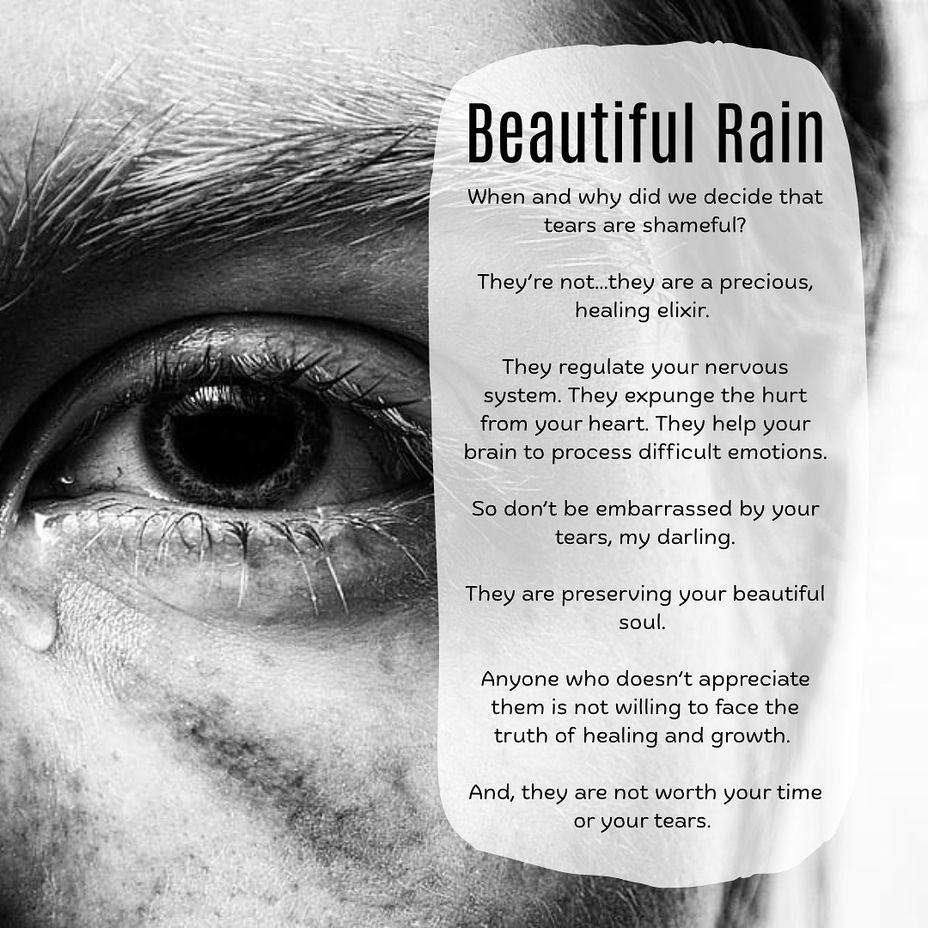
Don’t be embarrassed by your tears. They are the beautiful rain that washes you clean. 💧💧💧
Original piece by @meaustin91
#Poetry #writer #heal #healing #healyourself #Selflove #Depression #MentalHealth #Anxiety #MightyPoets
5 reactions •
2 comments
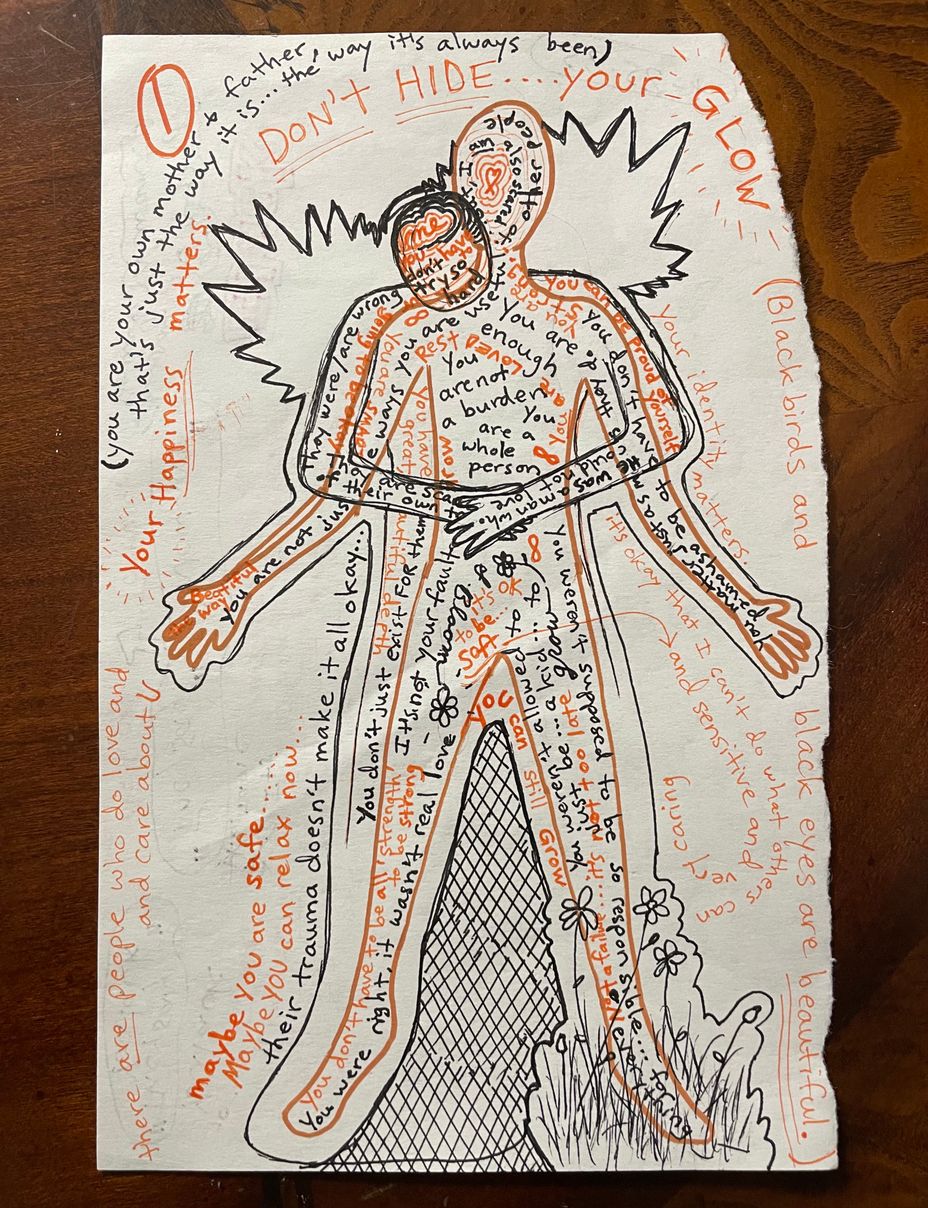
(from “Black Sheep” by MILCK)
Black sheep, cryin' those rebel tears
It's a battle to survive these lonely years
Black sheep, you live up to your name
You've been told for way too long that you're the one to blame
You never mean to hurt yourself or anyone around you
But trouble's like a curse, a curse you didn't choose
The house you're in is like a cage, the walls and floor rage
It's hard to breathe, but hard to leave
Look up, you’re not alone
You’ll make a home of your own
Don’t let anyone turn your unique into flaws
Yeah, you know that I love you the way that you are
Take those sticks and stones and make a home of your own
Every warrior grows from her battles and scars
Yeah, you know that I love you the way that you are…
Dear black sheep
It runs deep, it's insatiable
That hunger to be seen and to be understood
Black sheep, they call me that, too
I've wrestled with the dark, but I made it through
And so will you
Look up, you’re not alone
You’ll make a home of your own
Don’t let anyone turn your unique into flaws
Yeah, you know that I love you the way that you are
Take those sticks and stones and make a home of your own
Every warrior grows from her battles and scars
Yeah, you know that I love you the way that you are
Black sheep…
The house you build,
It will be safe and be full of light and space
You'll finally breathe, my dear black sheep
Look up, you're not alone, you'll make a home of your own
Don’t let anyone turn your unique into flaws
….you know that I love you the way that you are
Take those sticks and stones (sticks and stones)
And make a home of your own (all of your own)
Every warrior grows from her battles and scars
And you know that I love you the way that you are
And you know that I love you the way that you are
…you know that I love you the way that you are
#artastherapy #Music #Lyrics #Relationships #CPTSD #Autism #Autistic #ADHD #Selfcompassion #Selflove #Healing #MentalHealth
12 reactions •
5 comments